Get Full Government Meeting Transcripts, Videos, & Alerts Forever!
Get email alerts on the Medical Education Expansion topic
No spam. Unsubscribe anytime.
Committee advances bill to add medical school seats, direct state plan while preserving WWAMI partnership
Summary
House Bill 368, which would expand Idaho's undergraduate medical education capacity and direct the State Board of Education to produce a medical education growth plan, advanced out of the Idaho House Committee on Education on a due-pass vote.
House Bill 368, which would expand Idaho's undergraduate medical education capacity and direct the State Board of Education to produce a medical education growth plan, advanced out of the Idaho House Committee on Education on a due-pass vote.
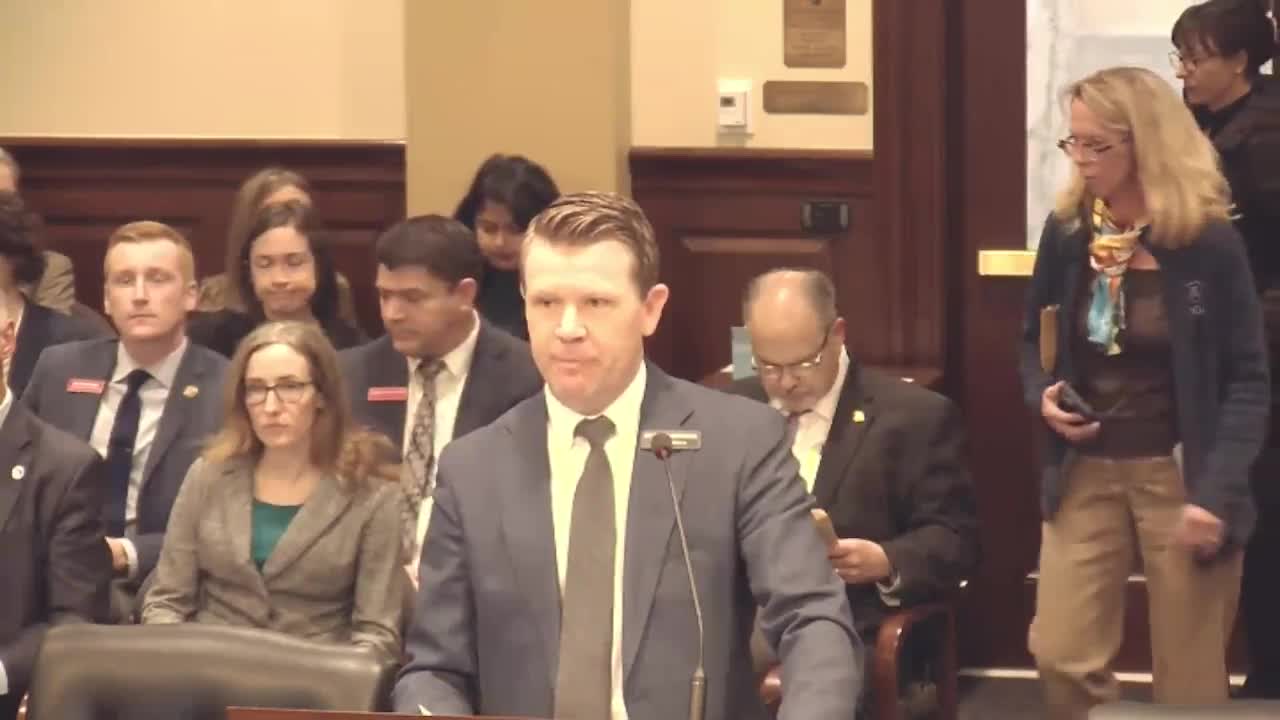
Representative Dustin Manwaring, state representative for District 29 and sponsor of House Bill 368, told the committee Idaho "faces a critical need for more physicians, particularly in rural and underserved areas." He said the bill would add 30 new non‑WWAMI seats leading to a net increase of 20 state‑sponsored medical school seats, bringing the total to 70.
The bill directs the State Board of Education to prepare a medical education plan this year that would inform how new seats are added and where training occurs. "This bill adds those net 20 seats, 30 non‑WWAMI and then the second part ... directs the state board of education this year to create a medical education plan," Manwaring said during his presentation.
Why it matters: Idaho ranks near the bottom among states for physicians per capita, and committee members and witnesses framed the proposal as an effort to strengthen the pipeline of doctors who train and remain in Idaho. Manwaring and witnesses cited current arrangements with WWAMI (the Washington, Wyoming, Alaska, Montana, Idaho regional medical education program) and new partnerships with the University of Utah as central to the proposal.
University of Utah representative Benjamin Chan, associate dean of admissions and Idaho affairs at the University of Utah School of Medicine, testified the university is "eager and excited to work with our potential new partners at the University of Idaho" and said the Utah program expects to keep much of the students' training in Idaho while offering specialty rotations in Salt Lake City when needed.
Mary Baranaga, a family physician in Idaho and a WWAMI graduate who works on clinical site development for WWAMI, urged preserving the existing WWAMI infrastructure while expanding options. "WWAMI is committed to figuring out how we expand medical education in Idaho to the citizens," she said, and noted that getting and maintaining clinical preceptors and clerkship sites is the program's largest operational challenge.
Josh Whitworth, executive director of the State Board of Education, said the board supports a methodical plan that increases seats and retains partnerships. "Our biggest purpose is we need to ensure that we have, are meeting this problem head on and putting a plan together that brings more doctors into the fold," he told the committee.
Committee members debated the mechanics and timeline for reducing WWAMI seats as non‑WWAMI seats are added. Several members asked about language on page 5 that uses "at least 10," with Representative Manwaring and others clarifying the bill phases in new non‑WWAMI seats (10 in year 1, 10 in year 2 with a corresponding reduction from WWAMI, and a further 10 in year 3) to result in a net increase of 20 seats.
Senator Dave Vail, a cosponsor, framed the policy as forward‑looking: "This really isn't about right or wrong or who's at fault, this is about how do we diversify our education process, how do we create more educational opportunities for our doctors in the state and retain those," he said.
After public testimony and committee discussion, Representative Hawkins moved to send House Bill 368 to the House floor with a due‑pass recommendation. The committee recorded a roll call; the motion carried by vote (motion carried; committee reported the bill to the floor by a recorded vote of 8 to 5, with one member absent). The committee also considered and rejected motions to hold the bill in committee and to send it to general orders.
Details and clarifications recorded in the hearing: Representative Manwaring said Idaho currently supports 40 WWAMI seats in state and 10 seats at the University of Utah (50 state‑sponsored seats total as of 2025). He said the state currently spends nearly $8 million annually on the WWAMI program, with "about two thirds of it or over $5,000,000 a year" going to the University of Washington. Manwaring stated his estimate that, given a 70% retention rate for WWAMI trainees, the cost equates to approximately $285,000 per physician trained through the WWAMI program. Mary Baranaga referenced an economic impact study the University of Idaho produced showing "for every dollar that's invested into Idaho WWAMI, our state gets back $5.10." Dr. Chan said the University of Utah estimates roughly 50% of the subsidized Idaho students who trained with Utah have returned to Idaho to practice, noting some uncertainty and offering to provide more precise numbers.
Implementation notes: witnesses described accreditation and clinical site constraints as practical limits. Dr. Chan outlined the LCME accreditation process and timelines for expanding class size or establishing regional campuses and said a formal submission and review would be required. Baranaga and others repeatedly identified recruitment and retention of clinical preceptors and clerkship sites as a bottleneck and noted the pandemic reduced the number of available teaching sites.
Next steps: House Bill 368 will be transmitted to the House floor with a due‑pass recommendation per the committee vote; the State Board of Education is directed by the bill to produce a medical education growth plan to guide future seat allocation and program development.