Get Full Government Meeting Transcripts, Videos, & Alerts Forever!
Get email alerts on the Economic Development topic
No spam. Unsubscribe anytime.
Port Authority and LCDC defend economic-development role; commissioners press for more county oversight
Summary
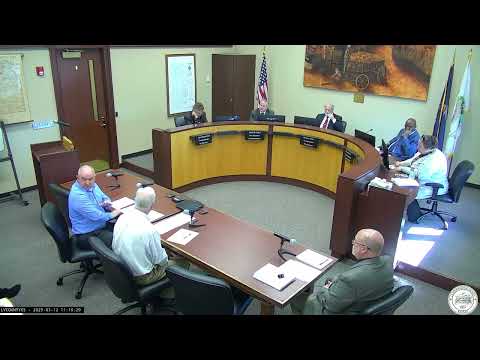
Leavenworth County officials and economic-development leaders met in a work session where Port Authority and Leavenworth County Development Corporation (LCDC) representatives summarized a decade of activity, defended the use of confidential negotiations, and agreed to several next steps after county commissioners raised concerns about transparency and county representation.
Leavenworth County officials and economic-development leaders met in a work session where Port Authority and Leavenworth County Development Corporation (LCDC) representatives summarized a decade of activity, defended the use of confidential negotiations, and agreed to several next steps after county commissioners raised concerns about transparency and county representation.
The discussion focused on recent development wins — including Hills Pet Nutrition — and on whether the county should have a voting seat on LCDC’s board when county funds indirectly support the corporation. Port Authority and LCDC leaders pledged to provide quarterly briefings to the commissioners, review LCDC bylaws about board seats, and run a nine-month public education effort before deciding whether to pursue a mill-levy funding measure.
The work session matters because commissioners said county budgets are strained and constituents have questioned whether public funds benefit private interests. “Our main focus for wanting to meet is to try to figure out what we can do to help economic development keep occurring within Leavenworth County and what’s the right structure,” said Doug Schemppi, the current chair of the Port Authority. Presenters said a combined 10-year funding stream (2015–2024) tied to the Port Authority and LCDC totals about $2.4 million and that the organizations helped 58 companies, leading to 651 new jobs and 411 retained jobs. They said those projects corresponded with roughly $522 million in real-estate capital investment in the county.
Commissioners pushed for clearer oversight and communication. “If you’re getting any money from Leavenworth County, which is indirectly or not, then we should have a voting member on that board,” said Commissioner Vanessa Reid. She and other commissioners said constituents have expressed concern about apparent conflicts of interest and about projects that receive tax abatements or payments-in-lieu-of-taxes.
LCDC and Port Authority leaders described why part of their work is confidential during negotiations. A board representative said economic development conversations frequently proceed under nondisclosure agreements so prospective employers are not publicly identified while negotiations continue. They also cited the Kansas Open Records Act as a reason an independent development corporation can provide a degree of confidentiality that direct county staff cannot. “One of the reasons economic development corporations exist is because it gives governing bodies like you separation from that process,” a presenter said, describing how NDAs allowed the parties to negotiate with Hills during the COVID period.
Speakers provided more detail about the Hills Pet Nutrition project. Presenters said Hills’s assessed value was about $90 million, that some tax incentives remain in effect for roughly eight and a half years, and that at full assessment they estimate annual property taxes of about $2.9 million — figures the presenters said they were not yet claiming as current county tax revenue because abatement remains in place.
Commissioners also pressed the organizations about cash reserves, transparency and how funds flow from the county. Port Authority representatives said land-value accounting can make their balance sheet look larger but that the organization has about $700,000 in cash once land valuations and long-term loan commitments are removed from the calculation. They cautioned that some loans and commitments (for example, a $200,000 loan on an industrial speculative building) affect when cash will be realized.
Several business and community members urged a collaborative approach. David Schrader, owner of Grey Western Manufacturing Company and a longtime LCDC board member, said he volunteers and invests time in the organization because he wants “the best for Leavenworth County.” Jeremy Greenhauer, who has served on recruiting committees, said criticism that bankers or developers serve on the LCDC board reflects a framing problem: “To me, it seems like a framing problem. Whereas it was stated as if having bankers, developers, landowners on the board is a bad thing,” he said, adding that experienced local business leaders are often the people with relevant expertise.
Outcomes and next steps recorded during the session were procedural rather than final policy decisions. LCDC leaders said they will review their bylaws to clarify whether a county commissioner may hold a voting seat and the Port Authority indicated it would fund regular quarterly briefings to the commission. LCDC representatives said they intend to run a nine-month public education campaign and follow-up poll before deciding whether to seek voter approval for a dedicated mill levy for economic development. At the meeting a board member pledged to make a motion at the next LCDC board meeting to add Commissioner Reid as a board member; that pledge had not been formalized into a vote by the end of the work session.
The work session closed with agreement to hold quarterly updates and to continue discussions about amending governing documents and funding options. No formal county action or vote was taken during the work session.