Get Full Government Meeting Transcripts, Videos, & Alerts Forever!
Get email alerts on the Legal Self Help Center topic
No spam. Unsubscribe anytime.
Douglas County updates legal self‑help center; commissioners hear eviction, volunteer and data report
Summary
Douglas County staff updated commissioners on the Legal Self Help Center’s operations, reporting 1,420 intakes since opening May 1, 2023; staff described eviction work, volunteer programs, grant funding and limits in available case-level data.
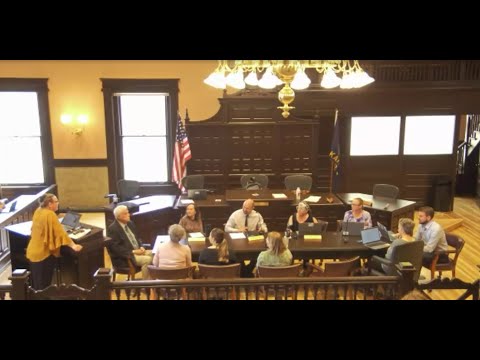
Brandy Nichols Brackovich, director of the Douglas County Self Help Center, told the Board of County Commissioners at a work session that the center opened to the public on May 1, 2023, and has recorded 1,420 completed intakes, including 268 intakes related to eviction matters.
The update, intended to introduce the center’s operations to newer commissioners and report progress to longer‑serving members, outlined staffing, volunteer support, grant funding and data limitations that affect how the county and partner agencies measure outcomes. Commissioners asked for more granular eviction data and clarification on which services are funded by county versus outside grants.
Brackovich said the center “was approved for funding during the summer 2022 budget cycle to begin for FY ’23.” She described a staffing mix that includes an eviction coordinator, Adelaide Mendoza, whose position was initially fully funded by a National Center for State Courts grant and has since been funded at 50 percent in subsequent budget years, and a VISTA member, Isabelle Hawkins, who coordinates volunteer schedules. Brackovich said retired and volunteer attorneys supplement center services; she named Marilyn Harp as a volunteer attorney who provides several appointments weekly.
The center provides guided interviews, forms assistance and limited legal information to people representing themselves in civil cases. Brackovich emphasized that the center does not provide legal advice or represent parties: “We are not to take the place of an attorney,” she said, and described the goal as helping self‑represented litigants complete accurate paperwork so hearings proceed without repeated continuances.
Staff described multiple grant relationships that support operations. Brackovich and other staff cited American Rescue Plan Act (ARPA) funds used to start the service, three Office of Judicial Administration (OJA) grants that supplement court services, a National Center for State Courts eviction diversion grant that funded the eviction coordinator initially, and an unsuccessful HUD application that would have funded additional staff and rental assistance. The center also has a one‑day‑a‑week Kansas Legal Services presence funded through an OJA access‑to‑justice grant; Brackovich said Topeka staffing recently stabilized and allowed that assistance to begin.
On eviction work, staff said the program serves both landlords and tenants and cannot be limited to one side under the court’s model. Brackovich noted statutory constraints that require LLC landlords to use attorneys while non‑LLC landlords may use the center’s services. The presentation reported a 12 percent decrease in writs of restitution and an increase in dismissal orders, which staff said likely reflects more people using available legal processes and administrative closures of stagnant dockets. Brackovich cautioned that OJA’s Odysee reports and current recordkeeping do not always capture the granular reasons for dismissals without hand‑tallying individual hearings.
Commissioners pressed staff for more detail on referral pathways to community partners and on the extent to which county rental and utility assistance dollars (HSC funds) influence eviction outcomes. Brackovich and other staff acknowledged multiple partners — including Kansas Holistic Defenders, Building Peace (landlord‑tenant mediation via an OJA grant) and local rental assistance programs — and said some partner activities are outside the court’s direct control. They reported 14 percent of service users were out‑of‑county or out‑of‑state callers and said the center refers those callers back to their home district courts or to the Kansas Judicial Council guidance when appropriate.
Staff described volunteer capacity and limits: the program recruited 47 volunteers and had 42 active slots in the reporting period, with a reported volunteer service value of about $25,000 and 874 recorded volunteer hours across the reporting window. Volunteers provide form assistance, basic process information and emotional support but are not authorized to give legal advice; supervisors and attorneys handle matters that require professional judgment. Brackovich said the program is exploring high‑school and university volunteer pipelines and noted that language capacity (including Spanish) has been important for some clients.
To address data gaps, the center plans to post a court navigator position to improve operational efficiency, collect additional hand‑tallied data where needed and harmonize reporting formats with county IT and OJA so grant reports align with county needs. Brackovich said the navigator’s work should make it easier to show how the program affects appearance counts and docket timing for types of cases such as uncontested divorces.
Commissioners requested copies of intake templates, the summons resource sheet that accompanies eviction summonses, and any statewide OJA materials on self‑help center strategy; staff agreed to provide available materials and to follow up with OJA staff on statewide tools. Brackovich told commissioners she intends the program to be sustainable beyond current staff and funding levels and said she and Court Administrator Linda Kester Vogelsang are working to align space, IT and operations as the program grows.
Douglas County officials said the program cannot yet attribute outcomes definitively to any single factor (for example, rental assistance versus mediation) because reporting systems do not consistently capture settlement reasons. Staff emphasized they will continue to work with OJA and community partners to improve data collection and to seek sustainable funding. The county will post the court navigator job and follow up with commissioners on requested materials and data clarifications.