Get Full Government Meeting Transcripts, Videos, & Alerts Forever!
Get email alerts on the Public Health Budget topic
No spam. Unsubscribe anytime.
JFAC approves public health enhancements including immunization, suicide prevention and rural physician incentive requests
Summary
The Joint Finance-Appropriations Committee approved FY2026 enhancements for the Department of Health and Welfare's Division of Public Health Services, adding 4 FTE and $25.083 million across general, federal and dedicated funds while also approving multiple language directives and cost-benefit reporting requirements.
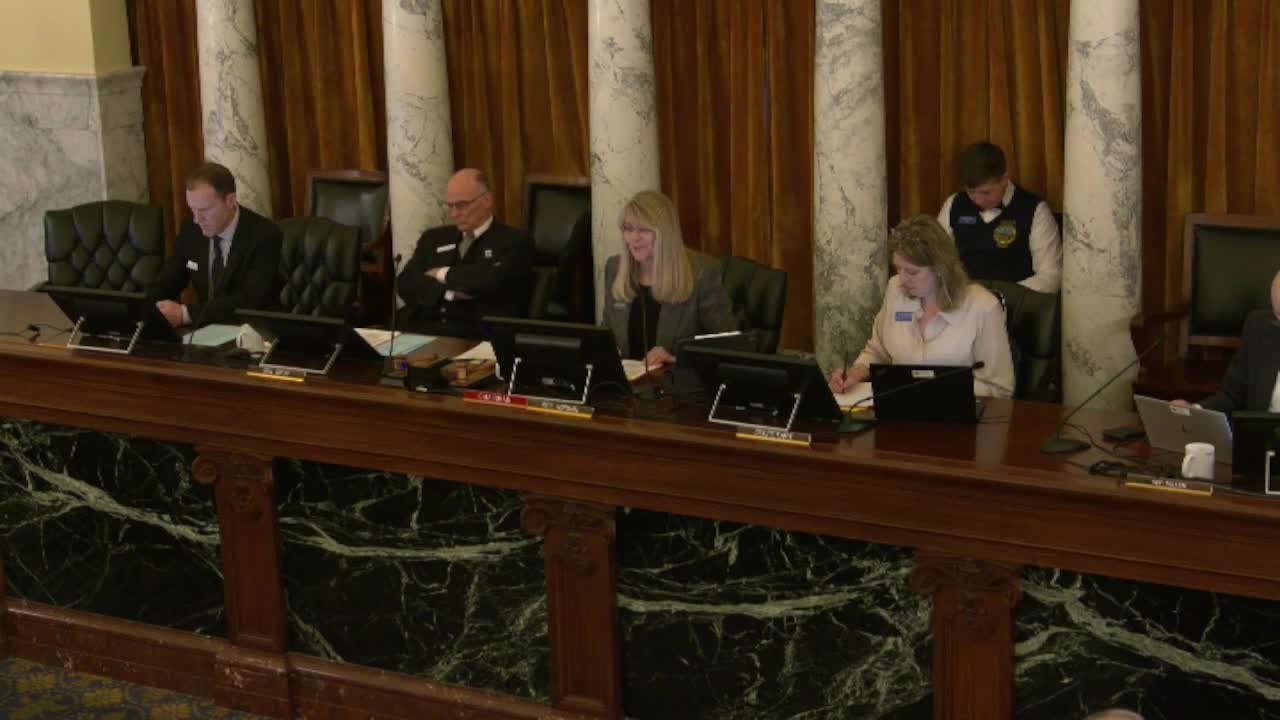
The Joint Finance-Appropriations Committee on March 12 approved fiscal year 2026 enhancements for the Department of Health and Welfare's Division of Public Health Services, adding 4 full-time equivalent positions and a net $25,083,000 in new funding across general, federal and dedicated sources.
The committee approved a package that included restoration of multiple programs (suicide prevention, drug overdose prevention, Alzheimer's and dementia services, the Fit and Fall Proof program, block grant funding, WIC and temporary assistance), ARPA-funded multi-year programs, funding moves for communicable disease prevention, and a $2.5 million allocation for the Idaho immunization program. The package also included a $500,000 ongoing governor's initiative for the rural physician loan repayment program and one-time amounts for HIV and hepatitis prevention.
The package was moved as a substitute motion by Representative Tanner and carried by roll call. The committee recorded a combined vote of 14 ayes, 4 nays and 2 absent/excused across both houses; the chair declared the motion passed with a due-pass recommendation.
Committee members discussed several items at length. Supporters said the rural physician repayment program helps recruit and retain clinicians in underserved areas by paying up to $25,000 a year over a four-year period and that Idaho faces shortages in active physicians per capita. Senator Wintrow and others cautioned against converting established prevention programs'notably the home visiting program and the immunization assessment fund'to one-time funding, saying it reduces predictability for hiring and ongoing service delivery. Representative Tanner and other members argued the one-time designation would give JFAC time to scrutinize program structure and duplication and is part of the committee's oversight role.
Separately, the committee approved multiple language directives and reporting requirements tied to the appropriation. Those directives require the Department of Health and Welfare to notify committee chairs when applying for federal grants; to analyze potential transitions of pass-through clinical-service grants from public health districts to federally qualified health centers and safety-net providers; and to identify and propose remedies for any double-billing between federal grants and Medicaid. The committee also approved language directing studies or transition plans for shifting the drug overdose prevention program to the Office of Drug Policy, transferring the Alzheimer's and dementia and Fit and Fall Proof programs to the Commission on Aging, and conducting cost-benefit analyses of moving the 988 crisis line and the state cancer data registry to alternative contractors or in-house operations.
The committee recorded separate roll-call votes or unanimous-consent approvals for those language items; some items were accepted by unanimous consent, while other items were the subject of recorded roll-call votes after objections.
The Division of Public Health Services package and the attached language now carry a due-pass recommendation to the full Legislature.
Notes: the committee's packet lists individual program restorations and ARPA allocations; specific line-item reductions and one-time/dedicated-fund switches are in the official fiscal packet and reflected in the motion recorded on the committee floor.