Get AI Briefings, Transcripts & Alerts on Local & National Government Meetings — Forever.
House panel advances bill to show tax impact if school bond or override fails
Loading...
Summary
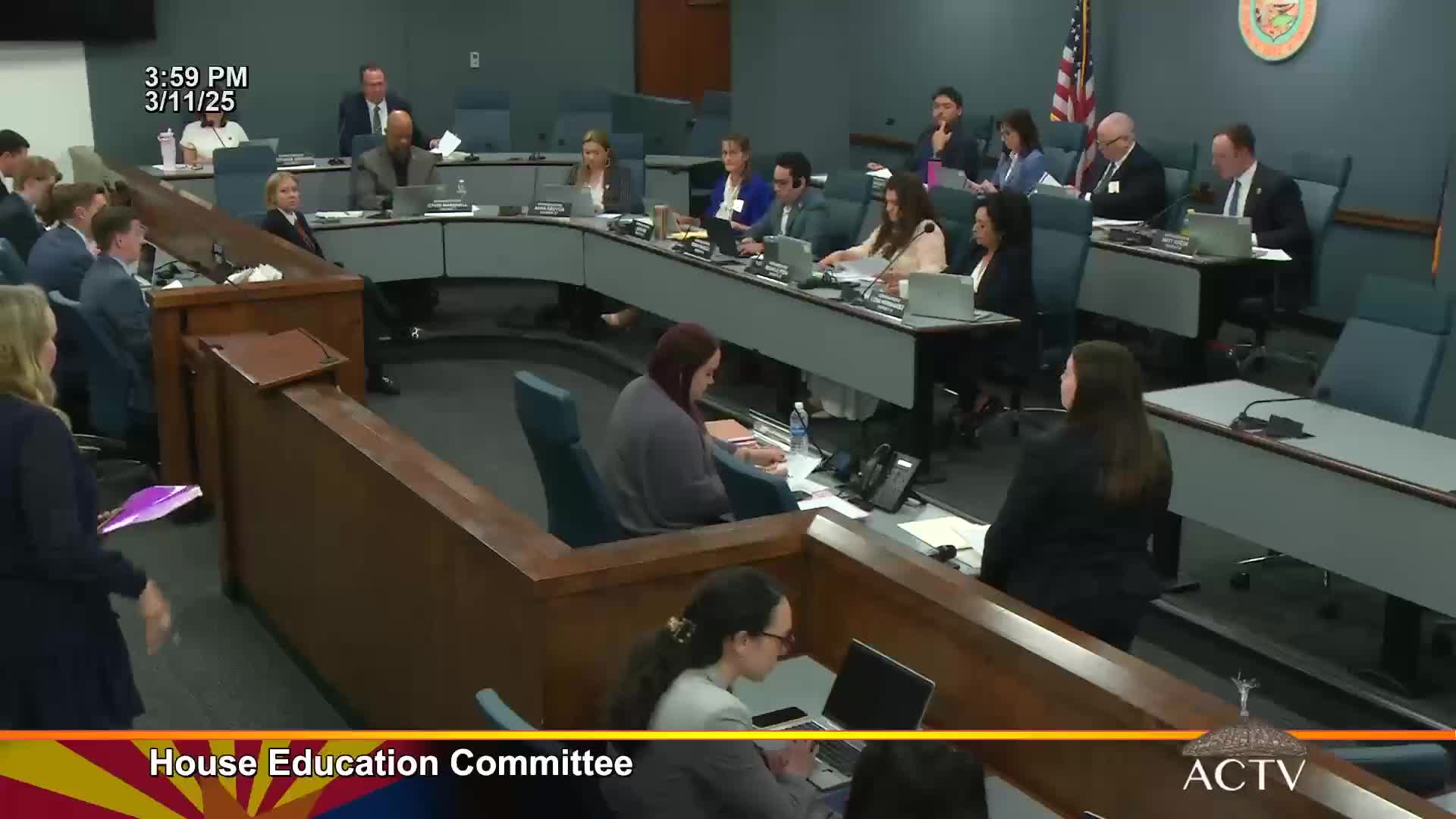
The House Education Committee gave a due-pass recommendation to Senate Bill 10‑91, which would require ballot language to estimate the amount by which secondary property taxes would be reduced if voters reject a school district bond or budget override.
Senate Bill 10‑91 was returned to the House Education Committee with a due-pass recommendation after members voted 7‑4.
The bill would add language to ballot materials for school district bond and override elections that estimates the amount by which secondary property taxes would be reduced if voters reject the continuation (a “no” vote). Chase, a committee staff member who explained the bill, said the change would allow voters to see the tax impact of a failing measure as well as the cost if it passes: "Senate Bill 10‑91 adds language to the ballot for an election to continue a school district budget override or to continue a school district's authority to sell and issue bonds ... That provides the estimated amount by which secondary property taxes will be reduced if the school district's electors reject the continuation."
Sponsor and members argued the measure fills an informational gap. Committee chair and others said current ballot analyses emphasize the impact of passage but do not always show the consequences of failure. Representative Gutierrez asked whether the information already appears in the mailed ballot pamphlet; a committee staffer and school finance representative Olsen responded that the existing materials show the tax rate or cost if the measure passes but do not provide the estimated tax reduction if the measure fails.
During roll call, members recorded 7 ayes and 4 noes; committee minutes show the motion carried. Members speaking in opposition raised concern that adding material to ballots could be duplicative because voters already receive tax and ballot information separately.
The bill now advances with the committee’s due‑pass recommendation.
Votes at a glance: The committee returned SB 10‑91 with a due‑pass recommendation, vote tally 7 ayes, 4 noes, 0 present, 1 absent.