Get Full Government Meeting Transcripts, Videos, & Alerts Forever!
Get email alerts on the Judiciary topic
No spam. Unsubscribe anytime.
Committee approves bill to make magistrate judge elections nonpartisan
Summary
A committee voted to advance House Bill 426, which would require magistrate judges to run in nonpartisan elections and place magistrates under the same code section that governs nonpartisan judicial contests.
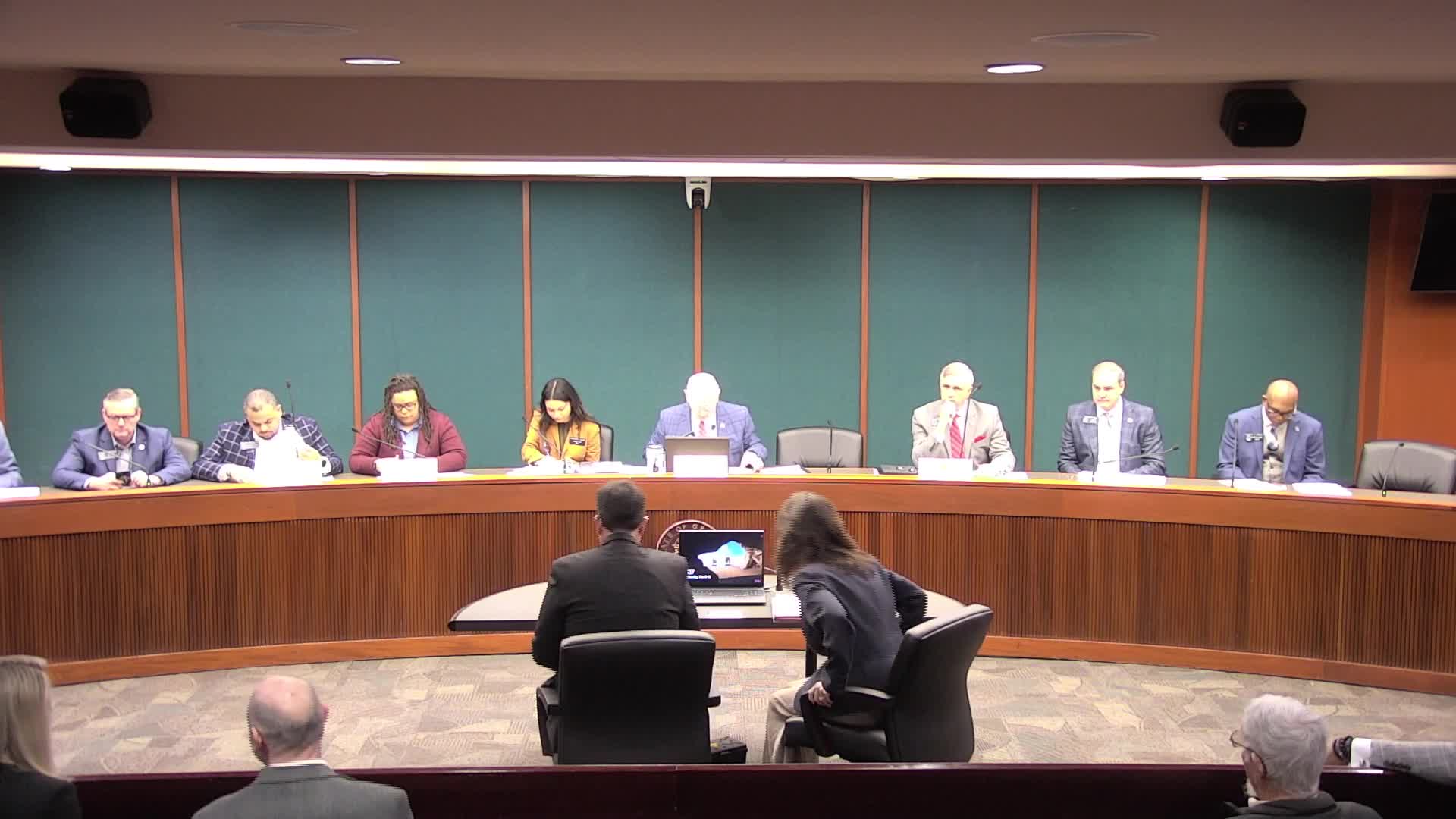
Representative Neu presented House Bill 426 to the committee and introduced Judge Bridal Murphy, a chief magistrate from Cobb County, who testified in support. "This bill proposes nonpartisan elections for all magistrate judges," Murphy told the committee, saying the change would place magistrates under the code section that governs how and when nonpartisan judicial elections are held.
Murphy argued that nonpartisan elections help judges comply with the code of judicial conduct and preserve the appearance of impartiality, saying, "A judge's duty is to impartially follow the constitution and the law. There is no room for partisan politics on the bench." When asked how many judges currently run in partisan elections, Murphy responded that "54 is on the probate side" and that "it's 38 magistrate judges running partisan elections, approximately 38."
Senators questioned whether other judicial offices would remain partisan. Committee members were told a separate companion bill would address probate judges, but that changing probate would require a constitutional amendment because probate judge elections are addressed in the Georgia Constitution.
Senator Robertson moved to pass the bill and Senator Kim Jackson seconded the motion. The committee voted to report the bill favorably; the transcript records two named no-votes: Estevez and Jones. No roll-call tally of all votes was included in the transcript.
Why it matters: If enacted, the bill would convert partisan magistrate contests to nonpartisan races across the state, a change supporters say would reduce partisan pressure on lower-court judges and help maintain public confidence in judicial impartiality.
What's next: The bill was reported favorably by the committee and is expected to proceed to the Senate calendar for further consideration.