Get Full Government Meeting Transcripts, Videos, & Alerts Forever!
Get email alerts on the Real Estate Disclosure topic
No spam. Unsubscribe anytime.
Committee delays vote on bill requiring sellers to disclose residential flood history after questions from realtors and attorneys
Summary
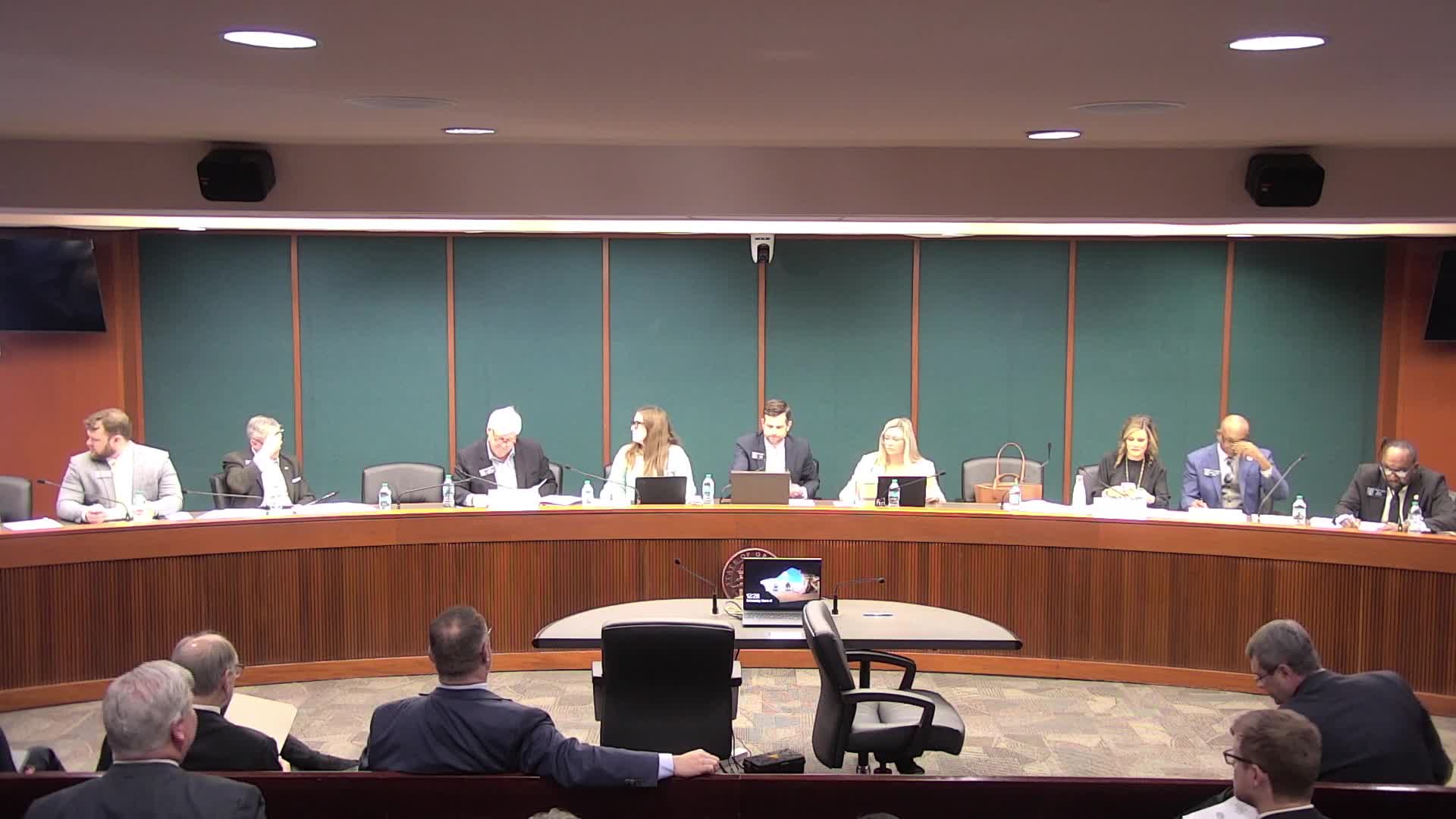
Senate Judiciary members heard extended testimony on House Bill 2618, which would require residential sellers to disclose flood history. Lawmakers paused action to allow drafting clarifications after questions about scope, liability and private remedies under the Fair Business Practices Act.
The Senate Judiciary Committee heard extended testimony on House Bill 2618 (referred to in committee as House Bill 618), a proposal to require sellers of residential property to disclose prior flood damage, but the sponsor asked to hold the measure to allow more work on definitions and liability language.
Representative Campbell, the bill’s sponsor, said the bill makes buyers’ rights comparable to renters’ rights: “While renters benefit from flood disclosures that require landlords to reveal a property's flooding history, many prospective homeowners are left uninformed about their property's past flooding incidents,” he said, arguing that buyers deserve the same information.
What the bill would do (as presented): The draft before committee applies to residential (one-to-four-family) real property sales and would require sellers to disclose prior flood incidents and related repair or insurance history. The committee was shown a substitute that pushes the effective date to Jan. 1, 2026 (to give realtors more time to adjust forms) and clarifies the requirement applies to residential properties. The sponsor also said the bill explicitly does not require sellers to perform independent investigation beyond their knowledge.
Major concerns and clarifications raised in committee: - Private remedies: Several senators asked whether the bill creates a new private cause of action by operating through the Fair Business Practices Act. One committee member read language in the draft referencing “all private remedies available under such part shall be available,” and counsel noted that FBPA provisions can carry treble damages for intentional failures to disclose. The committee discussed a civil penalty cap included in the draft: committee testimony referenced a civil penalty “capped at no more than $25,000 per violation.” - Scope of liability: Attorneys testifying in opposition, including Matthew Totten (chair of the legislative subcommittee for the real property section), urged limiting liability to the seller’s actual ownership period and narrowing who can be a defendant (suggesting excluding brokers or closing attorneys). Totten cited other states (Florida) that limit disclosures to the seller’s ownership period and warned broad language could create a new and extensive private-rights regime beyond current caveat emptor rules. - Practical forms and current practice: Jeff Ledford of Georgia Realtors testified that commonly used realtor disclosure forms already ask similar flood questions and that the association is neutral on the bill with the clarified changes; he requested clearer language to avoid inadvertently exposing brokers and agents to liability. - Definition of flood: Committee members pressed for precision in the statutory definition of “flood” and examples; counsel and witnesses discussed distinguishing storm surge/rising waters from routine plumbing incidents.
Committee action: After extended questioning and testimony from the real property bar and Georgia Realtors, the sponsor asked to hold the bill so committee members and stakeholders could reconcile remaining drafting questions, notably on the scope of remedies, limitation to the seller’s knowledge or period of ownership, and whether agents are captured by liability language. No committee vote was taken.
Next steps: The sponsor invited stakeholders to present suggested statutory language and said the bill may return after committee resolution of drafting and scope issues.