Get Full Government Meeting Transcripts, Videos, & Alerts Forever!
Get email alerts on the Immigration Enforcement topic
No spam. Unsubscribe anytime.
Senate hearing on bill to strip sovereign immunity from localities that flout immigration-detainer rules draws wide testimony
Summary
Senate Bill 21 would allow civil liability and waive sovereign immunity for local governments found not to comply with state laws on 'sanctuary' policies and ICE detainers; the measure drew opposition from municipal and civil-society groups and support from sponsors seeking accountability for noncompliant localities; the committee held a hearing.
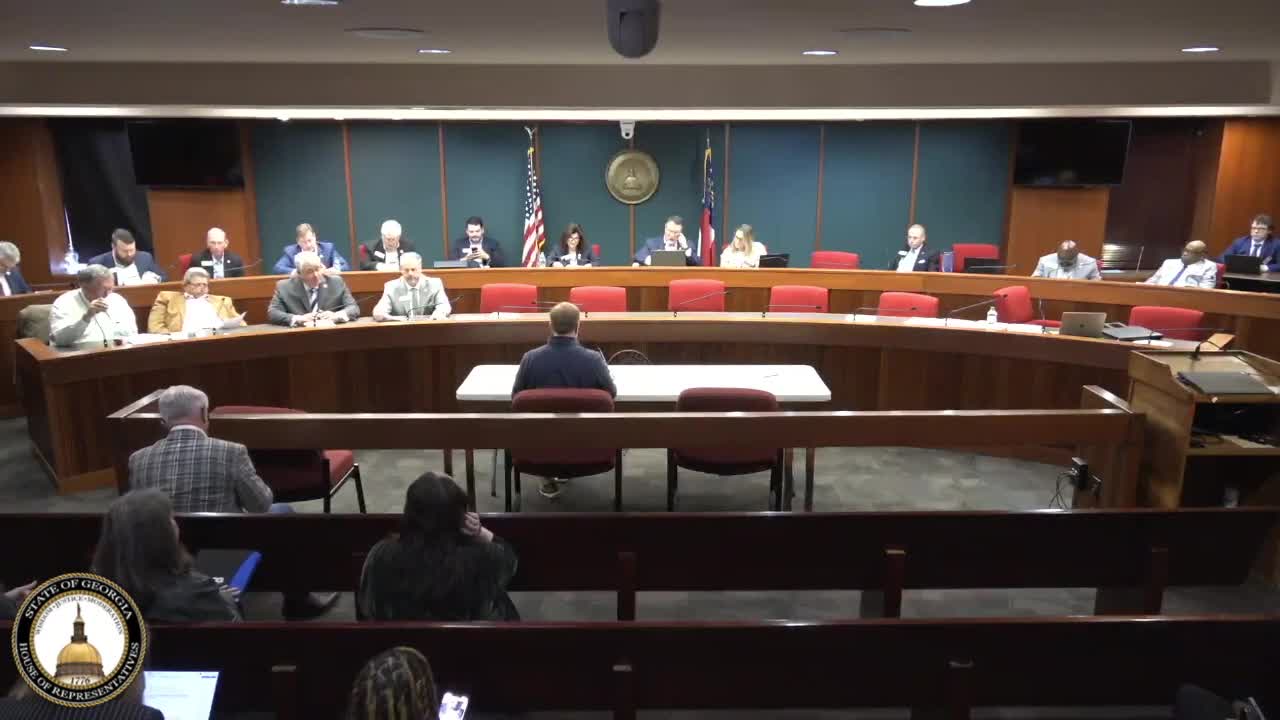
The Georgia Senate Committee on Public Safety and Homeland Security held an extended hearing on Senate Bill 21, a proposal that would expose local governments to civil liability and a waiver of sovereign immunity if they adopt or maintain policies that refuse to comply with state immigration laws or ignore ICE detainer requests.
Sponsor Senator Tillery said the bill is intended to hold local governments accountable when they do not follow state law on immigration enforcement and detainer cooperation. “If a city or county…were to have sanctuary policies…or were to not fulfill the immigration detainer orders…then they waive their sovereign immunity for acts that may happen because they did not follow those laws,” the sponsor told the committee, citing the Athens incident as an example of the harms the bill aims to prevent.
Representatives of municipal and county associations urged the committee to temper the measure. DJ Waller of the Georgia Municipal Association and Rucia Paterra, GMA general counsel, proposed amendments that would add a 15‑day cure period and a declaratory-judgment mechanism so a court could determine whether a policy actually violates state law before penalties or litigation proceed. Rucia Paterra told the committee that Georgia’s constitution already permits declaratory-judgment actions and that courts should be able to rule on whether an entity’s policy qualifies as a sanctuary policy before civil penalties follow.
The Association County Commissioners of Georgia recommended allowing existing House Bill 1105—which imposes penalties such as loss of certain state grants and permits for noncompliant jurisdictions—time to work, and asked for clearer drafting so liability would attach to the governing body that is violating the law rather than to related entities such as sheriffs' offices in ways that could shift costs to taxpayers.
Opponents from advocacy groups including the Galileo Impact Fund, Common Cause Georgia, and youth and immigrant-advocacy organizations warned that the bill would chill cooperation between immigrant communities and law enforcement, impose large litigation costs on local governments and schools, and risk harms to the state economy. Witnesses highlighted past experience with strict state immigration laws—citing 2011’s HB 87—and argued the bill risks reduced reporting of crime and labor shortages in key industries.
Committee members questioned practical details, including whether the proposed liability would apply to sheriffs or governing bodies, how detainer requests and timing should be defined (witnesses pointed to the standard 48‑hour ICE detainer window), and how declaratory relief and a cure period might work in practice. Several members urged narrower drafting and consultation with municipal and county stakeholders.
The committee held the item as a hearing only and did not vote. Sponsors and municipal representatives indicated they will continue to negotiate possible amendments, including the 15‑day cure and declaratory-judgment language proposed by GMA.