Get Full Government Meeting Transcripts, Videos, & Alerts Forever!
Get email alerts on the Licensing Reform topic
No spam. Unsubscribe anytime.
Subcommittee advances licensing reform to clarify criminal-record reviews and offer predetermination for applicants
Summary
Senate Bill 207, a wide-ranging licensing reform measure addressing how occupational boards review criminal records, was advanced by the Judiciary subcommittee after testimony from multiple stakeholder groups and members of the public.
The Judiciary subcommittee advanced Senate Bill 207, a comprehensive measure aimed at standardizing how state occupational licensing boards consider applicants' criminal records and offering an earlier predetermination process so prospective applicants can learn whether past convictions will bar licensing before they invest in training.
The sponsor described the bill as adding a required nexus analysis between the applicant's conviction and the licensed activity, standardizing written findings and appeals under the Administrative Procedure Act, and creating a predetermination procedure so an applicant can seek an advisory determination prior to education or training investment. The bill also requires boards to publish public guidance on how criminal records are considered and to report aggregated public data about licensing denials tied to criminal records.
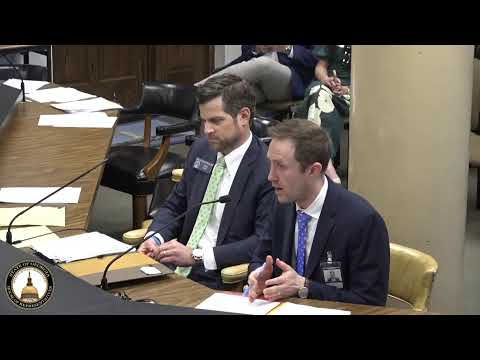
Witnesses and stakeholders including the Georgia Justice Project, Georgia Chamber of Commerce, Metro Chamber of Commerce, Faith and Freedom Coalition, and the Georgia Association of Criminal Defense Lawyers (represented in committee by Maisie Lynn Guertin) supported the bill as a bipartisan pathway to workforce reentry. Jeff Thompson, a witness with Americans for Prosperity, testified about personal barriers to employment caused by a past conviction and urged support for the sponsor's reforms.
Sponsors also described several narrower technical clarifications carried forward from prior sessions, including instruction to courts and agencies about when records restricted or sealed should remain private online, and clarifications around the Survivors First Act (trafficking survivor vacatur) to ensure filings and related orders remain under seal as intended.
The subcommittee recorded a motion to pass and advanced the bill by voice vote during the session.