Get Full Government Meeting Transcripts, Videos, & Alerts Forever!
Get email alerts on the Law Enforcement Definition topic
No spam. Unsubscribe anytime.
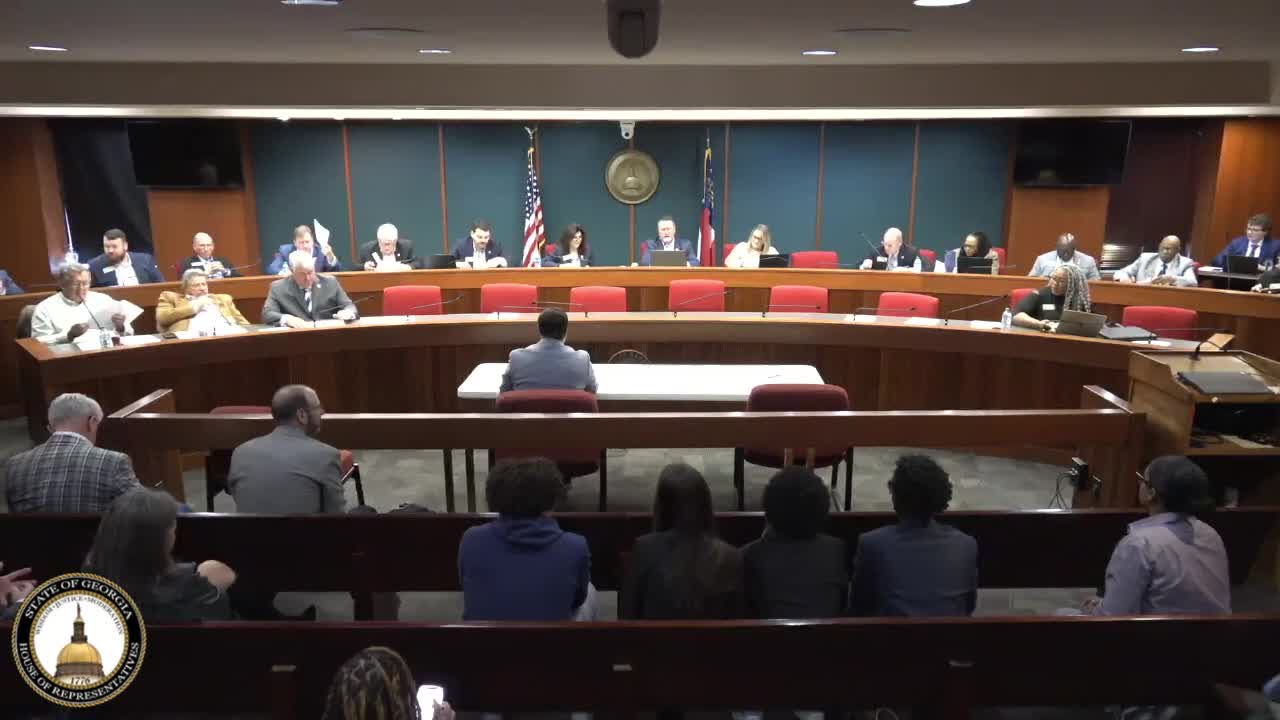
Committee hears debate over bill to expand 'law enforcement officer' definition to include certain federal agents
Summary
Senate Bill 99 would define 'law enforcement officer' in state code to encompass certain federal officers when assisting local agencies or acting in exigent circumstances; supporters say it offers liability protection, critics warn it could be broader than intended.
The Georgia Senate Committee on Public Safety and Homeland Security held a hearing on Senate Bill 99, a proposal to clarify the statutory definition of “law enforcement officer” so it can include certain federal officers when they are assisting state or local agencies or must act immediately to protect public safety.
Sponsor Senator Whit Robertson said the change is meant to narrow uncertainty in statutes that allow arrests and other interventions but do not define who qualifies as a law enforcement officer for that purpose. “The simplest way to resolve this…to allow federal partners who are in a situation where they either witness or are assisting law enforcement officers to make that arrest would be to define law enforcement officer in title 16,” the sponsor said.
Supporters including attorney Lance LaRusso, who described decades of experience as a prosecutor and certified peace officer, told the committee the bill is narrowly drafted and does not convert federal agents into Georgia-certified peace officers or allow them to obtain search warrants under state procedures. LaRusso described existing training differences and said federal basic training (FLETC) includes substantial Fourth Amendment and criminal-procedure instruction taught by federal attorneys.
Opponents, led by Maisie Lynn Guertin, executive director of the Georgia Association of Criminal Defense Lawyers, urged the committee to adopt narrower language. Guertin said expanding Title 16’s definition could have broader consequences because Title 16 references appear throughout state criminal code and that the same policy aim could be achieved by amending the citizen’s-arrest statute in Title 17 to encompass federal officers working with state task forces.
Committee members pressed over questions including how the bill interacts with POST (Peace Officer Standards and Training) certification and the extent to which federal officers receive Georgia-specific training. Witnesses said federal agencies typically provide state-specific briefings and that Georgia’s POST provides gap training for officers moving in from other states, but that federal basic academies cover substantial constitutional and Fourth Amendment materials.
Law-enforcement associations including the Georgia Association of Chiefs of Police and the Georgia Sheriffs’ Association were noted as generally supportive; some groups, including the Georgia Association of Criminal Defense Lawyers, recommended narrower language or alternative drafting that would put the federal officers into the Title 17 arrest statute rather than into Title 16.
The committee treated the measure as a hearing only and did not take a final vote. Sponsors and opponents said they will continue to negotiate language to address training, deputization and limits on investigatory powers.