Get Full Government Meeting Transcripts, Videos, & Alerts Forever!
Get email alerts on the Forensic Competency topic
No spam. Unsubscribe anytime.
Panel approves amended bill shortening restoration timelines for nonviolent misdemeanants and requiring pre-evaluation hearings
Summary
The Judiciary subcommittee amended and passed a bill updating forensic competency procedures: it shortens restoration timelines for nonviolent misdemeanors (to 120 days), requires a court hearing when competency concerns are raised, and creates an automatic dismissal/referral process if restoration is not achieved within the new timeframe.
The Judiciary subcommittee approved an amended measure updating procedures when a defendant's competency to stand trial is questioned. Sponsor testimony described the bill as the product of the advisory committee on forensic competency and the Department of Behavioral Health and Developmental Disabilities (DBHDD).
Key changes reflected in the committee's discussion and adopted amendment include a hearing requirement when competency concerns are raised, a shorter timeline for certain nonviolent misdemeanors, and an automatic dismissal-and-referral process if restoration is not achieved within the new period.
Sponsor and committee members said the bill directs judges to hold an initial hearing when information is presented that raises a bona fide doubt about competency; the committee adopted a "shall hold a hearing" amendment (Silcox amendment) clarifying the court's duty to convene that proceeding. The transcript records committee discussion about whether the hearing should be ex parte, whether evidence must be filed under seal, and protections that the accused cannot be compelled to testify at the pre-evaluation hearing. The amendment the subcommittee adopted inserts language that the prosecuting attorney may submit information, that any evidence submitted by either party be filed under seal, and that the accused not be compelled to testify; evidence presented by the accused can be ex parte.
The bill reduces the period for initial evaluation scheduling on nonviolent misdemeanors and shortens the restoration timeline: for nonviolent misdemeanors, the restoration period was changed from nine months under prior practice to 120 days in the bill text presented in committee. If the accused cannot be restored within the applicable timeframe, the bill establishes an automatic dismissal of the charge with referral to the community service board unless the prosecutor files a written objection and the court otherwise orders.
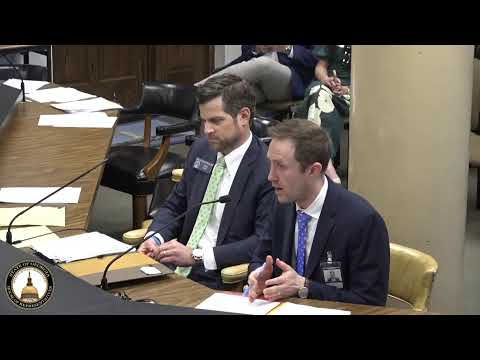
Testimony supporting the bill came from the Georgia Association of Criminal Defense Lawyers (represented by Maisie Lynn Guertin) and Coweta Circuit District Attorney Herb Cranford, both of whom participated in the advisory committee that developed the recommendations. DA Cranford told the committee that more than 70% of felony referrals historically returned a finding of competence after initial evaluation, and he described operational backlogs and long waits for hospital beds and initial evaluations. Witnesses and the sponsor said the bill seeks to add due-process gatekeeping early in the process while speeding resolution for lower-level, nonviolent cases so defendants are not held in jail for extended periods awaiting competency processes.
The subcommittee passed the bill as amended by voice vote.