Get Full Government Meeting Transcripts, Videos, & Alerts Forever!
Get email alerts on the Education topic
No spam. Unsubscribe anytime.
Bill would update Georgia code to reference 'successor' to federal Education Department
Summary
Senate Bill 154 would add 'or its successor' to references to the U.S. Department of Education in state code so that professional licensure and statutory references continue to function if the federal agency is abolished or restructured. The committee adopted a contingent-effectiveness amendment and passed the bill.
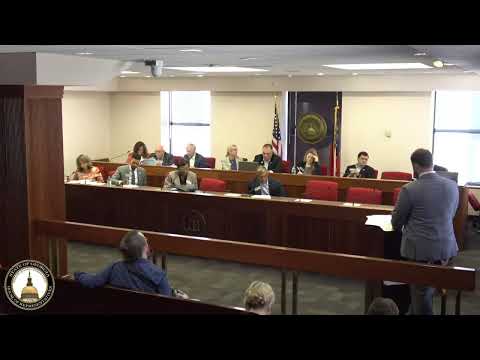
Senator (author from the 50th) brought Senate Bill 154 to amend multiple code sections that currently reference the U.S. Department of Education by inserting a phrase such as “or its successor,” so Georgia law would continue to function if the federal agency were abolished or its responsibilities reassigned.
The sponsor said he compiled roughly 25 code references to the U.S. Department of Education and described consequences for licensing and program references — for example, professional education programs and federal student-aid references — if the federal agency were to be terminated. Members asked whether the change would be revisited if a successor agency were named; the sponsor said the General Assembly could update the code later to identify a successor if necessary.
Legislative Counsel recommended applying contingent effectiveness language to sections 1 and 2 of the bill while allowing a cleanup provision (section 3 of the draft) to take effect on a fixed date. The committee adopted amendments to make sections 1 and 2 effective only upon an official act of Congress abolishing or otherwise terminating the U.S. Department of Education; section 3 would become effective July 1, 2025. The amendment passed on committee voice vote, and the committee then approved the bill in the hearing excerpt.
Committee members characterized the change as a preventative, housekeeping step to avoid licensing or administrative gaps if federal structure changes occur; the sponsor said the approach is precautionary and would avoid reactive emergency fixes.