Get Full Government Meeting Transcripts, Videos, & Alerts Forever!
Get email alerts on the Voter Rolls Data Audit topic
No spam. Unsubscribe anytime.
Presenters urge audits and tighter data validation of Georgia voter rolls; committee hears competing views
Summary
A group of private citizens and data analysts urged the House Governmental Affairs Committee to fund audits and implement automated data validation to remove ineligible registrations, while committee members and another speaker warned against relying solely on certain data sources and emphasized federal protections for voters.
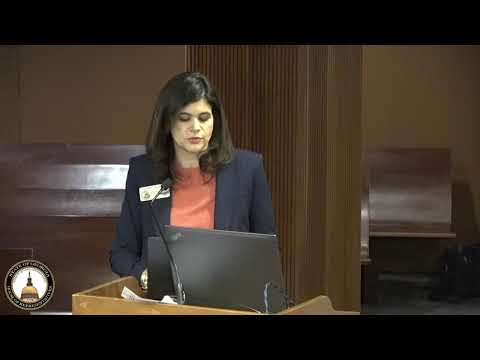
A series of presentations to the House Governmental Affairs Committee on [date not specified] urged state action to audit Georgia’s voter rolls, automate data validation and tighten processes the presenters said allow ineligible registrations to remain active.
Dr. Rick Richards, a private researcher who said he has worked with large population data since 1980, told the committee he analyzed the Georgia voter roll and United States Postal Service change-of-address data and found what he described as widespread data problems. “A simple standard data validation could fix 2,900,000 errors in our current Georgia voter roll,” Richards said. He listed examples he said were present in the February voter roll: registrations with only a first initial (5,986), hundreds of thousands of records with incomplete middle-name fields, roughly 311,000 registrants with no contact in six years, and more than a quarter-million registrants his analysis matched as having moved out of state via the USPS National Change of Address (NCOA) data.
Richards urged an independent audit and changes to law that would clarify county authority to remove ineligible registrations. “If for no other reason, I would request that you allow an amount in the budget to do an independent audit of the voter roll,” he said, adding that he believed counties were failing to remove registrations that, in his view, met the statutory criteria for removal.
Philip Davis and Mark Davis (separately) described technical and security issues they said they found in election-related databases and tabulation systems released to them via open-records requests. Philip Davis described database tables that he said contained passwords, encryption keys, and certificates in readable form, and he said some systems used hard-coded or default passwords (an example he cited was “DVS Corp 08!”). He warned that such findings indicated weak security practices that could be exploited and called for greater transparency about cybersecurity reports and mitigation. "These systems are not just Georgia. There are over 40% of The U. S.", he said, urging stronger audits and oversight.
Mark Davis and Jason Fraser urged procedural fixes, including independent third-party audits, routine verification of addresses and better county guidance on how to handle registration challenges. Fraser detailed limits he said exist in current challenge processes: county moratoria, restrictions around accepting outside data sources, and the seventy-to-ninety day timing windows that can make challenges impractical in busy election years. He recommended clearer state guidance, improved data-sharing and allowing more timely challenges of registrations that appear to be out of state.
Committee members pressed presenters on methods and sources. Representative Adesanya said the Secretary of State’s office had already provided updated numbers to committee members and questioned some of the presenters’ counts; Richards replied he used the Secretary of State data set as of February and USPS data for his analysis and offered to share his methods. Representative Draper cautioned that some datasets, including NCOA, are not sufficient on their own to prove a registrant is ineligible and stressed the federal rules that aim to protect people who remain eligible from being removed improperly. “Accuracy is also if a person is eligible to vote, they shouldn't be taken off the voter rolls,” Draper said, asking the committee to weigh both risks.
No formal committee action was taken on the presentations. Several presenters asked that the Legislature consider a standing committee or regular intersession reviews to study voter data management, cybersecurity of election systems and to make monthly voter-roll data publicly available. Presenters also urged that the Secretary of State’s office and counties improve transparency around a portal some presenters called “Firefly,” and to release external cybersecurity audits they said had been conducted.
The chair said committee staff would distribute the presentations and contact information to members and that the committee would consider follow-up steps.
Ending: Presenters asked for a standing legislative committee and increased transparency and auditing; committee members asked staff for the presentation materials and follow-up information so lawmakers could examine the claims and consider possible responses.