Get Full Government Meeting Transcripts, Videos, & Alerts Forever!
Get email alerts on the Education topic
No spam. Unsubscribe anytime.
Senator Kennedy proposes attendance review teams, limits expulsions tied to absenteeism
Summary
Sen. John Kennedy introduced SB123 to address rising chronic absenteeism by expanding duties of school climate committees, requiring local attendance review teams when district or school absenteeism crosses set thresholds, and prohibiting expulsions solely for unexcused absences. The committee voted to pass the bill.
Senator John Kennedy introduced Senate Bill 123 to require local, locally driven responses to chronic student absenteeism and to remove expulsions as a disciplinary response for unexcused absences.
Kennedy told the committee that chronic absenteeism — defined in the bill as missing 10 percent or more of school days — rose from about 9.5 percent pre-COVID to roughly 25.5 percent during the pandemic and remained around 22 percent last year. He said that rate equates to roughly 360,000 Georgia students missing at least 18 days in a 180-day year. Kennedy said SB123 is not a silver-bullet solution but is intended to raise awareness and prompt local problem solving.
The bill would place chronic absenteeism under the existing school climate committee structure and require an attendance review team when a school system’s chronic absenteeism rate reaches 10 percent or more. A separate school-level “advanced review team” would be triggered if an individual school’s rate reaches 15 percent or more. Kennedy also told the committee the bill would exclude excused absences from the chronic-absenteeism calculation and would remove statutory authority for school systems to expel students solely because of unexcused absences.
Committee members and speakers pressed for details about causes and local variation. Representative Lepton said DeKalb County is already using intensive contact methods (texts, calls, letters) and asked whether absenteeism is concentrated in urban or rural districts; Kennedy replied the problem is widespread and said only one county was below 10 percent when the data were analyzed. Representative Adena and others discussed family, transportation and health issues as contributing factors; Kennedy and witnesses said the causes vary by family and locality and that the planned study committee would dig deeper into root causes.
Several members asked whether school climate committees currently meet; Kennedy and staff said some are active while others are dormant. The attendance review team provision is new, Kennedy said, and intended to focus locally on individualized remedies. Committee members noted existing supports such as truancy officers and recent budget proposals for social workers that could operate alongside the bill’s teams.
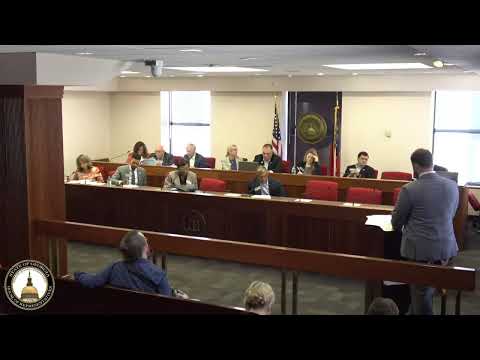
During committee action a member moved that the bill do pass; the motion was seconded and the committee voted in favor (recorded in the hearing transcript as an approval with no detailed roll-call provided). SB123 will proceed from the committee as recommended.
The bill’s author and multiple committee members emphasized that the legislation aims to prompt locally tailored interventions rather than prescribing a single statewide fix.