Get Full Government Meeting Transcripts, Videos, & Alerts Forever!
Get email alerts on the Performing Arts Funding Collaboration topic
No spam. Unsubscribe anytime.
Columbus arts leaders cite local funding, collaboration and audience growth amid federal uncertainty
Summary
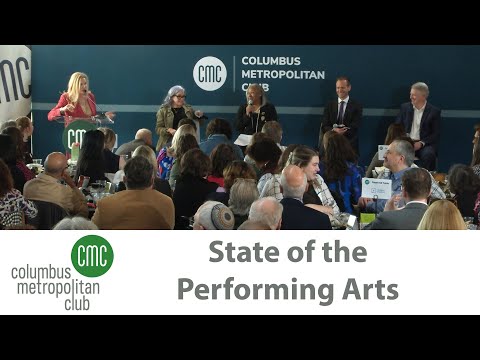
Panelists at a Columbus Metropolitan Club forum described stronger local funding and widespread collaboration as stabilizing forces for the city’s performing arts community, while warning that uncertainty around federal support and education funding could pose risks to programs, workforce pay and future risk-taking.
Columbus arts leaders told an audience at a Columbus Metropolitan Club forum that strengthened local support and deep collaboration are helping performing arts organizations recover from the pandemic and expand programming — but they expressed concern about uncertainty in federal funding and education budgets.
The panel convened by Jamie Goldstein, chief creative officer for the Greater Columbus Arts Council, brought together Stacy Board, CEO of Shadowbox Live; Regina Ann Campbell, CEO of the King Arts Complex; Daniel Walshaw, chief operating officer of the Columbus Symphony; and Chad Whittington of CAPA. Moderated by Doug Buchanan, editor in chief of Columbus Business First, the discussion ranged from audience growth and capital projects to arts education, pay for artists and the potential loss of National Endowment for the Arts support.
“We're very, very lucky,” said Stacy Board, CEO of Shadowbox Live, describing the theater’s post-pandemic recovery and noting returning audiences and new creative approaches to programming. Jamie Goldstein noted that the Greater Columbus Arts Council (GCAC) “invested nearly $23 million right back into this community” last year and that a 2018 ticket fee has been a key local funding source.
Panelists credited multi-source local support and close inter-organizational collaboration for recent gains. Daniel Walshaw of the Columbus Symphony called the local arts community “relevant” and pointed to partnerships such as the symphony’s recent collaboration on a production of West Side Story. Chad Whittington said the stability created by GCAC funding has enabled organizations to “dream big,” expand spaces and take artistic risks.
At the same time, speakers warned of risks if federal and state support shrinks. Several panelists cited unknowns surrounding the National Endowment for the Arts and other federal dollars that also flow through state and local programs. Chad Whittington noted that uncertainty about NEA funding “limits the ability to take risks,” and singled out small project grants — one example cited was a $10,000 NEA grant that helped a Contemporary Theatre production.
Panelists also emphasized that funding affects people directly: Shadowbox described recent capital and operating support that allowed the company to increase artist compensation and floor its staff on steady pay; Shadowbox has also expanded its front space and increased seating to 99. The Columbus Symphony reported a 23% increase in ticket sales and said it now programs roughly 250–275 events annually, adding about 300 new household buyers per concert on average.
Education and access were recurring themes. Panelists warned that arts education funding is frequently cut and described programmatic partnerships — for example, a collaboration with Columbus State Community College to train interpreters in American Sign Language for performances — intended to broaden access. Regina Ann Campbell stressed the “people piece,” saying she worried most about elders and children if education and social supports are reduced.
Speakers urged caution in responding to early signs of federal funding changes. “Keep doing the good work,” one panelist said, arguing against hasty cuts or reactionary moves before the full impact is known. At the same time they urged community and private philanthropy to help fill potential near-term gaps so smaller, risk-taking projects can proceed.
Panelists described near-term investments and projects to watch: Kappa (CAPA) discussed plans to repurpose an existing church building to create flexible, flat-floor performance space intended to reach new audiences; organizers said the project has a multi-million-dollar fundraising goal though the panel did not specify the current fundraising total. Shadowbox and other organizations said capacity and capital grants from GCAC have supported renovations and increased earned revenue.
The forum closed with program announcements and event reminders from panelists, including a Shadowbox premiere scheduled for June and CAPA’s ongoing programming at the Palace and Ohio theatres. Panelists framed their work as both cultural and economic: Goldstein said the creative sector supports tens of thousands of jobs locally and contributes billions in economic activity. “It is essential,” a panelist said, describing the arts as a unifier that brings diverse audiences together.
The discussion combined concrete program updates and fundraising needs with broader warnings about federal and education funding uncertainty, while repeatedly highlighting Columbus’s collaborative arts ecology and recent audience growth.