Get Full Government Meeting Transcripts, Videos, & Alerts Forever!
Get email alerts on the State Tax Policy topic
No spam. Unsubscribe anytime.
Senate panel advances bill accelerating Georgia individual income tax cut to 5.19%
Summary
The Senate Finance Committee voted to advance House Bill 111, which accelerates the scheduled decrease in Georgia's individual income tax rate from 5.39% to 5.19%; proponents said the reduction is included in the current budget and argued it returns money to taxpayers, while some members raised concerns about trade-offs with funding for services.
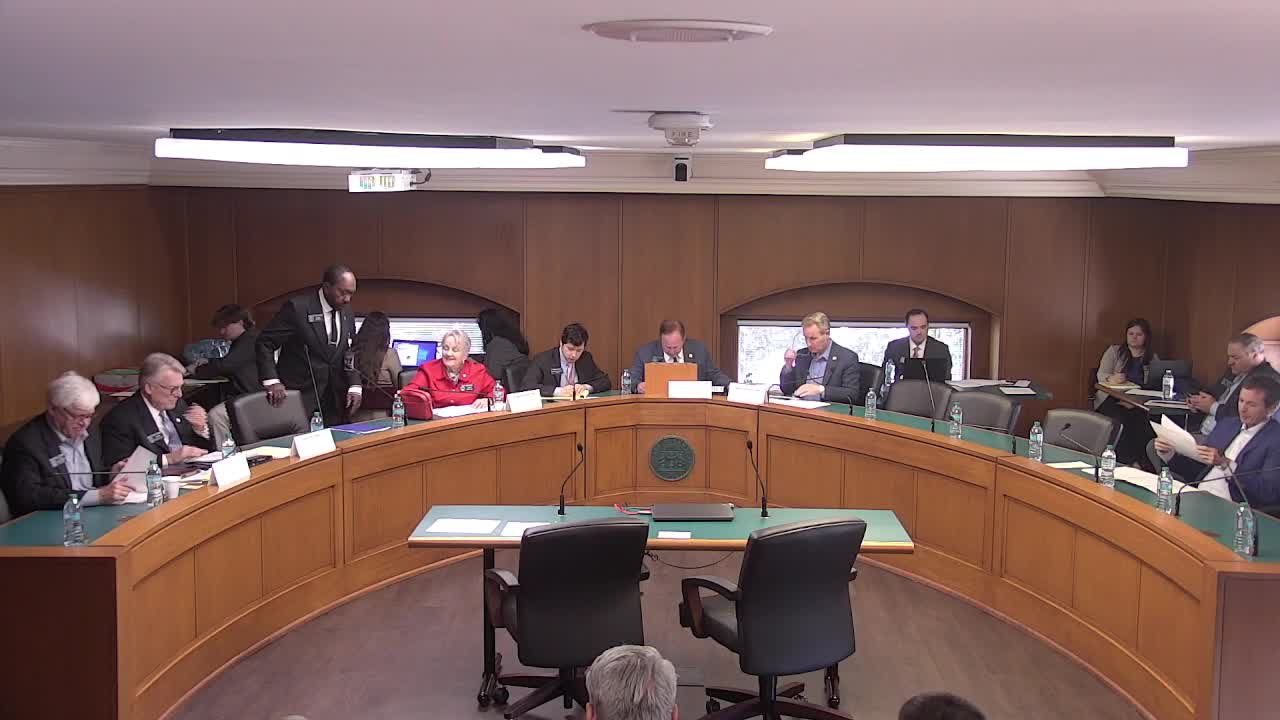
The Georgia Senate Finance Committee advanced House Bill 111 on a voice/hand vote after extended debate, approving a measure that accelerates an existing schedule of reductions in the state individual income tax rate from 5.39% to 5.19%.
Leader Hong, presenting HB 111 "on behalf of the governor," told the committee, "This will accelerate the tax cut for Georgia's individual income tax." He said the change was included in the current budget and that lawmakers could meet expenses and "give back money to our taxpayers."
The bill would accelerate reductions originally set out in earlier legislation. Hong and other supporters cited prior bills that created the multi-year rate path; members referenced HB 1437 (2022) and HB 1015 (passed last year) when describing the history of prior rate reductions and earlier accelerations. Calvin Sorby, identified in the hearing as a policy adviser for the governor, described the reduction as a uniform percentage change and said higher-income taxpayers will see larger dollar reductions because they pay more in taxes.
Committee members pressed supporters about fiscal trade-offs and the triggers that were written into prior law. Senator Dolezal asked whether a 10-basis-point change corresponds to roughly $350 million in revenue; the committee exchange concluded that the fiscal-note math was consistent with that estimate. Senator Estevez questioned whether reductions in revenues should be weighed alongside unmet needs such as waiver wait lists for services to people with disabilities and said votes on budgets do not mean all priorities are fully funded. Supporters replied that HB 111 is an acceleration rather than an automatic trigger and that the current budgeting projections and reserves made the acceleration possible.
Vice Chairman Albers, Senator Steele and others framed the proposal as a continuation of a multi-year policy to reduce rates, and several members described prior actions that increased the standard deduction and child deductions to benefit lower-income households. Senator Blackman and others noted that front-loading standard deduction increases had reduced the number of low-income filers who owe state income tax.
The committee recorded the motion to pass HB 111, moved by Senator Steele and seconded by Senator Albers. The chair counted hands: nine in favor, two opposed; the motion carried. Committee members said the accelerated reduction is incorporated in the current budget and that the statutory triggers remain in place for future automatic reductions.
What the committee did not do in this meeting was adopt new appropriations tied to the reduction or change the existing trigger language for future automatic cuts; supporters characterized HB 111 as a budgeted acceleration of reductions already planned in state law.
The committee advanced the bill to the Senate rules process for the next steps in the chamber.
Ending: The bill will return to the Senate calendar and must be considered in the full Senate; supporters said the reduction is already reflected in the budget and opponents said the committee should weigh remaining unmet service needs against lower tax revenue.