Get Full Government Meeting Transcripts, Videos, & Alerts Forever!
Get email alerts on the Historic Roofing topic
No spam. Unsubscribe anytime.
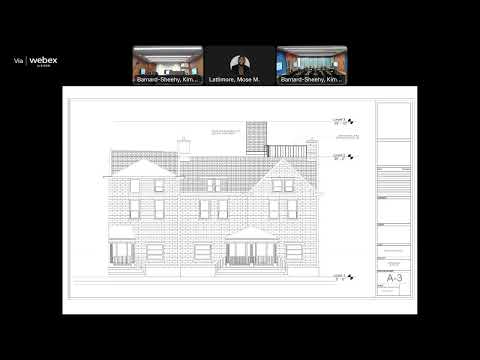
Historic commission continues request to replace slate roof at 239 Wilbur Avenue
Summary
The Historic Preservation Commission continued an application to replace a deteriorating slate roof with asphalt shingles after staff and the applicant agreed additional slate-specific contractor assessments and attic inspection documentation are needed.
The Historic Preservation Commission continued an application for 239 Wilbur Avenue on a motion to give the applicant time to produce additional documentation supporting replacement of an original slate roof with asphalt shingles.
Commissioners, staff and the property representative discussed repeated on-site repairs, contractor cost estimates and the limitations of an initial slate assessment. The applicant said repeated repairs typically cost about $12,000 and last months, and that pieces of slate frequently break when roofers make repairs. Staff said the submitted slate assessment did not include an inspection of attic framing and recommended a licensed slate contractor provide an updated evaluation that addresses both the slate and the underlying wood structure.
The commission’s action does not approve removal of the slate; rather, it continues the Certificate of Appropriateness application pending submission of a more detailed slate-contractor evaluation and documentation clarifying whether replacement is necessary. Commissioners emphasized the need for a Columbus-licensed slate contractor’s report that includes whether slates can be repaired in place, whether additional slates must be removed for underlying wood repairs, and whether a composite or specialty asphalt shingle would appropriately match the roof’s distinctive diamond-shaped slate profile.
Applicant testimony described ongoing leaks and tenant safety concerns, noting three to six slates have been found on the ground overnight and that routine repairs sometimes uncover additional damage. Staff noted that some neighboring properties use asphalt shingles and that composite slate products may be an option but must be evaluated in person and with physical samples. Commissioners requested an updated slate-company report that explicitly inspected attic wood and explained whether slate replacement was required given underlying structural conditions. Staff also reiterated that guidelines call for documentation from a licensed slate contractor in Columbus when assessing slate roofs.
The commission took the procedural step of continuing the application to a future hearing to allow the applicant to obtain the requested contractor reports and submit material samples. No final decision on materials or a COA issuance was made.
Looking ahead, staff said the applicant may return with an amended slate assessment, photos, and material samples. If the commission receives a report showing the slate is repairable, the applicant would need to demonstrate a long-term maintenance plan; if the report documents compromised attic framing requiring removal of slate, the commission indicated it would consider material-matching options that retain the building’s character while addressing tenant-safety and maintenance concerns.