Get Full Government Meeting Transcripts, Videos, & Alerts Forever!
Get email alerts on the Easement Closures topic
No spam. Unsubscribe anytime.
Council committee considers multiple easement and alley closures to clear site for VA hospital; staff warned some relocation work remains incomplete
Summary
The committee reviewed a set of ordinances to close alleys, easements and portions of public ways at 440 S. Houston Ave. for a planned VA hospital expansion and heard that some infrastructure relocation work (IDP) is still in progress, prompting discussion about timing and court steps required to make closures permanent.
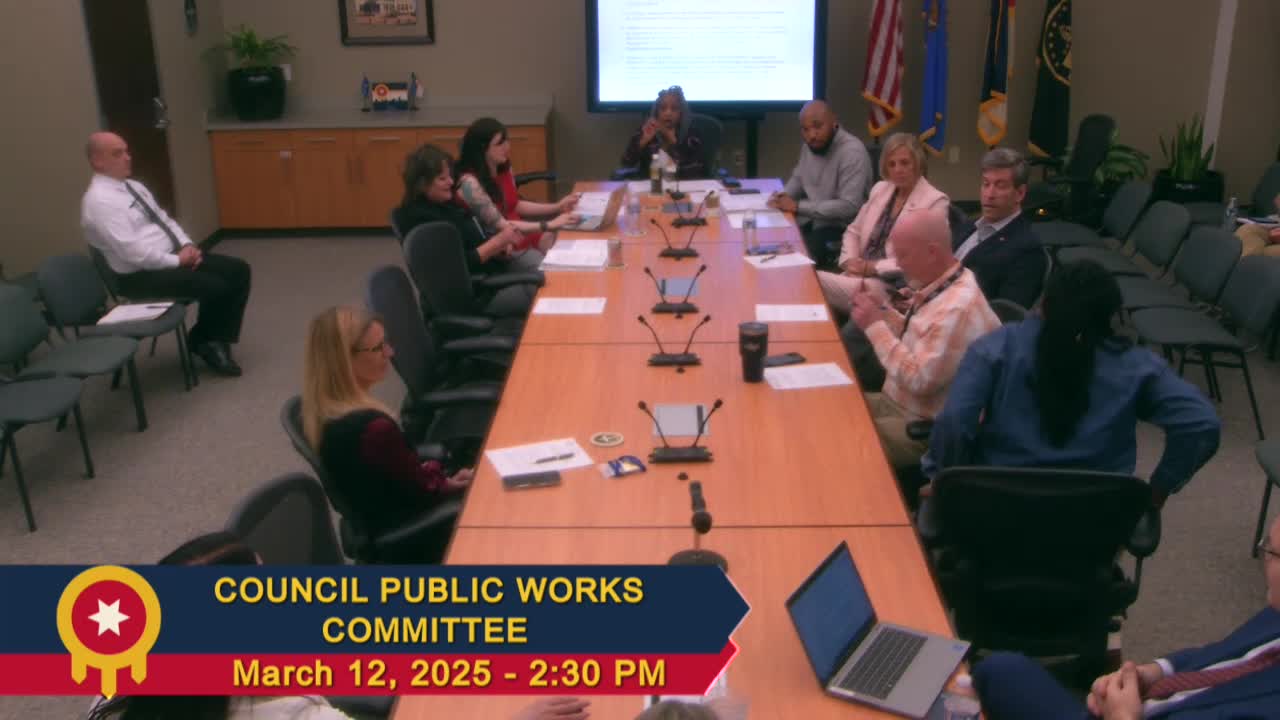
The Public Works Committee reviewed several ordinances to close alleys, public ways and utility easements near 440 South Houston Avenue to accommodate a planned expansion of the VA hospital.
Matt Lendy, a Public Works engineering representative, told the committee the proposed closures cover multiple miscellaneous alleys and easements and are intended to clear the site for future hospital development. Lendy said some utilities that formerly occupied easements have been abandoned and that work to relocate active utilities has been undertaken in coordination with utilities and contractors.
During discussion, staff and the applicant noted the work is time-sensitive because the federal agreement for the VA project requires cleared title and completed site work before the developer can turn property over to the federal government. Jeff Hall, who identified himself as representing the developer entity associated with the VA project, said shutting off water temporarily and coordinating other utility relocations were among the remaining tasks and that the schedule is tight. “We’re not trying to waive any work that’s happening… we are faced with the time frame,” Hall said.
Public Works staff said the ordinances can be placed on the council agenda for first reading on March 26 but cautioned that, under city practice, easements typically are not presented for closure until IDP (infrastructure development program) work and utility relocations are complete. Staff explained the closures are retroactive: after the council approves an ordinance and the city files the necessary papers, the final step to make a closure permanent is a district court action that quiets title; if relocation work later proves incomplete, the city retains the opportunity to raise the issue in court.
Committee members discussed expediting the ordinances to move the district court timeline forward and reduce the risk that federal project deadlines will be missed. One councilor asked whether the ordinances should include an emergency clause; staff said the 30-day window for effectiveness is typical and that the district court process can run concurrently with the council action.
The committee heard no formal vote during the meeting; staff said the mayor’s office had signed off to accelerate the items onto the council agenda so the council could consider first reading by March 26.