Get Full Government Meeting Transcripts, Videos, & Alerts Forever!
Get email alerts on the School Boundaries topic
No spam. Unsubscribe anytime.
Parents and Parkland city leaders press board to prioritize families affected by MSD boundary change; board says policy limits immediate relief
Summary
Parents and municipal leaders urged the School Board on March 18 to prioritize families who were rezoned away from Marjory Stoneman Douglas High School; the board said its current reassignment and boundary policies prevent an immediate fix and asked staff to outline a timeline for options.
Speakers from Parkland and Coral Springs urged the School Board of Broward County on March 18 to give priority seats to families who were rezoned away from Marjory Stoneman Douglas High School (MSD) during the district’s recent boundary process.
Several residents described frustration that a four‑year phase-out enacted less than two years ago now leaves MSD with open seats and prompted requests for reassignments. Renee Silva and other parents urged the board to "right a wrong" by offering choice priority for families affected by the C4 reboundary area so siblings and students could choose between Glades and MSD.
Lynn Martzell, executive director of intergovernmental affairs for the City of Coral Springs, said the Coral Springs Commission adopted a resolution requesting the board bring the reassignment priority back to a future meeting and that the city would advocate for affected families. "We are here requesting that this board bring this forward at a future meeting on behalf of our commission," she said.
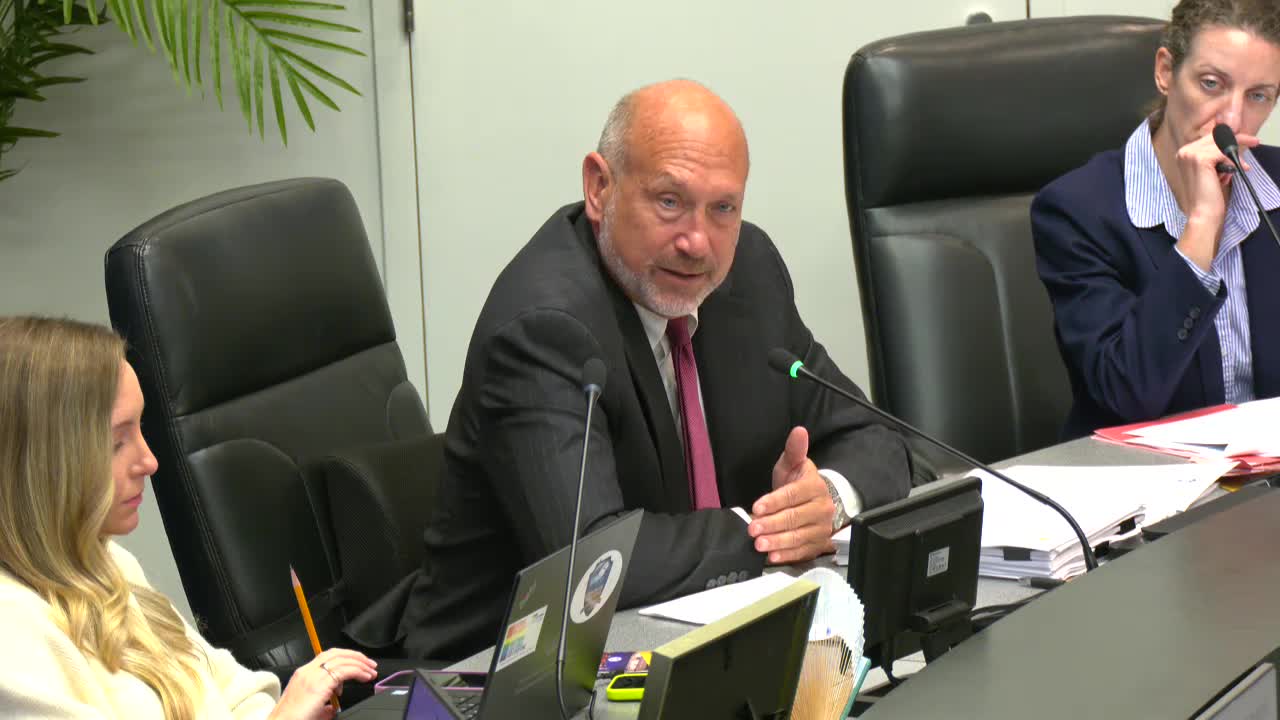
Board members and staff explained the district’s current policies limit immediate changes. Ms. Batista, general counsel, and Valerie Wanda, chief strategy and innovation officer, outlined the governing rules: reassignment priorities (military families, children of employees, foster placements, custody orders, siblings, and county residents) are defined in policy; the boundary process that produces a "boundary choice area" is a separate, rulemaking process that follows a multi-step calendar. Ms. Wanda noted the boundary process concluded with the board's January vote and said the district would need to follow the rulemaking timeline to create a new choice area.
Board members asked staff to investigate options. Doctor. Zeman and Doctor. Holness asked the superintendent for a timeline showing whether and how the C4 area could be made a "boundary choice area" as part of the next boundary cycle; the board indicated the change could not be enacted quickly enough for the coming school year without following the full boundary process. The superintendent and counsel confirmed reassignment priorities for the current season must follow existing policy and that creating a new choice area would require the longer boundary‑process timeline.
What the board did and asked: board members asked the superintendent to return with timing and options — including whether the C4 area could become a boundary‑choice area in the next boundary schedule — and asked staff to outline the legal and procedural steps and dates. No immediate priority reassignments or policy exceptions were approved at the March 18 meeting.
Public comment on the issue continued throughout the meeting; several speakers requested that seats in the reassignment window be given to families rezoned in the last cycle or that the district create a choice zone to allow those families priority selection.