Get Full Government Meeting Transcripts, Videos, & Alerts Forever!
Get email alerts on the Homelessness topic
No spam. Unsubscribe anytime.
Fort Smith study session focuses on homelessness, policing data and a proposed anti‑camping ordinance
Summary
City directors, police and homeless‑service providers discussed rising calls for service, consolidation of services at shelter campuses and a proposed ordinance limiting sleeping or camping in public; no ordinance vote was taken during the March 11 study session.
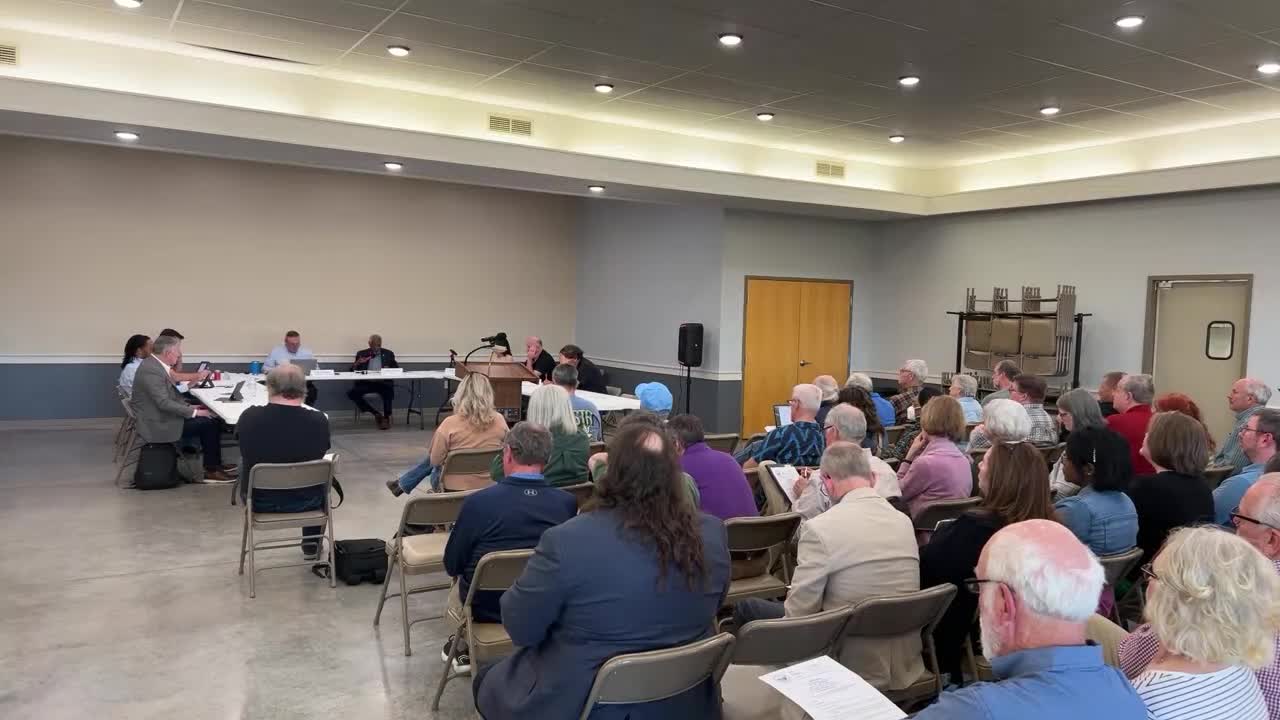
Fort Smith city directors and service providers spent a study session discussing homelessness, police calls for service in the downtown entertainment district and proposals for an ordinance that would restrict sleeping or camping on public sidewalks.
City staff and the police department presented data showing frequent police responses near shelters and downtown. Police Chief Baker and crime analyst Pam Miller described the data sources and limitations, and shelter operators and downtown business representatives urged the city to coordinate services and consider enforcement tools.
Miller said the department’s downtown maps include all calls for service from 2022 to 2025 and that some counts — for example, the downtown entertainment district — include traffic incidents and officer‑initiated contacts, which can inflate measures tied specifically to homelessness. A city staff summary presented to the board reported about 73 calls per year near Next Step Homeless Services and about 783 calls per year related to the “whole campus” site (roughly 2.14 calls per day), though Miller and others cautioned the numbers reflect the CAD call types and self‑initiated activity as well as dispatch calls.
Sharon Chapman, director of Next Step Homeless Services, and HOPE campus representatives described shelter and housing work: in 2024 Next Step housed 57 people through alternative sentencing programs and reported outreach and case management that staff said helps reduce recidivism. Speakers also said the campuses provide emergency shelter during inclement weather (one speaker cited 746 beds provided during recent cold spells) and that a majority of shelter clients have lived in the area a year or longer, based on the facility’s point‑in‑time survey.
Business owners representing the Central Business Improvement District (CBID) told the board they support a minimum rule that sleeping on sidewalks and camping in doorways not be tolerated and urged the city to consider an ordinance similar to one recently upheld in Grants Pass, Oregon. CBID representatives said consolidation of services at campus sites and stronger coordination among providers, the city and police could reduce the visible impacts downtown while still offering services to people experiencing homelessness.
Several directors discussed legal and practical limits. One director noted the city attorney vetted a previous draft of a proposed ordinance and that a Supreme Court ruling on Grants Pass provides legal context but does not mean a city ordinance would be immune from challenge. City staff noted new Arkansas legislation (referred to in the meeting as Act 238) that criminalizes unlawful squatting on private property; staff said enforcement on public property still requires coordination among departments and caution in application.
Directors and providers agreed on several practical next steps: staff will provide a revised ordinance draft and related materials for further review; the board asked staff for additional breakdowns of police data (for example, excluding vehicle stops from some charts); and the board requested an updated packet for discussion at a future meeting. No ordinance was adopted or formally introduced during the session.
Speakers emphasized the dual priorities of public safety and connecting people to services. Chief Baker and service providers repeatedly cautioned that data depend on how calls are coded in the CAD system and on how officer‑initiated activity is recorded, and several directors asked staff to return with clarified statistics and an updated ordinance draft before any formal action.