Get Full Government Meeting Transcripts, Videos, & Alerts Forever!
Get email alerts on the Disaster Housing topic
No spam. Unsubscribe anytime.
Hernando County ratifies disaster housing plan, delegates limited authority and ends local state of emergency
Summary
The Board ratified the county's disaster housing plan to place travel trailers for storm-displaced homeowners, authorized the county administrator to ratify donation agreements and voted to end the rolling local state of emergency that had been used for rapid approvals.
Hernando County commissioners on March 11 ratified a disaster housing plan to place temporary travel-trailer units for homeowners displaced by recent storms, approved procedures to execute donation agreements for units already placed and voted to end the county's local state of emergency while delegating limited signature authority for immediate placements.
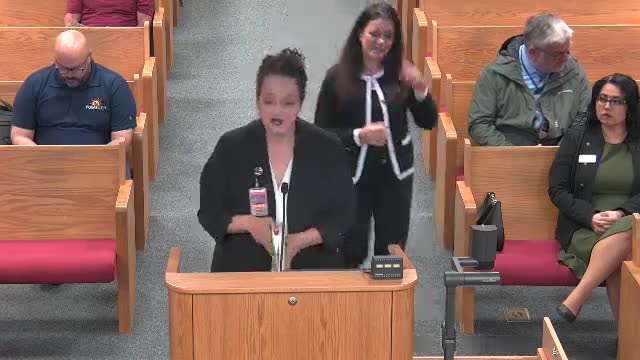
Emergency management director Aaron Thomas told the commission the state-run Elevate Florida program has drawn 82 county applicants so far and that the county had secured on-site applicant workshops from the Florida Division of Emergency Management to help residents apply. "We have a total of 82 applicants here specifically in Hernando," Thomas said. He described staffing and eligibility steps the county is using to screen and place units and said staff will continue case management through permit milestones and the 180-day mark after placement.
Fallon Alo of iPerametrics, introduced by Thomas as leading case management for the county, described the program as a "last resort option for homeowners who are still displaced from their primary residence due to the storms," and outlined vetting steps including septic inspections, income verification and FEMA/insurance coordination.
Angie Bonfardino, executive director of United Way of Hernando County, described United Way donations that covered hookup and title-transfer fees and said the nonprofit has been paying costs that individual homeowners would otherwise face. "Those dollars are going to good use," Bonfardino told commissioners, describing payments for electric hookups, title transfer fees and towing as examples of barriers the local donations have removed.
County administrator Jeff Rogers explained the board was being asked to ratify the disaster housing plan in the meeting agenda, to ratify donation agreements for already-placed units and to delegate limited authority to sign future donation agreements so unit placements would not be delayed by waiting for the next board meeting. Commissioner Loco moved to both delegate the limited authority to sign placement agreements as described and to end the local state of emergency; the motion passed on a voice vote.
Commissioners said they expected the county would not need more emergency ratifications. Rogers and Thomas said the delegation is intended only to accelerate placements after staff finishes checks including electrical permitting, site planning and safety inspections; all signed agreements would be brought back to the board for ratification.
The county presented status figures: the county had requested 49 units from the state, had placed seven travel trailers to date, had roughly 81 households providing documentation for review, had conducted roughly 35 site inspections and had eight additional cases ready for committee review.
Ending the local state of emergency does not remove the county's obligations to displaced residents, commissioners said; it removes the week-to-week ratification step the board used during the immediate surge response while preserving staff authority for contract execution under the delegated limits approved at the meeting.
Commissioners asked staff to report back after the applicant workshops and to provide ongoing status reports on placements, costs and any lessons from applicants' experiences with Elevate Florida.