Get Full Government Meeting Transcripts, Videos, & Alerts Forever!
Get email alerts on the Emergency Alerts topic
No spam. Unsubscribe anytime.
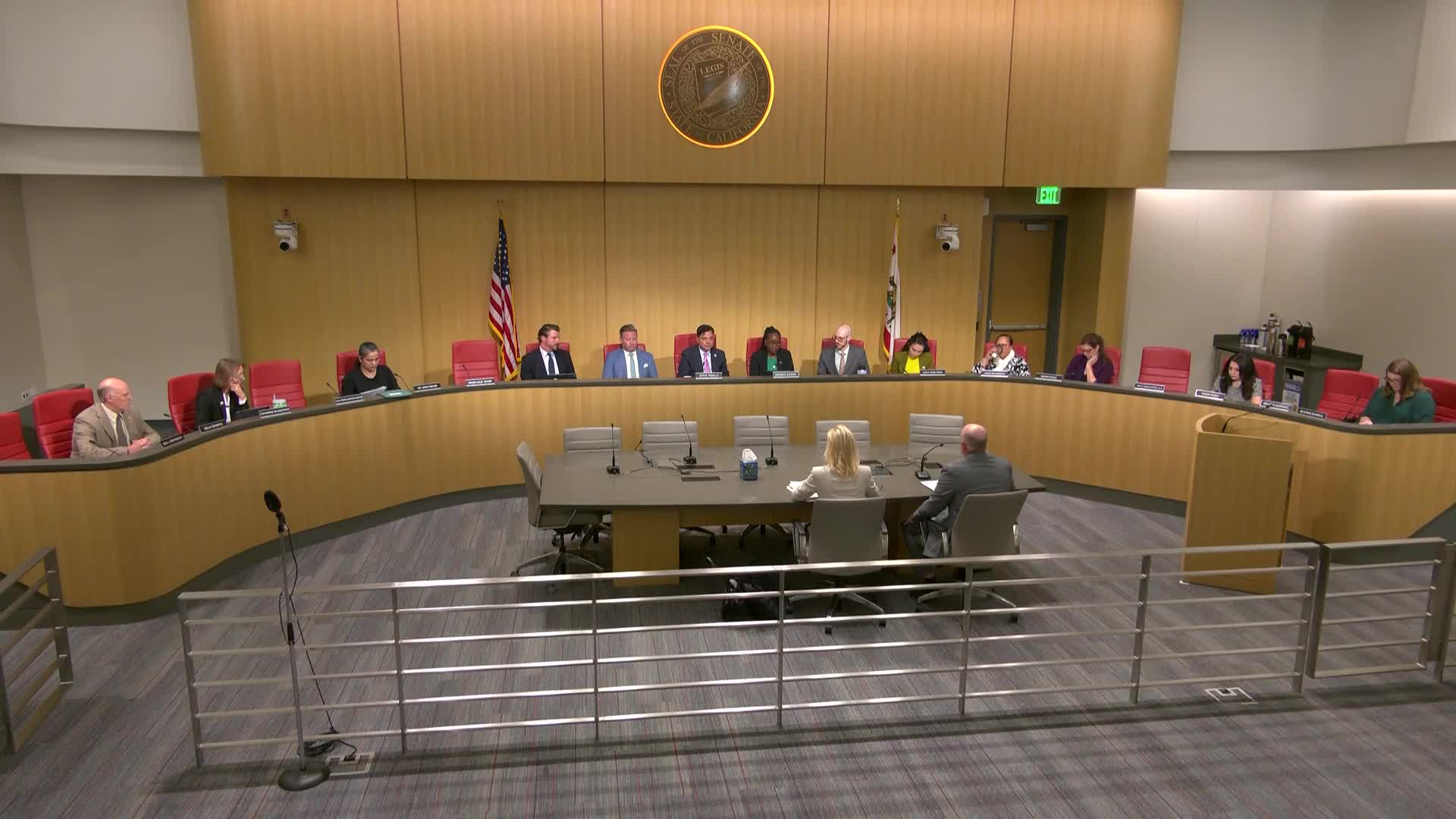
Senate hearing probes California emergency-alert failures after Los Angeles wildfires
Summary
Assemblymember Ransom opened a joint informational hearing on emergency alerting by telling lawmakers that a January evacuation alert intended for Kenneth Fire residents "was mistakenly sent to 10,000,000 other residents in Los Angeles County," and said that error eroded public trust in the system.
Assemblymember Ransom opened a joint informational hearing on emergency alerting by telling lawmakers that a January evacuation alert intended for Kenneth Fire residents ‘‘was mistakenly sent to 10,000,000 other residents in Los Angeles County,’’ and said that error eroded public trust in the system.
Why it matters: multiple legislators and local officials linked delayed or misdirected alerts to confusion and, in some cases, loss of life during the Eaton and Palisades fires. Senators and assemblymembers pressed the California Governor’s Office of Emergency Services (Cal OES) on how alerts are issued, who draws evacuation zones and what back-up options exist when local systems fail.
Cal OES assistant director Erica Baker and program manager David Meyer told the committees that the state maintains guidelines, training and a 24/7 State Warning Center that supports local alerting authorities. ‘‘The state's role is to support local governments through training, consultation, and guidance on alert and warning best practices,’’ Baker said, noting regular testing requirements for jurisdictions that use FEMA’s Integrated Public Alert and Warning System (IPAWS).
Cal OES described three primary public alert channels used by local authorities: IPAWS (which requires a memorandum of agreement with FEMA and compatible software), wireless emergency alerts (through carriers), and the Emergency Alert System for broadcast media. Baker said local governments retain authority over deciding alert zones and the precise language of evacuation notices because they best know local ingress/egress routes and shelter locations. She added the state can act as a backup: ‘‘If local alerting authority is unable to send notifications, they can ask Cal OES for assistance through our alert and warning program.’’
Lawmakers pushed on specifics. Senator Perez and other members said some Altadena residents received alerts hours after the fire spread; Perez said initial reporting indicated the West Side of Altadena received notices only at about 3 a.m., and that ‘‘all 17 of the deaths were also on the West Side Of Altadena.’’ Baker and other Cal OES officials acknowledged investigations and after-action reviews are underway and said the state will coordinate with Los Angeles County on reports and possible changes.
On compliance and testing, Cal OES said IPAWS-participating jurisdictions must test monthly and that the state monitors test activity. ‘‘We have 56 alerting authorities in the state and we manage all of them the same way,’’ a Cal OES official said, adding the office follows up when tests are missed. FEMA-required training for alert originators was described as mandatory; jurisdictions must maintain credentials for personnel authorized to issue IPAWS messages.
Several legislators asked whether California should consider a single statewide alert platform or fund smaller jurisdictions. Baker said cost estimates would require study: ‘‘the cost…we would have to do some type of an analysis’’ and offered to provide follow-up information. Cal OES staff highlighted free options available to jurisdictions, including the Rave platform (available to public safety entities through tariffs) and noted Zonehaven and other vendor platforms can be integrated if local agencies choose.
Legislators and witnesses repeatedly stressed the limits of technology: outages, cellular gaps and message fatigue can blunt effectiveness. Sheriff Eric Taylor of San Benito County described rural coverage issues and opt-in platforms that residents sometimes abandon. ‘‘Many people in my rural community lack cellular coverage or reliable Internet. The old copper wire phone lines are truly their only lifeline,’’ he said.
What lawmakers asked for: several members requested after-action reports from Los Angeles County and that the county present findings to the committee when completed. Assemblymember Richardson asked Cal OES to identify the budget line that funds the state alert program and to return with cost estimates for any proposed statewide system.
The hearing concluded with Cal OES reiterating its role in training, monitoring and technical assistance and lawmakers signaling follow-up requests and additional panels to gather more detail.
Ending: Committees said they will stay engaged as counties complete after-action reviews and Cal OES refines training, testing and technical assistance. Members signaled interest in more detail on costs, the practicality of centralized systems, and measures to improve redundant non-digital outreach for residents with limited connectivity.