Get Full Government Meeting Transcripts, Videos, & Alerts Forever!
Get email alerts on the Building Codes topic
No spam. Unsubscribe anytime.
Assembly committee advances bill to pause residential building-code updates for six years
Summary
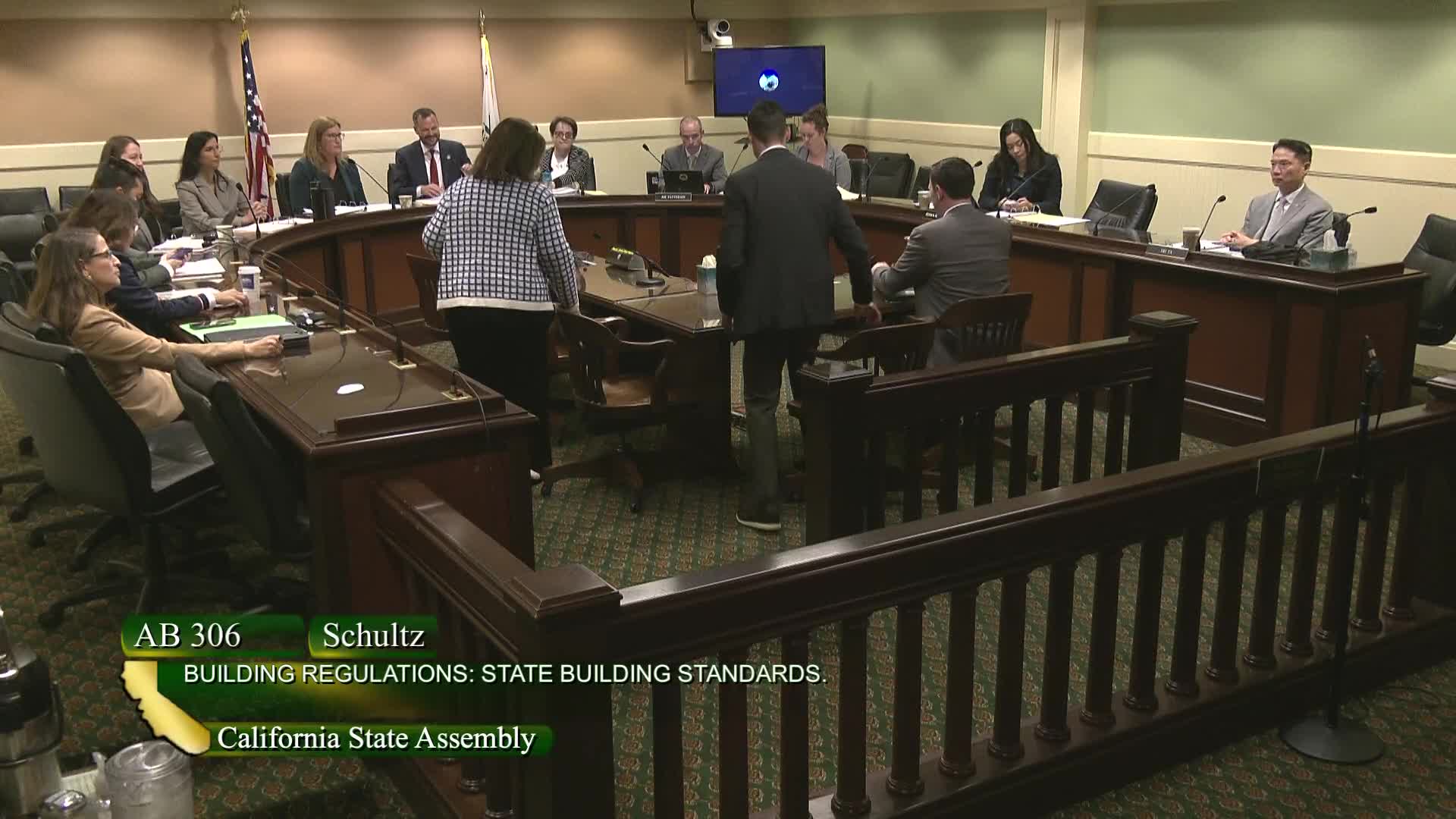
The Assembly Housing and Community Development Committee voted to refer AB 306, which would impose a six‑year moratorium on new residential building‑code updates, to the Appropriations Committee after debate among housing developers, affordable‑housing advocates and environmental groups.
Assemblymember Schultz introduced Assembly Bill 306, a proposal to impose a six‑year moratorium on new updates to the California building code that affect only residential construction and to limit local governments from making modifications to those standards except for emergency health and safety changes.
Supporters said the pause would provide cost certainty for builders and homeowners during a statewide housing shortage and the recent wildfire rebuilding in Los Angeles County. Silvio Ferrari of the California Building Industry Association told the committee the frequent code updates impose recurring costs on builders and said, “the law of diminishing returns is absolutely coming to roost in the code,” arguing that continuing cycles of stricter standards raise prices for future homebuyers. Laura Archuleta, president and CEO of Jamboree Housing Corporation, said affordable housing projects rely on multiple layers of financing and repeated design revisions undermine project feasibility.
Opponents, led by Marian Borgesen of the Natural Resources Defense Council and Andy Schroeder, a former policy director for a Los Angeles council member, argued the moratorium would prevent adoption of technologies and improvements that can reduce costs and increase safety. Borgesen warned the bill could leave the state a decade behind national code advances and cited examples — including changes to how electrical loads are calculated — that could lower per‑home costs by thousands of dollars. Schroeder said local governments need the flexibility to adopt reach codes and resilience measures after devastating fires.
Committee members who supported the bill framed it as a temporary measure to stabilize rebuilding and housing production while leaving emergency rulemaking authority intact. The author and proponents said emergency health and safety changes under Health and Safety Code section 18937 would remain available and that voluntary higher standards would still be permitted. Several members urged the author to work with opponents on targeted amendments to protect cost‑saving innovations.
After extended discussion, a motion to refer AB 306 to the Assembly Appropriations Committee carried on a roll call with the committee voting to advance the bill.
AB 306 must now be considered by the Appropriations Committee; proponents said they will continue negotiating amendments to address concerns raised by environmental advocates and labor groups.