Get Full Government Meeting Transcripts, Videos, & Alerts Forever!
Get email alerts on the Workforce Recovery Local Hire topic
No spam. Unsubscribe anytime.
State, county and unions push for local hire, apprenticeships and enforcement as rebuild funds flow
Summary
State and local workforce leaders and building‑trades representatives told the joint hearing that recovery funding offers an opportunity to create local, trained jobs but urged stronger compliance, apprenticeships and community workforce agreements to ensure impacted residents benefit.
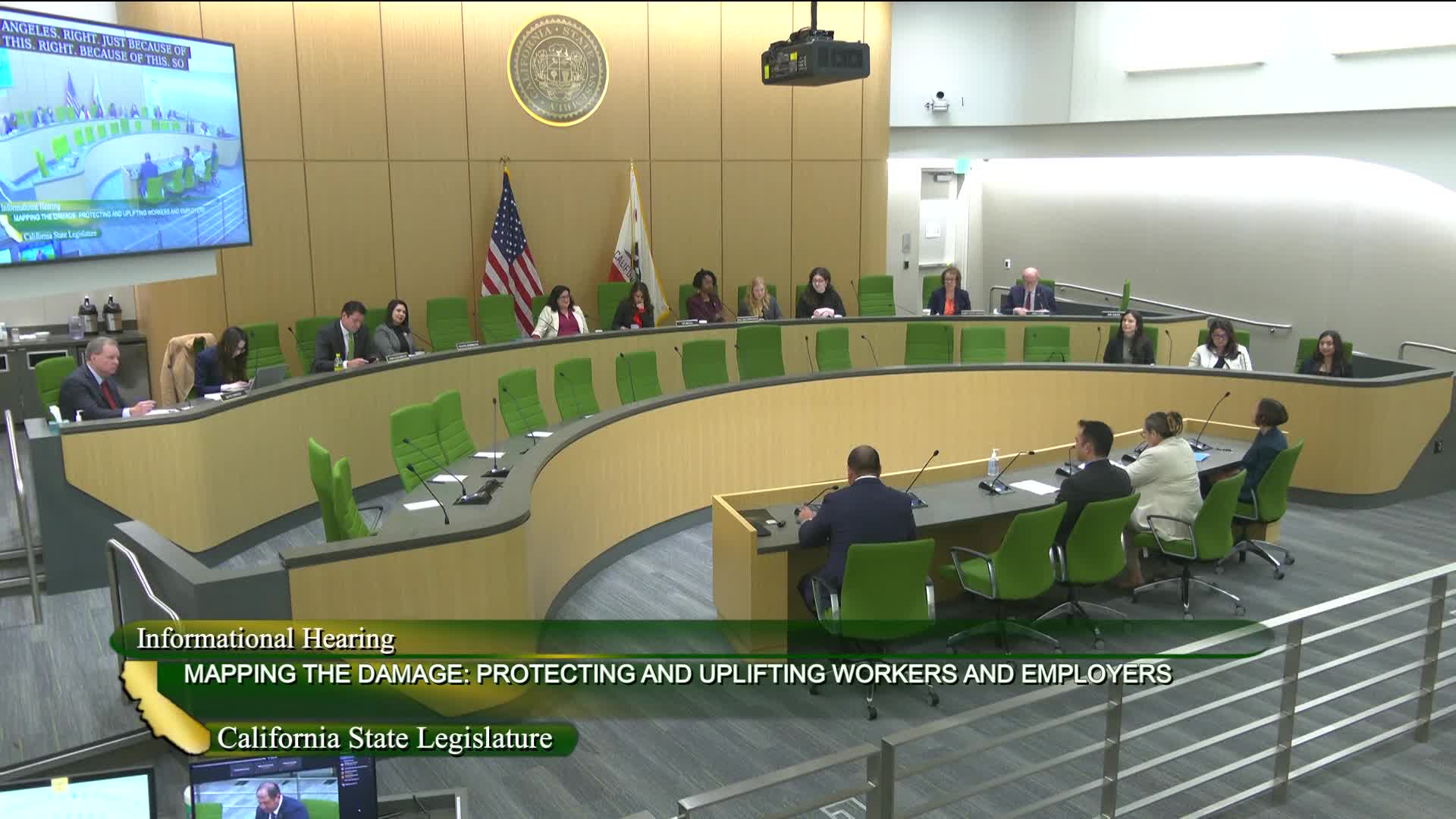
Labor leaders, local workforce agencies and state officials told a joint California Senate and Assembly hearing that the post‑wildfire cleanup and rebuilding period presents an opportunity to create career pathways for residents of impacted communities — but they said that will require enforceable local‑hire and apprenticeship commitments and better coordination of federal, state and local funds.
Eddie Escoto Alvarez, a council representative for the Los Angeles and Orange County Building Trades, said the region has the trained workforce to rebuild, and urged that public subsidies and expedited permits be tied to community workforce agreements so projects include local hires, apprentices and veterans. "If there's any type of public subsidy, may it be time or money to fast track these projects, make sure there's a community workforce agreement attached to it," Alvarez said.
Chris Hannon, of the State Building Trades, noted existing California law the Legislature passed in 2022 that allows the state to prequalify contractors for disaster cleanup contracts. "SB 978 set up a process when the state of California was awarding contracts to clean up the devastation and the debris in the fire area that it could, ahead of time, prequalify contractors and set up a method," Hannon said, adding that the tool has not always been used because many funds and contracts run through federal agencies.
State and local workforce officials described grants and programs that aim to connect displaced workers to temporary jobs and training. Nancy Farris, director of the Employment Development Department, said EDD has processed more than 7,000 regular unemployment insurance claims and more than 4,500 federal disaster unemployment assistance (DUA) claims for survivors, and announced two federally funded workforce grants awarded to the city and county for hiring, training and supportive services for displaced workers.
Kelly LoBianco, director of the Los Angeles County Department of Economic Opportunity, described a coordinated local relief program that includes a regional small business and worker relief fund and two federal grants (National Dislocated Worker Grant and an Additional Assistance grant) that will fund temporary subsidized employment and transitional services. She said the county’s relief fund has received several thousand worker applications and that first awards would be issued quickly.
Germaine Hampton of the Los Angeles County Economic Development Corporation presented preliminary economic estimates showing large economic damage and potential long‑term job impacts, and urged investment in retraining and infrastructure resilience. "Job losses are concentrated in retail, health care, construction and professional services," Hampton said, urging coalitions of public and private partners to accelerate training and hiring.
Small business owners and chambers described barriers to accessing contracts. Catherine Peebles, owner of Howes Construction and JRM Development, said her certified minority‑owned firm has attended industry events and submitted inquiries but has not been awarded work on major disaster contracts and urged reform of procurement processes to include small local contractors.
Building trades and workforce panels emphasized enforcement and compliance as essential for meeting apprenticeship and prevailing‑wage goals, and several speakers asked state and federal agencies to ensure that federal funds routed through the Army Corps and other agencies still meet state standards for apprenticeships, prevailing wages and safety training. City and county workforce officials said they are coordinating training on HAZWOPER and other safety credentials so local residents can fill cleanup and humanitarian jobs when grants roll out in April.
Lawmakers said oversight will continue, pressing agencies to produce data on who is getting work, apprenticeship participation rates and the use of local workers as cleanup and rebuilding moves from federally led debris removal to long‑term reconstruction.