Get Full Government Meeting Transcripts, Videos, & Alerts Forever!
Get email alerts on the Sb905 Ccus topic
No spam. Unsubscribe anytime.
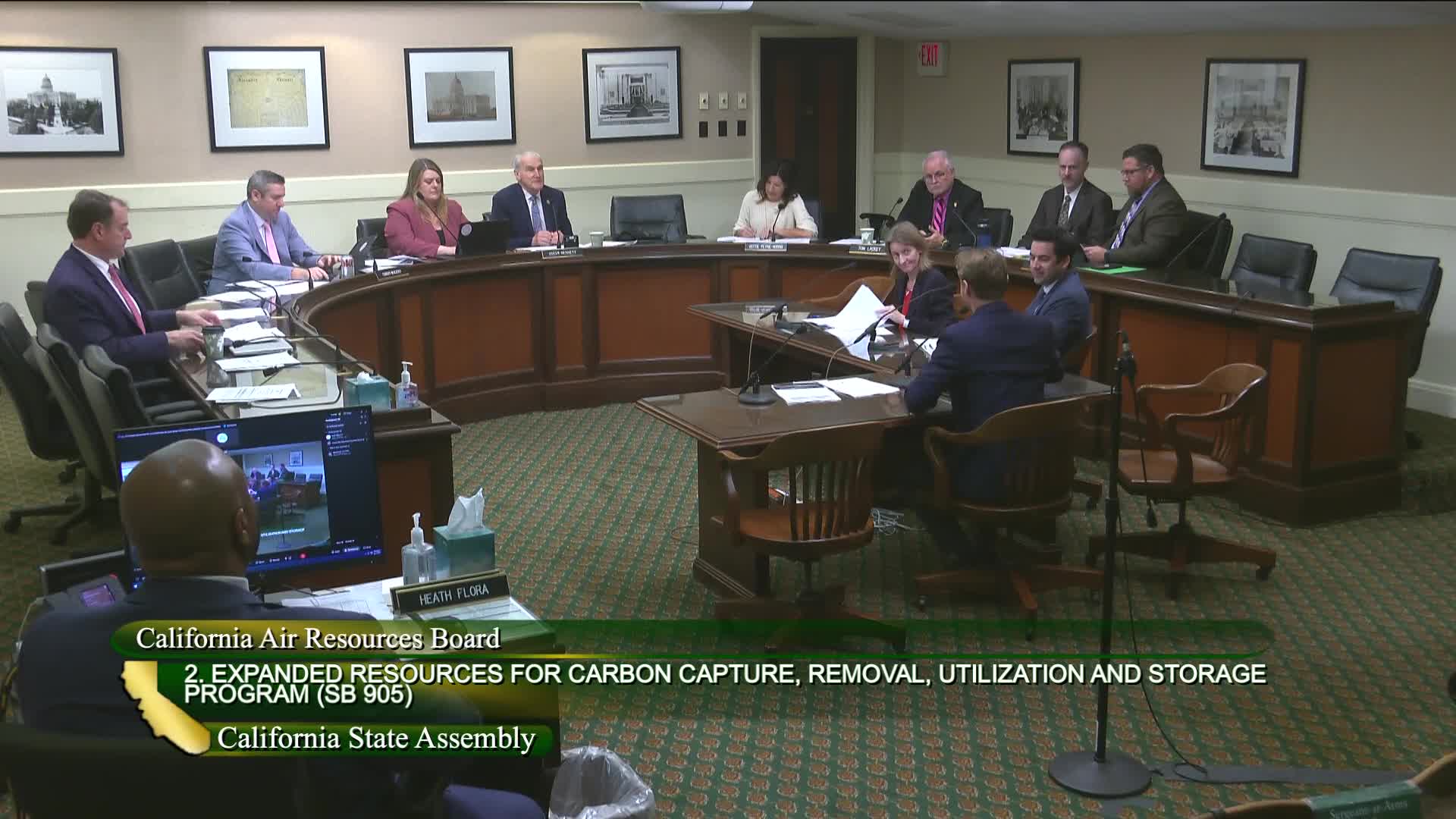
Assembly hearing highlights CARB request for permanent staff to implement CCUS and CDR program under SB905
Summary
CARB told the Assembly it needs permanent positions to implement SB905's carbon capture, utilization and storage, and carbon dioxide removal program; lawmakers and stakeholders questioned timelines, community protections and whether limited-term staffing choices made recruiting difficult.
California Air Resources Board staff told the Assembly Budget Subcommittee No. 4 that implementing SB905will require permanent positions and funding to complete rulemaking, permitting support and program oversight for carbon capture, utilization and storage (CCUS) and carbon dioxide removal (CDR).
Matt Botel, Division Chief, Industrial Strategies, said SB905 requires CARB to establish a CCUS program, adopt financial responsibility regulations, create a streamlined permit application and develop a centralized public database for projects. "This is a critical strategy for our climate," he said, noting CCUS and CDR technologies can include direct air capture, carbon mineralization and sequestration in natural and working lands.
CARB explained that the Legislature authorized nine limited-term positions and three years of funding in the 2023 budget, but the agency struggled to recruit and retain staff on limited-term hires. "We were authorized limited term positions, we moved forward to repost our recruitments ... those 3 positions now are now vacant again," CARB staff said, explaining the difficulty of hiring regulatory and technical experts into nonpermanent roles.
Lawmakers pressed CARB on practical matters: what the agency's timeline would be if it receives permanent authorization; what contractors and pre-rulemaking work had already been completed; how community protections and co-pollutant impacts would be addressed; and how local air districts would interact with the new program. CARB said it has contracts with national labs and community-college partners to study technology, community benefits and permit portal design and that rulemaking could be initiated later in the year if permanent resources are approved.
Several members acknowledged the policy goal but asked CARB to demonstrate efficient use of staff and clearer milestones. Committee members also linked the request to broader fiscal scrutiny and suggested the agency provide more detail about past staffing efforts and the steps that the three existing staff and contractors have completed during the interim.
Public commenters included CCUS industry supporters, unions and environmental groups. Supporters said the program is necessary to meet climate targets and create jobs; some environmental groups urged strong community protections and that projects not move ahead without adopted frameworks.
The subcommittee did not take final action but asked CARB to provide additional documentation on staffing needs, a clearer timeline for rulemaking and further detail on outreach and community-protection measures before finalizing any permanent staffing authorization.