Get Full Government Meeting Transcripts, Videos, & Alerts Forever!
Get email alerts on the Un Reform topic
No spam. Unsubscribe anytime.
U.N. launches "UN80" review to seek efficiencies as member payments lag
Summary
The U.N. Secretary-General announced the "UN80" initiative, an internal task force to identify efficiencies, review mandates and propose structural changes amid a multiyear liquidity crisis and agency staff cuts.
The U.N. Secretary-General announced the launch of a system-wide review called the "UN80" initiative and said he has appointed an internal task force to propose efficiency measures, mandate reviews and structural program realignment.
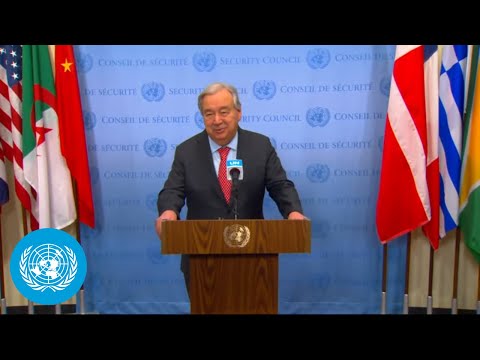
The announcement, made during a morning press briefing, came as the secretary-general warned of a multiyear liquidity crisis driven by member states that do not pay assessed contributions in full or on time and described recent cuts to humanitarian and development funding that have forced agencies to reduce staff.
The secretary-general said the task force will be led by under secretary general Raghai Radhar and will present recommendations across three areas: "rapidly identifying efficiencies and improvements in the way we work," "thoroughly reviewing the implementation of all mandates given to us by member states," and conducting "a strategic review of deeper, more structural changes and program realignment in the U.N. system." He said he will consult regularly with member states and the president of the General Assembly on proposals.
"From day 1 on of my mandate, we embarked in an ambitious reform agenda to strengthen how we work and deliver," the secretary-general said. He added later, "I am officially launching what we call the UN 80 initiative." The remarks tied the effort to the organization's eightieth anniversary year and to existing reform work such as decentralizing functions and investing in data and digital capacities.
Officials and agencies have already taken some steps the secretary-general cited as examples of cost-saving realignment, including shifting functions to Nairobi: "We have been investing in Nairobi, creating the conditions for Nairobi to receive services that are now in more expensive locations. UNICEF will be transferring soon some of the functions to Nairobi. The UNFPA will be essentially moving to Nairobi," he said.
The secretary-general framed the reforms as driven by both fiscal and humanitarian stakes: "Budgets at the United Nations are not just numbers on a balance sheet. They are a matter of life and death for millions around the world," he said. He warned that while the U.N. system can "adapt" and "make the UN more effective and most cost effective," cuts to agency budgets have led to layoffs and will have consequences for vulnerable populations that the U.N. assists.
He described the liquidity problem as persistent: "For at least the past 7 years, the United Nations has faced the liquidity crisis because not all member states pay in full, and many also do not pay on time." The secretary-general said agencies have made layoffs in response to funding shortfalls: "thousands of staff have been laid off by several agencies," he said, adding that agencies adjust but that the loss of service to people is the primary concern.
The task force is internal and, according to the secretary-general, composed of principals representing the U.N. system. He said the aim is to bring concrete decisions to member states after consultation, emphasizing both efficiency and preservation of core services. The secretary-general closed his remarks noting he was leaving for a visit showing solidarity during Ramadan with Rohingya refugees and Bangladeshi host communities.
The announcement does not specify timelines for the task force's final recommendations, nor does it list any immediate staffing or budgetary decisions beyond the examples of agency relocations and the general observation that cuts have produced layoffs.
The initiative will return to member-state consultation and decision-making, the secretary-general said, and is presented as a way to strengthen delivery at a time when he said "our values have never been more relevant. And the needs have never been greater."