Get Full Government Meeting Transcripts, Videos, & Alerts Forever!
Get email alerts on the Sb3 Consumer Protection topic
No spam. Unsubscribe anytime.
Committee Weighs Broad Consumer‑Protection Bill: fees, right‑to‑repair, price‑gouging and .gov rules
Summary
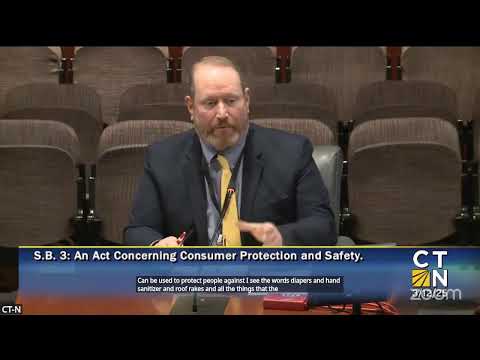
Senate Bill 3, a broad consumer‑protection package, drew testimony on fee disclosures, expansion of price‑gouging authority, a right‑to‑repair for electronics, and a requirement that municipal websites use .gov domains.
Senate Bill 3, a multi‑part consumer‑protection measure, was the focus of a broad panel of witnesses who urged the committee to adopt a mix of consumer‑friendly provisions and to clarify or carve‑out certain technical exemptions.
Fee disclosures: AARP and representatives told the committee they support requiring sellers to disclose mandatory fees upfront. John Erlinghauser (AARP) highlighted that fee transparency for retail purchases (aside from taxes) would reduce deceptive surprise charges at checkout and that violations would be unfair‑trade practices. Banking and brokerage representatives asked for tailored language or exemptions for certain financial trades where final settlement prices are not known before execution.
Right to repair: Consumer advocates (U.S. PIRG, Connecticut PIRG) and independent repair businesses testified strongly for a right‑to‑repair provision to require manufacturers to make parts, tools and repair manuals available to consumers and independent shops. They argued such rules would reduce e‑waste and save consumer money. Trade groups and medical‑device manufacturers requested explicit carve‑outs: multiple witnesses warned that the bill’s definitions (for “connected device” and related terms) could inadvertently include FDA‑regulated medical devices and home‑health technology, creating a public‑safety risk. Medical‑device groups and representatives asked for an explicit exemption or careful scoping so that only consumer electronics and non‑regulated devices are covered.
Price gouging and abnormal economic disruptions: Sponsors proposed expanding the attorney general’s authority to declare abnormal economic disruptions and investigate price increases not tied to declared gubernatorial emergencies. Senator Looney and Majority Leader Duff argued this would enable action when wholesale or distribution disruptions drive price spikes that are effectively gouging consumers. Industry and trade witnesses (fuel and energy marketers) opposed overly broad language with undefined standards such as “unconscionably excessive,” saying existing statutes and governor‑declared emergencies provide workable authority. Several committee members suggested a review process or defined objective criteria to avoid unchecked unilateral declarations.
.gov domains and cybersecurity: SB 3 would require state and municipal sites to use .gov domains. Supporters from the cybersecurity community told the committee that .gov domains carry stronger authentication and improve eligibility for federal cybersecurity grants; witnesses said adoption is relatively inexpensive and improves trust in municipal communications.
Follow‑ups and scope clarifications: The bill’s supporters and opponents agreed on one point — the statute needs clarified definitions. Legislators asked staff to draft narrow exceptions for medical technology, to define the threshold for abnormal economic disruptions, and to craft fee‑disclosure language that exempts trade executions where final price cannot be known in advance. Right‑to‑repair proponents suggested model language used in states such as Oregon and Colorado; medical‑device manufacturers pointed to California’s approach and several state bills that include explicit device exemptions.
Ending: Committee members directed staff to prepare redrafts to clarify the scope of the right‑to‑repair language, tighten standards for price‑gouging declarations, and coordinate cybersecurity language (the .gov requirement) with the Office of the Secretary of the State and CISA grant programs.