Get Full Government Meeting Transcripts, Videos, & Alerts Forever!
Get email alerts on the Education topic
No spam. Unsubscribe anytime.
House tables education bill that would reset READ Act, shift MDE funding
Summary
Representative Bennett, the author of House File 6, summarized the bill’s aims on the House floor on March 11 in Saint Paul, saying the measure would refocus state reading policy and give local districts more flexibility.
Representative Bennett, the author of House File 6, summarized the bill’s aims on the House floor on March 11 in Saint Paul, saying the measure would refocus state reading policy and give local districts more flexibility. “House file 6 covers the following priorities, where literacy is learning, local control is innovation, and empowered parents are engaged parents,” Bennett said. He told members the bill would implement what he described as a “READ Act reset” and said “the reading instruction should be based on the science of reading, and that our children have the fundamental right to read.”
Bennett described three main articles in the 25-page bill: (1) a READ Act reset that would change state direction on reading instruction and repeal a requirement that literacy curriculum and instructional materials pass a state-sponsored cultural screening; (2) education innovation provisions that would create a new school performance report and shift funding from the Equity, Diversity and Inclusion Center at the Minnesota Department of Education (MDE) to a proposed Office of Achievement and Innovation; and (3) funding flexibility and mandate-relief provisions to allow local school boards more discretion on how to use available revenue, subject to compliance with federal law.
Bennett repeatedly criticized the bill’s fiscal note, which he said appeared to overstate costs. “The fiscal note is 30 pages long. The fiscal note assumes a one-time cost of nearly $5,000,000 for MDE to create a report telling parents how many children can read, perform math, and regularly attend school and graduate,” Bennett said on the floor. He also cited figures in the fiscal note that would add 13 staff to MDE and assign new duties to the Professional Educator Licensing and Standards Board; Bennett said those assumptions were unreasonable given MDE’s existing data systems and staff.
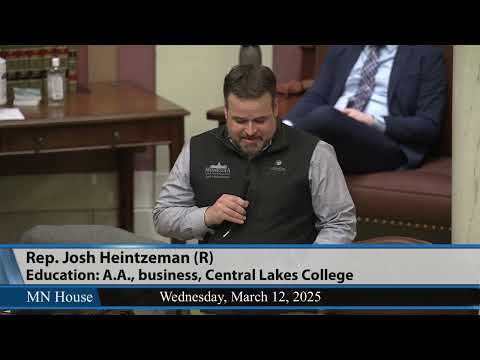
Representative Kreisha, speaking from the floor, said the bill had received a fiscal note and that she would have recommended returning the bill to committee for further work. “I would recommend that we would have taken this back to committee,” Kreisha said, adding that she had expected to do so in good faith but that an amendment on the floor changed the path forward. After a parliamentary inquiry and a brief exchange about the amendment, Kreisha moved to lay House File 6 on the table. The motion to table is nondebateable; the presiding officer called for voice votes and the motion prevailed.
Distinguishing discussion from action: the floor debate recorded substantive policy positions and technical objections to the fiscal note, but the only formal action recorded in the transcript was the motion to lay House File 6 on the table. The motion was moved by Representative Kreisha and carried by voice vote; no roll-call tally was recorded in the transcript.
What the bill would have done (as described by proponents on the floor): repeal the state-mandated cultural screening requirement for literacy materials; refocus a portion of MDE funding toward an Office of Achievement and Innovation; require a new school performance report for parents; and grant local districts more flexibility in spending and implementing mandates so long as federal law is not violated. The bill also included provisions addressing teacher preparation related to reading instruction; the fiscal note identified potential costs at the licensing board for changes to educator-preparation oversight.
The transcript does not record opposition speakers on the floor or an amended text adopted prior to the table motion. The tabled status means no further action on House File 6 is reflected in this transcript. The House adjourned later in the day and the bill’s future depends on whether it is recalled or re-referred at a subsequent floor session or returned to committee.
Ending: The action leaves questions about how the House will reconcile the fiscal-note concerns and stakeholder letters that Representative Kreisha said were on members’ desks; Kreisha said she had hoped to return the bill to committee for additional work before the amendment prompted the tabling motion.