Get Full Government Meeting Transcripts, Videos, & Alerts Forever!
Get email alerts on the Long Term Care Tax Credit topic
No spam. Unsubscribe anytime.
House committee hears bill to raise long-term care insurance tax credit
Summary
The House Taxes Committee heard author testimony and public comment on House File 355, which would raise Minnesota's long-term care insurance tax credit for individuals and married couples and was laid over for possible inclusion in the omnibus tax bill.
Representative Matt O'Driscoll told the House Taxes Committee that House File 355 would raise the state income tax credit for purchasing qualified long-term care coverage, increasing the credit for individuals and married couples and encouraging middle-income Minnesotans to keep private coverage.
The bill matters because proponents say more private coverage could reduce future pressure on Medicaid long-term care spending. O'Driscoll said the change would move the individual credit from $100 to $250 and the married-couple credit from $200 to $500 to better reflect rising premiums.
Bob Stein, co-chair of the legislative committee for the National Association of Benefit and Insurance Professionals of Minnesota and an independent insurance agent, testified in support. "It is not too late to make a meaningful impact on the future of human services budget by incentivizing Minnesotans to put their own funds on the table," Stein said, arguing that raising the credit would encourage purchase and retention of coverage and ease pressure on state budgets.
Committee members pressed proponents about whether the credit would address structural problems in the long-term care insurance market. Representative Richard Elkins, who described the market as a "classic insurance company death spiral," questioned whether a tax credit would change the underlying economics that have reduced the number of carriers offering traditional long-term care policies. O'Driscoll and testifiers said hybrid life policies with long-term care riders are gaining market share and that future policy work could focus incentives on those products.
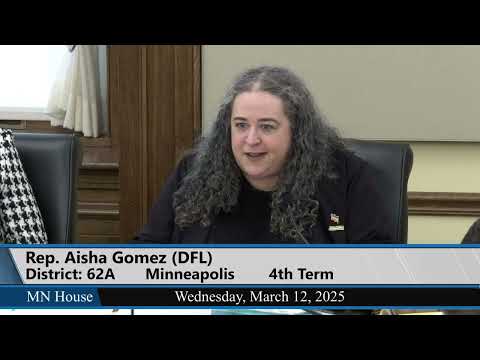
Members also discussed budget trade-offs. Chair Gomez noted a widely cited fiscal estimate and concerns about placing limited tax dollars into what some members characterized as a small-scale fix for a much larger, multibillion-dollar long-term care funding challenge. Committee discussion referenced the bill's fiscal note; one member said the fiscal note estimate was closer to $13–14 million per biennium rather than the $30 million figure cited during debate.
The committee did not take a roll-call vote on policy; Representative O'Driscoll moved that House File 355 be "laid over for possible inclusion in the omnibus tax bill," and the motion was renewed and carried as laid over.
Looking ahead, the author said he and other members would continue work on incentives targeted at hybrid life/long-term care products to broaden coverage and preserve family wealth while reducing reliance on Medicaid.
Speakers quoted in this article appeared during the committee hearing and are listed in the speakers section below. No final policy change was enacted at this hearing; the bill was laid over for possible inclusion in the omnibus tax bill.