
Bill would create advisory committee for Crownsville Hospital Memorial Park, sponsors emphasize history and long-term planning
Get AI-powered insights, summaries, and transcripts
Sign Up Free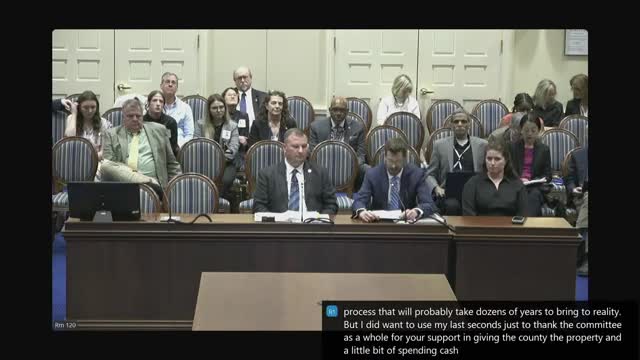
Summary
Delegate Andrew Pruske presented HB 9‑71 to establish a Crownsville Hospital Memorial Park advisory committee to guide preservation, remembrance, and future uses after Anne Arundel County transferred the property. County officials and the governor’s office supported amendments to add state-level representatives.
Delegate Andrew Pruske told the committee HB 9‑71 would establish a Crownsville Hospital Memorial Park Advisory Committee to provide recommendations on restoration, commemoration and future uses for the former Crownsville Hospital site.
“For those of you that don't know, Crownsville Hospital was a state owned psychiatric facility … It operated from 1911 to 02/2004,” Pruske said, noting the site's history and that most patients were African American. He said Anne Arundel County recently received the property and released a master plan focused on remembrance, healing, and behavioral-health services.
The bill would create an advisory body with representatives from the governor’s office, county government, historical and community organizations, and appointees from the county executive. Anne Arundel County budget officer Chris Tranmauer, who chairs the county advisory group, told the committee the local master plan is 220 pages and urged passage. Lawrence Walker, executive director of the governor's office of community initiatives, supported adding the office’s executive director and the executive director of the Maryland Commission on African American History and Culture as statutory members; he emphasized the facility's traumatic history and the need for community representation.
Pruske and county witnesses described the project as long-term and multi-decadal, intended to protect environmental features and preserve the historical record while exploring options for behavioral-health services and public use. The committee discussion focused on membership and the proposed amendments; the provided transcript does not record a final vote on HB 9‑71.