Maricopa County Board updates health code to allow advanced water purification
Summary
Board unanimously approved revisions to the county Environmental Health Code to align with Arizona Department of Environmental Quality rules on advanced water purification and direct potable reuse after public comment and staff explanation.
The Maricopa County Board of Supervisors on March 18 unanimously approved revisions to the county Environmental Health Code that remove a county-level prohibition on advanced water purification and allow direct potable reuse projects under the state's regulatory framework.
The vote follows presentations from city and county officials and public comment. Troy Hayes, water services director for the City of Phoenix, told the board the change is "critical to aligning our county's regulations with the Arizona Department of Environmental Quality's advanced water purification rules" and said such facilities would help secure a drought-resilient water supply for Phoenix's more than 1,700,000 customers.
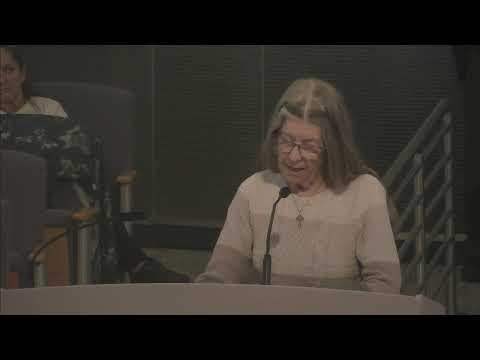
Assistant County Manager Darcy Kober told the board the county amendment responds to a recent state regulatory change and removes an outdated prohibition from the county health code so that cities can pursue projects under the state rules. In public comment, some residents asked whether reclaimed wastewater has been used historically and raised health concerns; county staff replied the code changes simply align county rules with the state's new framework and do not alter existing permitted wastewater practices.
Supervisor Guarito moved approval of item 12; Supervisor Stewart seconded. The board voted in favor with no recorded opposition. The motion removes the county-level restriction and permits cities and other authorized entities to apply for projects and permits under ADEQ's advanced water purification regulations.
County staff said the change is intended to let municipalities make local decisions about water purification projects and to avoid duplicative county regulation that would conflict with the state framework. The board did not adopt new technical standards in the hearing; staff said projects will proceed under state rules and project-specific permitting.
Next steps described by staff include updated county permitting guidance to reflect the state rules and continued public outreach as individual projects move through local permitting and environmental review.
AI generated
The text on this page is AI generated. Summaries, highlights, analysis, and video transcripts are all produced from the original source material.
AI can make mistakes, so if you spot one, and we will fix it for everyone.
Note: the source content is unaltered by us. Any content source we link to, be it a video, an audio recording, or a document, is presented exactly as its publisher released it. That publisher is usually a government body, sometimes an individual official or another organisation.