Get Full Government Meeting Transcripts, Videos, & Alerts Forever!
Get email alerts on the Micromobility Safety topic
No spam. Unsubscribe anytime.
Palm Beach transportation official urges e‑bike safety as micromobility use rises
Summary
Deputy director Brian Rusher told the village Public Safety Committee that electric bicycles, scooters and other micromobility vehicles are growing in number and speed, outpacing statutes and infrastructure; he urged helmets, education and local planning and promoted countywide outreach and events.
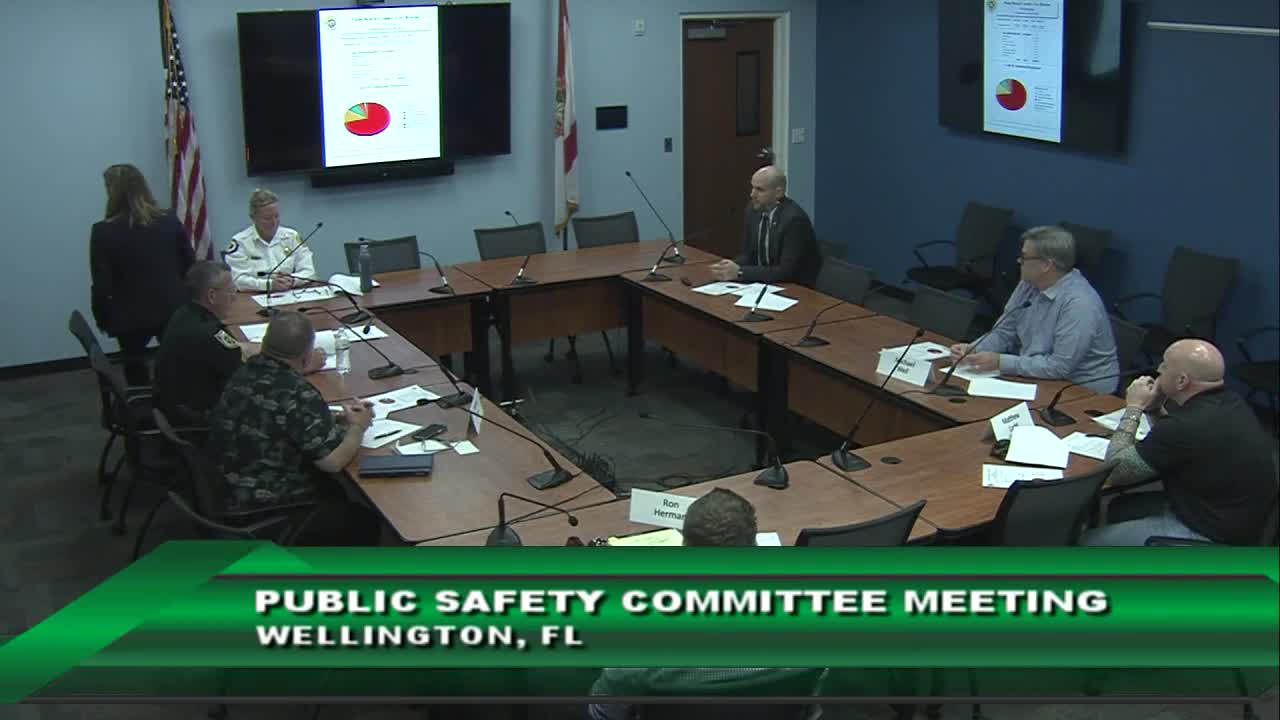
Brian Rusher, deputy director of multimodal at the Palm Beach Transportation Planning Agency, told the Village of Wellington Public Safety Committee that the rapid rise in electric bicycles, scooters and similar micromobility devices is creating local safety and planning challenges.
"The overall cost of e bikes, eMotos, e scooters, they are all coming down very rapidly. And they're becoming more accessible to everybody despite, you know, the laws that we have on the books," Rusher said, describing a trend the agency is seeing across Palm Beach County.
Rusher said Florida law defines micromobility devices but that statutes and local infrastructure have not kept pace with device capabilities. He cited what he described as a statutory definition (Florida statute, chapter 316.003, section 41) and said many devices now available to consumers can travel much faster than the bicycles that local streets and paths were designed for.
Why it matters: county and local officials are seeing more collisions and near misses involving electrified devices, Rusher said, and the devices are being used for short trips, including connections to transit. He recommended continued public education, targeted enforcement and infrastructure changes to reduce risk.
Rusher walked the committee through vehicle classes used in current guidance: class 1 (pedal assist), class 2 (throttle plus pedal assist, typically limited to about 20 mph) and class 3 (pedal assist up to 28 mph). He warned that some eMotos and other nonstandard vehicles exceed those limits and are subject to motor‑vehicle code rather than bicycle provisions.
The presentation cited local hospital data summarized by the Healthcare District covering November 2019 through October 2024 showing hospital visits tied to bicycle and micromobility incidents. Rusher said the district recorded dozens of electric‑bike and scooter falls and that a large share of patients were pediatric (ages 12–15) or male. He stressed that head injuries are the most frequent serious outcome and repeated the committee’s long‑standing safety messages encouraging helmets for users under 16 and advising universal helmet use where possible.
Rusher also listed outreach and response steps the agency and municipalities are taking: a county survey on where residents want bike facilities, public demonstrations and test‑ride events (including REI in Palm Beach Gardens), participation in Kids to Park Day on May 17 and webinars on micromobility safety. He asked local staff to share a short county survey and to help promote a web page and public events.
Village staff later said Wellington has published an informational page at wellingtonfl.gov/ebikesafety and has run a public service announcement with the Palm Beach County Sheriff's Office. The village also said it is monitoring trends for potential code changes but has not proposed new regulations.
The committee did not take policy action during the meeting; members and staff discussed further outreach and scheduled public events for spring.