Get Full Government Meeting Transcripts, Videos, & Alerts Forever!
Get email alerts on the Public Transit Funding topic
No spam. Unsubscribe anytime.
Public speakers urge Board to prevent Muni summer service cuts, call for local funding transfer
Summary
Multiple public commenters urged the Board of Supervisors to provide or redirect local funding to the San Francisco Municipal Transportation Agency to avert planned summer service cuts caused by a near-term $15 million shortfall.
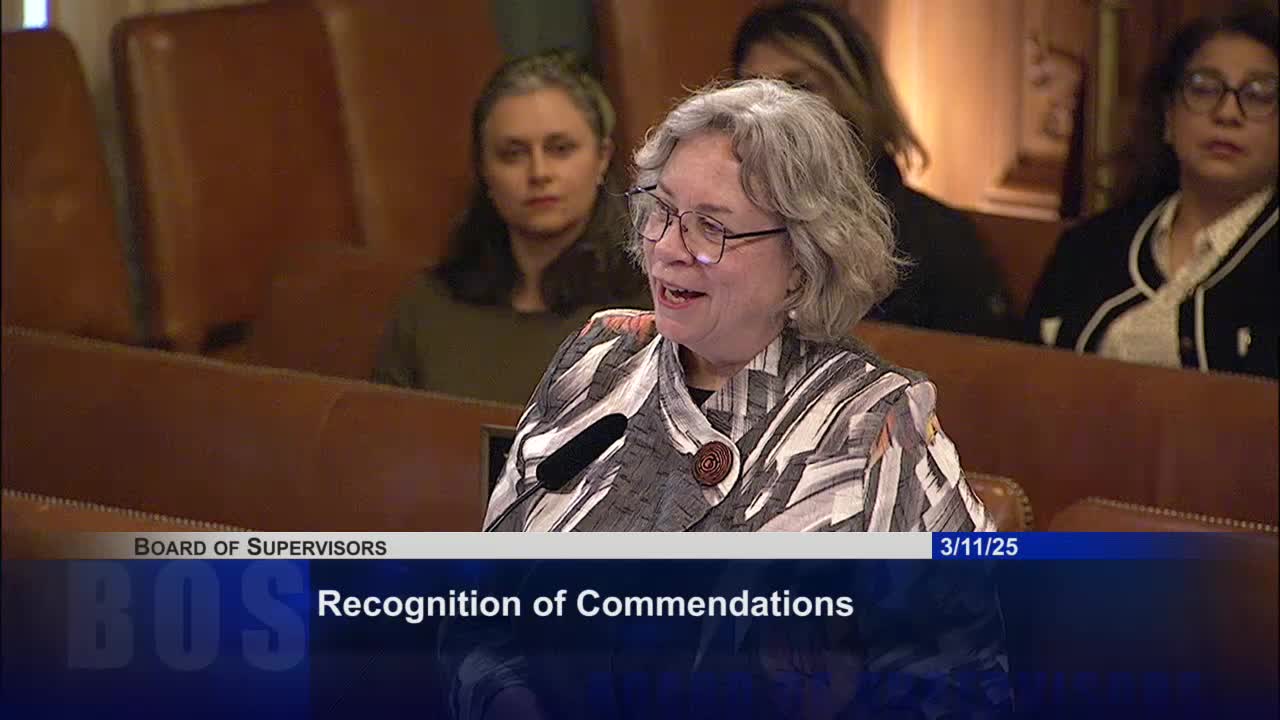
Several members of the public used general public comment time at the March 11 Board of Supervisors meeting to urge the board and the mayor to avert planned summer service cuts to Muni by taking local funding actions.
Lisa Platt, a District 1 resident, briefed supervisors on a near-term SFMTA budget gap she described as reduced parking revenues in downtown garages and said SFMTA had reduced its 2025 gap to about $15,000,000 through savings. Platt urged three options: (1) cut Muni service (which she said would harm riders and economic recovery), (2) find new parking revenue sources such as running meters in the evening, or (3) make a small general fund transfer or use reserves. She argued that a general fund transfer or reserves use would buy time to secure longer-term funding in 2026 and avoid politically damaging service cuts.
Jaime Viloria of the Muni Now, Muni Forever campaign said the city has repeatedly relied on state or regional efforts and warned against "risking it on the uncertainty" of regional measures, urging the board to act locally this year. Audrey Liu, a District 1 resident, urged the board to support a general fund transfer or work with SFMTA to prevent summer cuts that could eliminate crossing guards, low-income tow subsidies, and crucial Muni lines.
Speakers characterized the potential cuts as threats to hundreds of thousands of transit users and described the issue as both an equity concern and a near-term operational risk. The board did not take a formal vote during public comment. Several public commenters asked for local action rather than continued reliance on state or regional funding.