Get Full Government Meeting Transcripts, Videos, & Alerts Forever!
Get email alerts on the Budget And Finance topic
No spam. Unsubscribe anytime.
SFUSD board adopts negative interim certification, advances fiscal stabilization plan
Summary
The San Francisco Board of Education voted to adopt a negative second interim certification for fiscal year 2024–25 and approved an updated fiscal stabilization plan after staff presented new projections showing large shortfalls over the next two fiscal years.
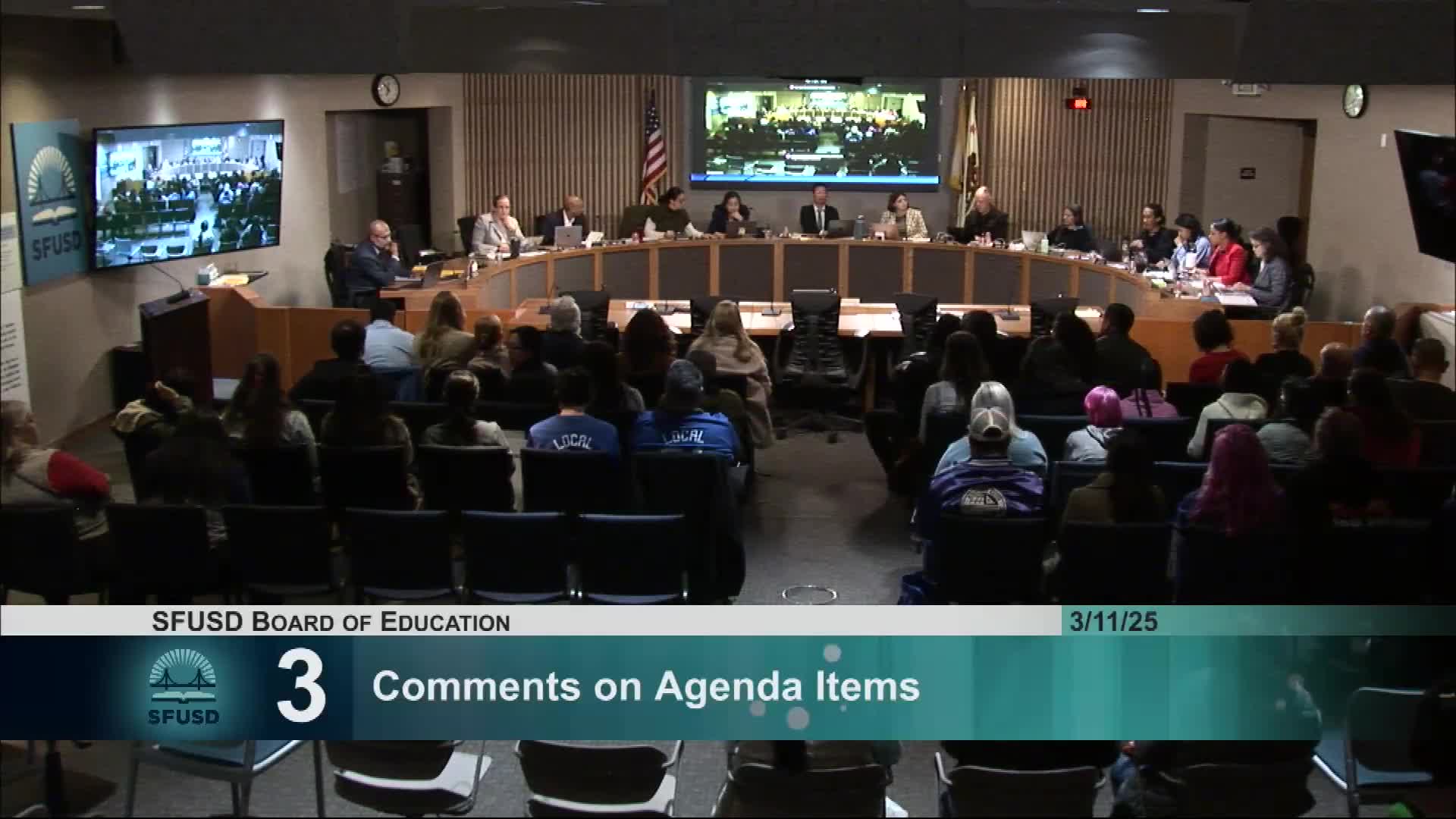
The San Francisco Board of Education on Wednesday adopted a negative second interim fiscal certification and an updated fiscal stabilization plan after district staff said revenues would fall short of expenses without additional action.
The board voted 7–0 to approve the district’s second interim report and the related fiscal stabilization update, a move that formalizes staff projections that the district is deficit spending this year and will need ongoing reductions to remain solvent in coming years.
The negative certification reflects staff projections showing that current-year expenditures exceed revenues by about $97 million, and that without further reductions the district faces a $57 million shortfall in 2026–27. "Our anticipated spending exceeds our anticipated revenue by about $97,000,000," Ann Marie Gordon, Interim Financial Services Officer, told the board during the presentation.
Nut graf: The action places the district on a statutory path that requires tighter financial controls and more explicit reductions. The board’s vote authorizes staff to continue implementing the district’s fiscal stabilization plan, which the board first adopted last summer and updated this winter. The plan includes a combination of central-office reductions, program adjustments and one-time measures such as a supplemental early retirement program (SERP) approved separately during the meeting.
District staff said staff-level adjustments and reallocation of restricted funds had reduced the immediate budget gap but that longer-term, sustained reductions are still needed. The presentation showed that shifting eligible costs onto restricted grants and using one-time reserves reduce the near-term pressure on the general fund, but those steps do not eliminate the need for structural savings.
Superintendent Dr. Hsu described the choices as "really painful reductions" but said the steps were required to reach a legally balanced budget and preserve student services over time. Staff said the district will return at third interim with updated data showing which reductions have been implemented and how plans will affect the coming fiscal year.
Board members pressed for regular updates and called for clearer, multi-department implementation plans. Commissioner Gupta asked for a schedule of follow-ups; Vice President Healy and others requested that staff provide progress reports within four to six months. Staff said they will bring more-detailed implementation proposals to the board at upcoming meetings, including revised central-office reductions and updated transportation plans where necessary.
Ending: The board’s approval does not itself enact all reductions; rather it signals that the district must move to the next implementation phase of its fiscal stabilization plan. Staff said they will return with a third interim report and additional implementation detail before the budget is finalized in June.