Get Full Government Meeting Transcripts, Videos, & Alerts Forever!
Get email alerts on the Public Safety And Downtown Policy topic
No spam. Unsubscribe anytime.
Utica council votes to deny proposed downtown social district after weeks of debate
Summary
After extended public comment and council discussion about safety, cleanup costs and logistics, Utica City Council voted 6–1 to deny a proposal to create a year‑round downtown social district allowing sealed alcoholic beverages to be carried outside licensed establishments.
Utica City Council on Tuesday voted 6–1 to deny a proposal to create a downtown social district that would let customers carry sealed alcoholic drinks outside licensed bars and restaurants.
Supporters of the plan told council they expected the district to boost downtown activity, while bar owners and some council members raised concerns about policing, cleanup costs and whether the city could contain and control the area.
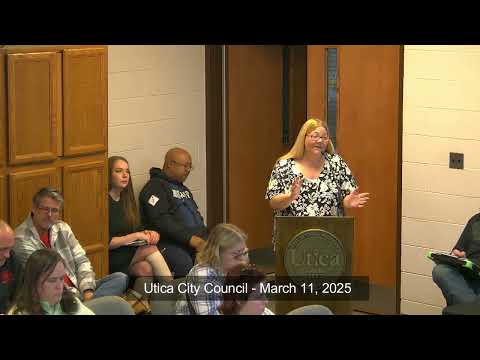
Proponents Anna (owner, Vinu Vibes) and Paul Weiss (owner, Steampunk Taproom) said a social district would make Utica more vibrant and pointed to nearby cities that have similar programs. "It's not to get people completely intoxicated," Weiss said, urging the council to learn from Mount Clemens and Royal Oak. Opponents, including Liz Curry of Locker Room Saloon, warned that people who are already intoxicated could attempt to re-enter businesses and that staff safety and liability were serious issues.
Councilmembers pressed for a more detailed plan on hours, programming and funding. Councilmember Sikora, who moved to deny the request, and others said they were worried about the city absorbing overtime for police and public works. Chief Kaluznick (police) told council officers would be responsible for enforcing boundaries and that other cities contracted or required social‑district funding to pay for police presence. Superintendent Diamond (public works) estimated at least two DPW workers would be needed for cleanup on weekend events and noted overtime minimums.
Council members discussed alternatives including limited seasonal events, use of an alleyway north of Auburn Road to concentrate activities, and forming a working committee of business owners, city staff and council to develop a plan. Several council members said they would be willing to serve on a committee but emphasized the city should not subsidize private businesses without clear public benefit.
The motion to deny, moved by Councilmember Sikora and seconded by Councilmember Torenzi, passed 6–1 (Secora: yes; Torenzi: yes; O'Donnell: no; Dionne: yes; Backus: yes; Weaver: yes; Mayor Calandrino: yes). Council members and business owners agreed the idea could be revisited if a more detailed, funded proposal with defined programming and a plan for police/DPW costs is presented.
Council left open the possibility of forming a committee to develop a narrower, event‑based approach and asked interested business owners to take the lead on a written plan for future consideration.
The council's decision followed a public comment period that included a separate public hearing earlier in the meeting for Community Development Block Grant requests.