Get Full Government Meeting Transcripts, Videos, & Alerts Forever!
Get email alerts on the Class Size And Staffing topic
No spam. Unsubscribe anytime.
Parents and teachers urge board to reverse proposed cuts as officials cite enrollment-driven shortfall
Summary
Dozens of parents and teachers urged the Missoula County Public Schools board to halt proposed teacher cuts and avoid increasing elementary class sizes; Superintendent Micah Hill said declining K–5 enrollment reduced district funding and that the district faces a net reduction of roughly three teacher positions.
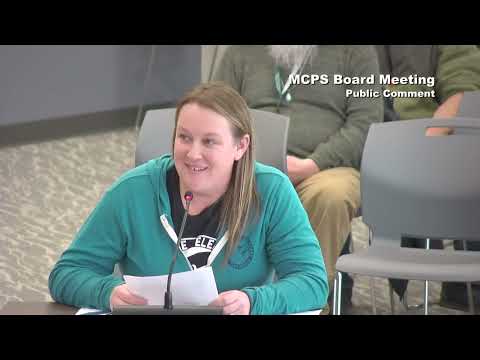
Dozens of parents, paraeducators and classroom teachers pressed the Missoula County Public Schools Board of Trustees on staffing proposals they say would raise elementary class sizes and undermine student supports.
Community members described classroom safety and learning concerns and called for alternatives to the cuts. “Don’t increase class sizes. Don’t cut these teachers,” said Jeff Busman, identifying himself as “a parent of a child at Chief Charlo.” Several classroom teachers spoke at length about daily workload, behavior challenges and special-education needs. Emily Earl, a fourth-grade teacher at Hawthorne Elementary, told the board that “filling classrooms to the absolute maximum physical capacity could alleviate some financial strain, [but] the effects will be detrimental to the education the students receive as well as the morale and well-being of the staff.”
The speakers said proposed reductions would force student “leveling” — reassigning families to other neighborhood schools — and could separate siblings. Third-grade teacher Tessa Masters described learning and family disruption if her school loses a teacher and students are reassigned: “If you put 33 children in 1 class, do you think my Gretel would have gotten caught and been put in the right class? No.” Susan Ray, a second-grade teacher at Chief Charlo, said the school’s projected split into two sections of 33 third-graders would place unusual burdens on staff: “18 of them are on IEPs which requires extra planning and meeting time.”
Superintendent Micah Hill acknowledged the human impact and described the district’s fiscal drivers. Hill said K–5 enrollment is down by 84 students from the prior year and that the decline translates to roughly $500,000 less in general-fund revenue because state A and B funding is tied to prior-year counts. He said the district has taken steps to avoid last year’s broad pink slips and instead communicated early with staff; the net effect this year, he said, is roughly a three-position reduction K–5 rather than a larger, across-the-board layoff.
Hill said district policy choices and bargaining rules shape how reductions are implemented and emphasized trade-offs among classroom teachers, special-education supports, behavior interventionists, social workers and other services. “If the balance is we want smaller class sizes, it might mean that the board has forced into a decision to say, well then we have to cut something else to accommodate that request,” he said.
Speakers and board members also disputed how “leveling” would be applied across schools. Multiple commenters said Jeannette Rankin and other nearby schools have lower third-grade counts and that the district’s plan to rebalance students would move children away from neighborhood schools. An elementary special educator who identified herself as one of Chief Charlo’s special-ed staff said the school’s cohort includes 18 students with individualized education programs and that placing nine IEPs into each of two third-grade classes would be “unmanageable.”
Board members pressed for clarity on process and legal constraints. Trustees noted collective-bargaining provisions and administrative placement rules that shape whether and how non-tenured and tenured teachers may be reassigned or laid off, and asked district staff for follow-up on alternatives raised by speakers.
The board did not vote on any specific staffing reduction at the meeting. It approved routine personnel reports and other consent items during the session; those votes do not themselves authorize the school-by-school reductions speakers described. Hill said district staff will continue the placement work and present the board with options, and he urged public engagement on priorities such as class size, special-education supports and other services.
Members of the public repeatedly cited state limits and district policy when arguing against classes above 28 students in early grades; speakers stated their reading of state statutes and district rules and asked the board to prioritize smaller class sizes. The district’s administration acknowledged the statutory and bargaining framework as constraints and said the board will need to weigh trade-offs if it directs the district to preserve lower class sizes.
The discussion followed a year in which the district implemented staffing changes tied to federal ESSER funding and other budget adjustments. Hill said the district is monitoring potential state-level funding changes — including the STARS Act — that could affect the budget, but he did not promise additional revenue.
The board heard public comment for more than an hour on the topic and did not adopt final policy changes at the meeting. Trustees and district staff said they will return to staffing decisions in subsequent meetings and that families will be notified through the district’s established placement processes.