Get Full Government Meeting Transcripts, Videos, & Alerts Forever!
Get email alerts on the Therapeutic Interchange topic
No spam. Unsubscribe anytime.
Medical and industry groups oppose Board's therapeutic-interchange proposal, cite patient-safety risks
Summary
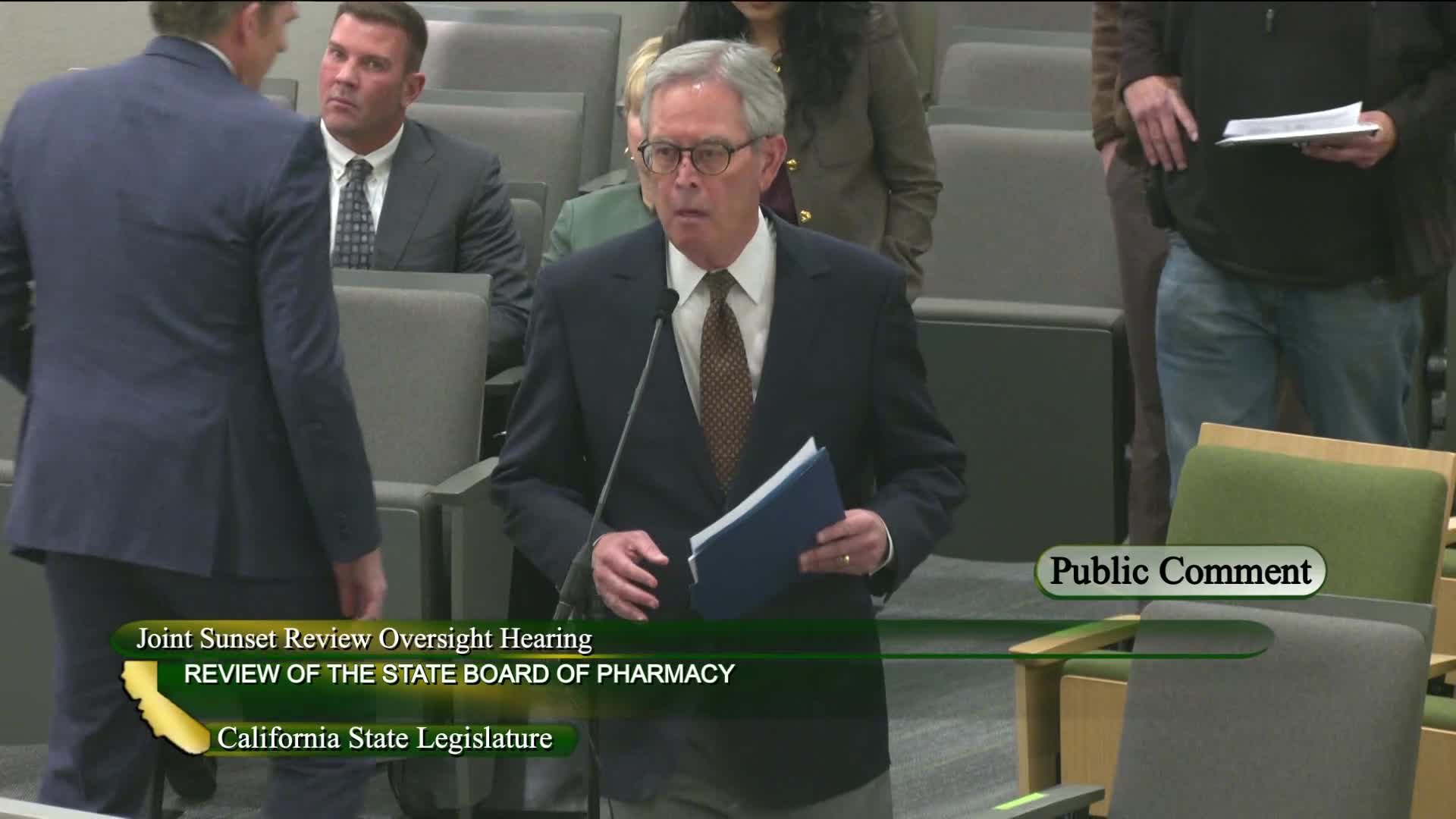
Pharmaceutical industry groups and psychiatrists told the committee a board proposal to allow pharmacist-initiated therapeutic interchange could endanger patients and disrupt the physician-patient relationship; speakers urged rejection or substantial guardrails.
Representatives of the pharmaceutical industry and physician specialty groups warned legislators that a Board of Pharmacy proposal discussed in the board's report could permit pharmacists to effect therapeutic interchange without prior physician authorization, a change they said could put patients at risk.
Fred Notewear of the Pharmaceutical Research and Manufacturers of America (PhRMA) urged rejection of proposed changes to Business and Professions Code language, saying pharmacist-initiated interchange "could upset the stability of" ongoing treatment regimens and that pharmacists may not have access to full medication histories required to make safe substitutions. "This proposal reads in part: such interchanges include, but are not limited to, the use of biosimilars, if different dosage forms, drugs within the same drug classification," Notewear said, arguing the change would undermine physician oversight and patient safety.
Randall Hager, representing the Psychiatric Physicians Alliance of California, said clinical nuance in psychiatric prescribing demonstrates the risk: "There—s no way a pharmacist can know that I need sertraline as opposed to mirtazapine, fluoxetine, phenelzine, bupropion or amitriptyline," Hager said, adding that antidepressants have differing mechanisms, interactions and black-box warnings that typically require extended clinical evaluation.
Physician groups and industry witnesses called for either rejecting the board—s interchange language or creating strict guardrails ensuring therapeutic interchange cannot occur without clear physician authorization and access to full patient medication histories.
Ending: Committee members took note of the safety concerns and asked the board and stakeholders to clarify whether and how any therapeutic-interchange authority would be constrained to preserve continuity of care and physician oversight.