Pharmacy workforce debate focuses on technician ratio and remote processing to ease access
Loading...
Summary
Industry groups and unions told legislators California's strict pharmacist-to-technician ratio and limits on remote processing contribute to delays and closures; the board is exploring a 1:2 ratio and other flexibilities while stakeholders urged broader discretion for pharmacist-in-charge.
Several industry groups and unions told the joint committee that staffing rules and limits on remote processing are contributing to delays, longer wait times and pressure on pharmacies that have coincided with closures in parts of the state.
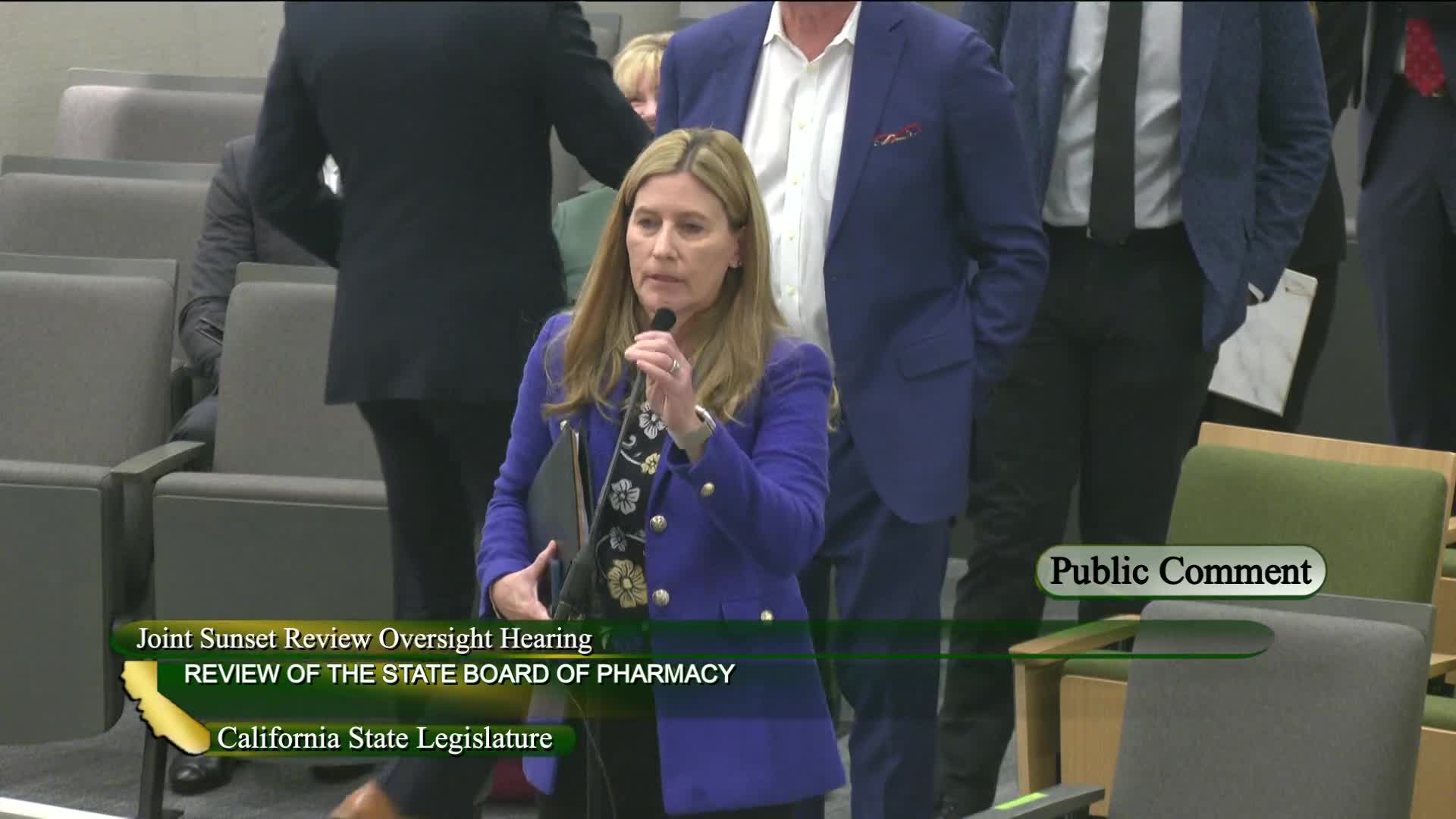
Jennifer Snyder of the National Association of Chain Drug Stores urged change in California—s technician rules, noting that "we are the only state in the nation that has a 1 to 1 pharmacist to pharmacy technician ratio," and that the national average is roughly 1 to 4. Snyder said the board has explored moving to 1 to 2 and urged continued discussion and statutory or regulatory flexibility.
Peter Kellison of Walgreens echoed the staffing concern and said loosening ratio limits is one demonstrable way to improve throughput and reduce closures. The California Community Pharmacy Coalition said it supports increasing the ratio or, alternatively, delegating staffing discretion to the pharmacist in charge so clinical tasks can be prioritized.
Unions that represent pharmacy personnel cautioned that changes should not unintentionally increase pharmacists' workload. Ed Howard of the United Food and Commercial Workers Union said 85% of surveyed members report insufficient staffing for current required tasks and urged careful collaboration with the board as any ratio changes are considered.
The board said it is considering flexibility, including a possible 1:2 ratio and authority for the board to promulgate changes. Separately, several speakers recommended permanent allowances or clearer rules to allow remote processing (off-site administrative support) for retail pharmacies, noting technology advances used in hospital settings.
Ending: Committee members signaled interest in continuing conversations among the board, legislators, industry, unions and patient groups to resolve staffing, safety and operational questions.