Get Full Government Meeting Transcripts, Videos, & Alerts Forever!
Get email alerts on the Transit Funding Projects topic
No spam. Unsubscribe anytime.
Transit systems warn of lingering pandemic deficits and funding needs for major events and capital projects
Summary
VTA, LA Metro and the California Transit Association told the Senate committee that ridership recovery is incomplete, capital program costs remain large and near‑term funding is needed to support operations and major upcoming events including the Super Bowl, FIFA World Cup and the 2028 Olympics.
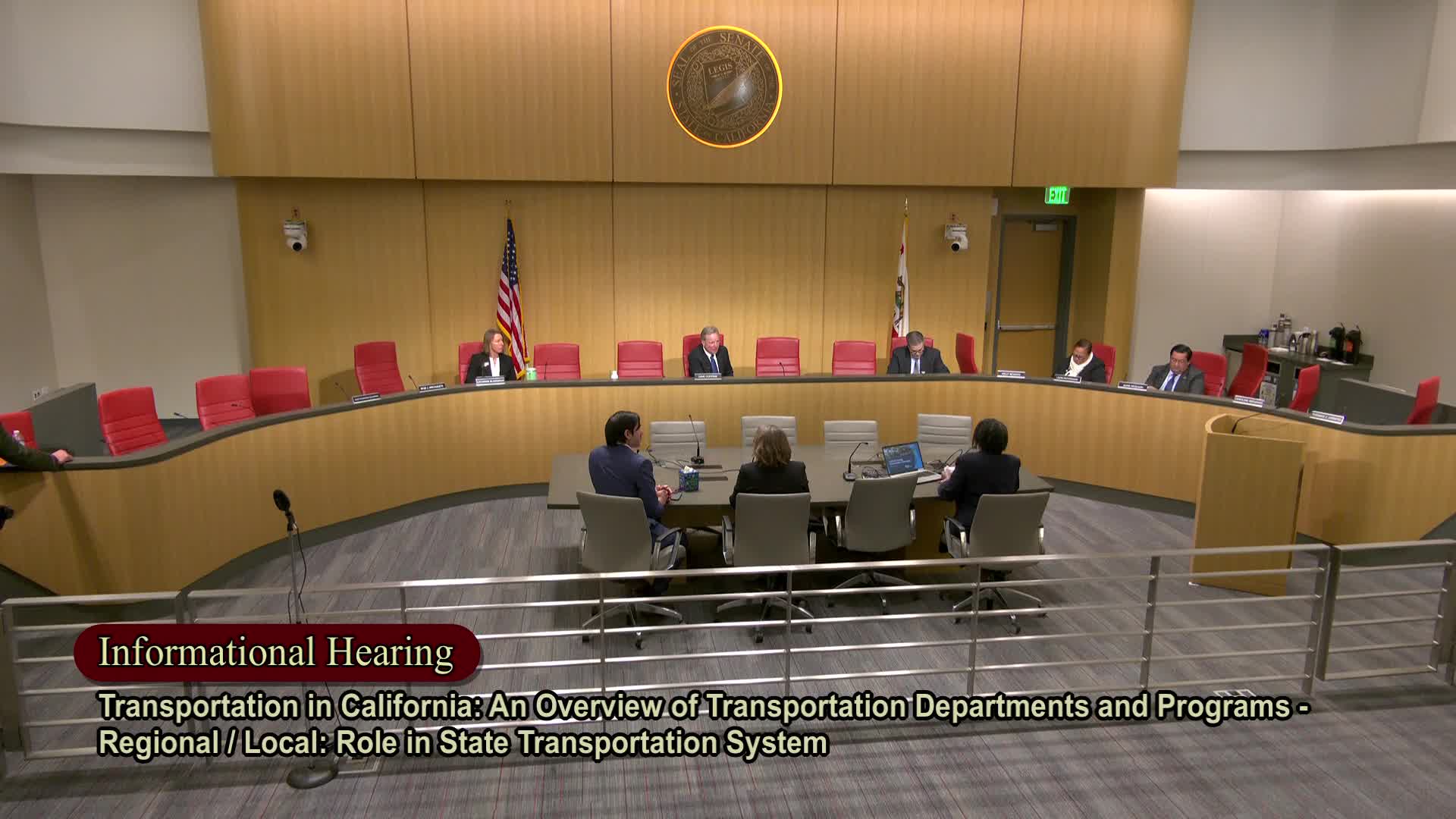
Regional transit leaders told the Senate Transportation Committee that ridership has partially recovered but operators face substantial fiscal challenges and large capital programs that depend on continued state and federal support.
Beverly Greene, chief government affairs officer for the Santa Clara Valley Transportation Authority (VTA), told the committee VTA’s operating budget was about $604 million in 2024 and is projected to increase to $625 million in 2025. She said VTA operates 441 buses on more than 1,200 route miles and 98 light‑rail vehicles on roughly 42 miles of track; bus ridership was about 89% of pre‑pandemic weekday levels while light rail was 59%.
Greene described the BART to Silicon Valley extension: a 16‑mile extension into Silicon Valley with a cost estimate of about $12.8 billion; VTA has a federal New Starts commitment of roughly $5.1 billion and estimates passenger service starting in 2036 for Phase 2. Greene also said VTA is preparing for a steep increase in major events in 2026 — Super Bowl 60, multiple FIFA World Cup matches and NCAA tournament events — and gave a preliminary estimate that roughly $30 million will be needed to prepare for those events.
Madeline Moore of LA Metro described a broad capital program and noted Metro’s FY24‑25 budget of about $9 billion. She said Metro’s weekday ridership was about 80–84% of pre‑pandemic levels and cited major projects moving forward, including the East San Fernando Valley light rail (roughly $900 million in federal support pending), the Foothill Gold Line extension and the D Line subway openings under Wilshire this year. Moore said Metro anticipates a cumulative operating and capital gap of up to $2.3 billion through 2030 unless additional funding is secured.
Michael Pimentel, executive director of the California Transit Association, told the panel that transit agencies statewide operate diverse governance models and that local sources supply the largest share of transit funding: the Legislative Analyst’s Office shows roughly $14.3 billion going to transit in 2023, with about 54% from local sources, $3.8 billion federal and $2.8 billion state. Pimentel said the Association supports a near‑term $2 billion statewide funding package for transit operations and capital to address immediate needs while longer‑term funding solutions are developed.
Ending: Transit officials asked the Legislature for prompt action on predictable funding, highlighted the role of state grants such as SB 125 and the Transit and Intercity Rail Capital Program, and requested targeted support for event operations and continued project delivery.