Get Full Government Meeting Transcripts, Videos, & Alerts Forever!
Get email alerts on the Immigration topic
No spam. Unsubscribe anytime.
Senate committee advances bill to create California Immigrant and Refugee Affairs Agency
Summary
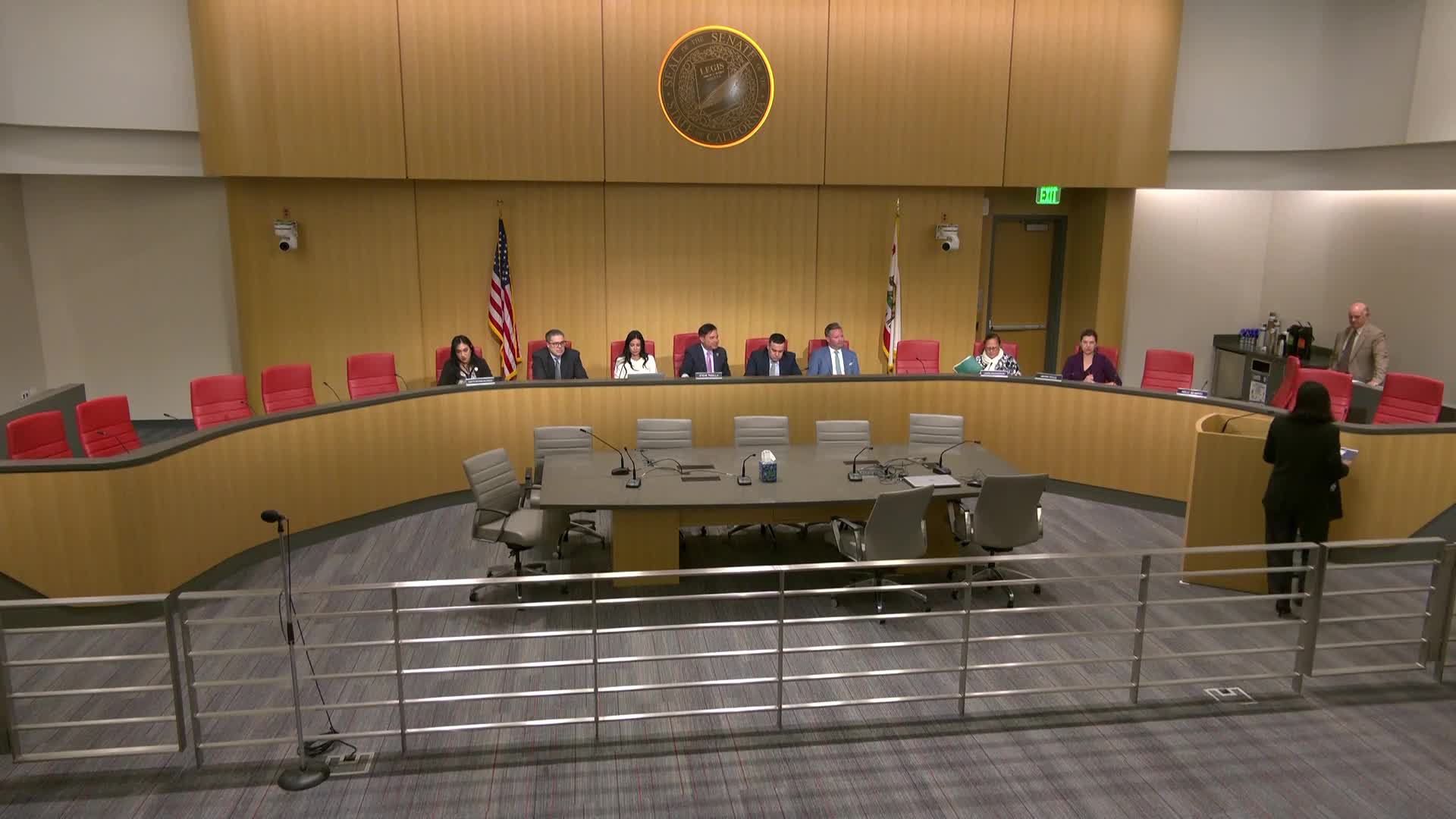
Senators on the Senate Committee on Governmental Organization voted to pass SB 12 as amended, moving the measure to the Judiciary Committee. The bill would create the California Immigrant and Refugee Affairs Agency to coordinate services for more than 10 million immigrant and refugee residents and includes a 10‑year sunset.
Senators on the Senate Committee on Governmental Organization voted to pass SB 12 as amended, moving the measure to the Judiciary Committee. The bill, authored by Senator Maria Elena Gonzales, would create a California Immigrant and Refugee Affairs Agency to coordinate outreach, services and policy for the state’s immigrant and refugee population and includes a 10‑year sunset in the committee amendments.
Senator Maria Elena Gonzales, the bill’s author, told the committee, “I'd like to start by accepting the committee's proposed amendments to add a 10 year sunset to the bill and make other technical changes. SB 12 will create the California Immigrant and Refugee Affairs Agency to help meet the needs of our state's large immigrant and refugee population.” She argued the office would act as a “one‑stop shop” to surface programs and connect communities with services.
Academic and advocacy witnesses spoke in support. Dr. Amada Armenta, faculty director of the UCLA Latino Policy and Politics Institute, testified that California is home to “over 10,000,000 immigrant residents” and said immigrants face “unique vulnerabilities” including language barriers and trouble accessing state services. Ray Cano, a CHIRLA member from Orange County, described how residents in smaller communities are often unaware of available resources and said a statewide office could improve coordination with local organizations. Cynthia Gomez, deputy director of state policy for CHIRLA, told the committee the absence of a central hub means many residents do not know available state resources and that smaller communities lack trusted nonprofit partners.
Committee members raised questions about structure, staffing and data sharing. Senator Bob Weber asked whether shifting staff into a new office could “pull them out” of the departments where their subject‑matter expertise currently resides and risk creating silos. Gonzales said the bill establishes a director to coordinate existing work across departments and that programs would continue within their home agencies while benefiting from centralized oversight and outreach.
Weber also pressed on language limiting interagency data sharing “to demographics only,” asking what the bill meant by “demographics.” Senator Gonzales and witnesses described demographics in the hearing as age, gender, race and ethnicity and said the bill includes data‑protection language intended to comply with California privacy laws. Weber emphasized that public health agencies need access to more detailed data for emergency response and vaccination outreach; Gonzales said the bill aims to de‑identify data to protect immigrant safety while preserving public‑health utility.
Members also asked about a prior state effort to coordinate immigrant services. Senator Alex Valadares (Valle‑dares in transcript) asked whether a 2015 bill, SB 84, produced a required report and whether the existing statewide director role could be expanded instead of creating a new office. Supporters said they would review SB 84’s report but argued the existing role had not produced a sustained, statewide operational hub and that a full office would add accountability, strategic planning and biannual legislative reporting.
The committee adopted the author’s motion and passed the bill as amended to the Judiciary Committee. The motion was moved by Senator Archuleta. Recorded votes included at least one dissent (Senator Dally cast a “no” vote in the roll call). The committee recommendation included the 10‑year sunset and direction to the next committee on implementation details such as data protections.
Supporters said the office would compile a mission statement, strategic plan, performance matrix and periodic evaluations and provide a central point of contact for local governments and nonprofits. Opponents, and some members who withheld support, said they were concerned about potential duplication of existing roles, unknown costs during a period of budget constraints, and that the legislature should first review SB 84’s report before creating a new entity.
SB 12 will proceed to the Judiciary Committee with the committee’s amendments, including the 10‑year sunset and clarifying language on privacy and staffing transfers.