Get Full Government Meeting Transcripts, Videos, & Alerts Forever!
Get email alerts on the Standard Of Care Model topic
No spam. Unsubscribe anytime.
Proposal to move pharmacists to a "standard of care" model draws support and caution
Summary
Board of Pharmacy officials and pharmacists urged shifting from rigid protocol-based rules to a standard-of-care enforcement model to preserve patient access; physician groups warned the change could expand practice scope and create ambiguity about training and access to patient medical records.
Board of Pharmacy leaders and pharmacist groups told legislators the board is proposing a transition from highly prescriptive, statute- and protocol-based rules toward a "standard of care" practice model for pharmacists, which the board said would allow pharmacists to adapt to evolving clinical guidance and expand patient access to services such as HIV PEP/PrEP, contraception and naloxone.
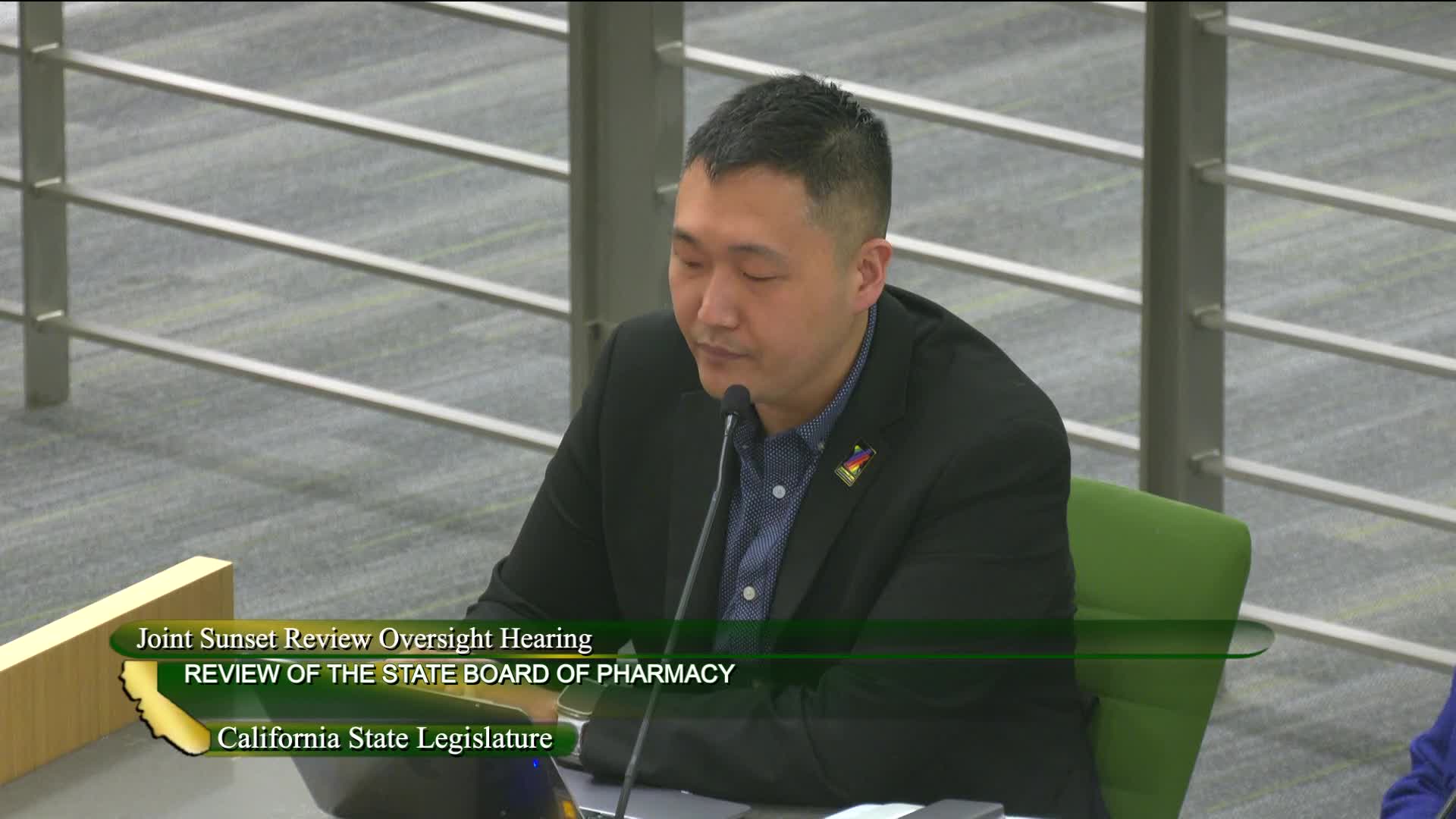
"One of the best examples is really the HIV PEP and PrEP," Board President Seung Oh said, arguing that frequent updates to federal guidance create barriers when state law mandates specific protocols. "What we want people to be able to do is to provide the best care possible without having to change the legislation or change the regulation."
Pharmacist organizations widely backed the proposal in testimony. Richard Dang, past president and speaking for the California Pharmacists Association, said pharmacists are "medication experts" who already provide expanded care in chronic disease management and public-health interventions. He urged adoption of a standard-of-care enforcement model to avoid "reactive legislation that delays care and risks patient harm." Dang said the shift would not expand pharmacist scope but would align enforcement with clinical judgment and best practices.
Some medical groups urged caution. George Soares of the California Medical Association said the board—s proposed language appears to do more than adopt a standard-of-care enforcement approach; in his interpretation, it would expand pharmacist authority to provide new services. "Pharmacists lack access to the complete patient record, which prevents them from be able to develop an appropriate plan of care for patients," Soares told the committee, adding concern that corporate pressure in large retail settings could push pharmacists toward volume-driven decisions rather than patient-centered care.
Other speakers, including the Psychiatric Physicians Alliance, raised clinical-safety concerns if pharmacists could interchange therapeutically distinct drugs without physician authorization — an issue the board also has under review (see separate article on therapeutic interchange). The Psychiatric Physicians Alliance warned that antidepressants and other psychiatric medications have different mechanisms, side-effect profiles and interactions that require detailed clinical judgment.
Board witnesses said the standard-of-care approach is intended to preserve access and allow pharmacists to practice consistent with their training while preserving consumer protections through oversight and enforcement targeted at clinically significant risks.
Ending: Committee members signaled continued interest in crafting a model that preserves pharmacist clinical judgment and patient access while clarifying training, documentation, and limits to prevent unintended expansion of scope.