Get Full Government Meeting Transcripts, Videos, & Alerts Forever!
Get email alerts on the Recharge And Funding topic
No spam. Unsubscribe anytime.
DWR and board outline recharge progress and Prop 4 rollout; concerns remain over permitting certainty and funding scale
Summary
DWR and the State Water Board told the Senate committee that managed recharge and improved data collection have expanded since 2014, but agencies still face permitting and funding constraints that slow project implementation.
Officials described managed recharge as one of the principal implementation tools for SGMA but said permitting, timing and funding remain constraints lawmakers must address.
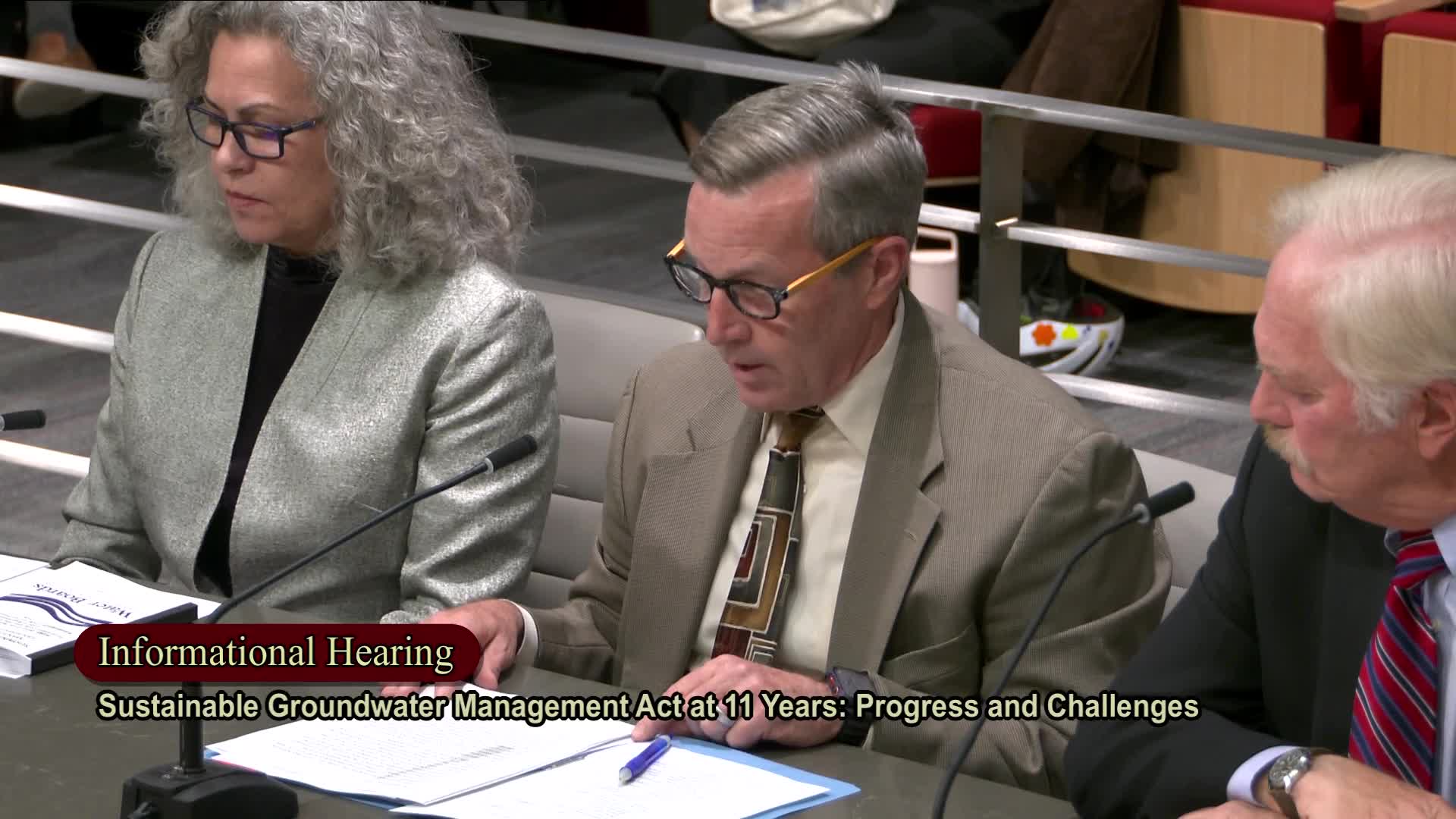
Paul Gosselin of the Department of Water Resources told the committee that expanded data collection and local partnerships enabled a major managed‑recharge effort in 2023, when agencies diverted and recharged more than 4.1 million acre‑feet to underground storage. The department said that increased monitoring, guidance documents and facilitation services have helped GSAs prepare for project implementation, and that DWR will publish forthcoming guidance on assessing depletion of interconnected surface waters and a best‑practice document for addressing subsidence.
On funding, Gosselin said the administration’s budget proposes work to update guidelines for Prop 4 (bond funds near $400 million discussed in the hearing) and to prepare for solicitations in the next fiscal year; DWR intends to solicit input from local agencies to design those guidelines. The witness also said that the State Water Board and Department of Fish and Wildlife have been coordinating on temporary‑permit and reduction‑of‑regulatory‑barriers for permitted recharge and that the governor’s targets include permitting half a million acre‑feet of recharge annually.
Committee members asked how to reduce the permitting and timing burden that can dissuade projects—witnesses acknowledged one practical obstacle: agencies sometimes delay applying for water‑right or temporary recharge permits until a wet season is underway because permit processing and upfront costs make it expensive to apply for a year that ends up dry. State staff said they are working on clarifications (for example, on fish screens and other conditions) and on outreach to communities and permit applicants, and that the Board issued a “frequently asked questions” update to clarify processes.
What they asked: Lawmakers pressed for faster rollout of Prop 4 solicitations, clearer streamlined permitting for managed recharge, and greater certainty for local agencies to invest in project development. Witnesses said updated Prop 4 guidelines, continued interagency coordination, and expanded guidance on permitting and species protections are planned.
Ending: DWR and the Board emphasized that surge years for runoff can provide opportunities to recharge groundwater, but that building predictable, streamlined permit pathways and matching funding to the scale of needed projects will be essential if recharge is to substantially offset overdraft over the next decade.