
DCC says testing and pesticide rules will be tightened after reporting on lab gaps; advertising enforcement increasing
Get AI-powered insights, summaries, and transcripts
Sign Up Free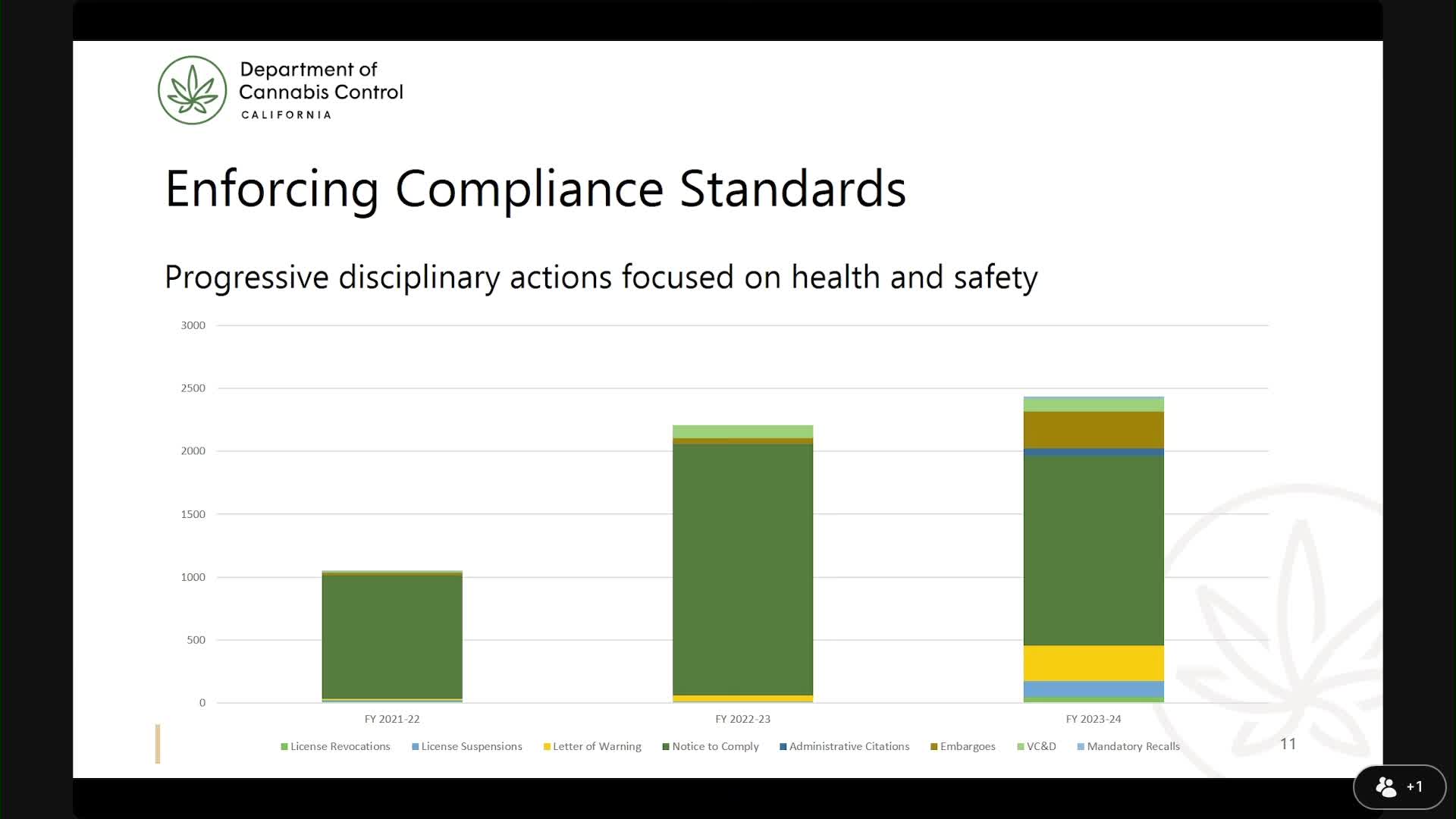
Summary
Department of Cannabis Control officials told legislators they are expanding pesticide testing lists and increasing enforcement of child-appealing packaging and advertising after questions about laboratory testing and product safety.
Department of Cannabis Control leaders told a legislative joint hearing they are updating pesticide-testing guidance and increasing compliance actions on child-appealing packaging after lawmakers raised concerns about testing gaps and advertising aimed at minors.
"A lot of pesticides aren't on our required list of 66 pesticides," Christina Dempsey said in response to questions about reporting that suggested legal-market testing missed contaminants. She said the Department of Pesticide Regulation has prepared an expanded pesticide list that will be incorporated into future DCC regulations and that the department is working to improve laboratory practices and regulatory language.
Dempsey described the DCC—9s CAS (California Authorized Sampling) program, a first-in-the-nation product sampling and testing effort that randomly selects products at distribution or retail for laboratory testing. The department said it conducts routine and unannounced inspections and can use recalls, embargoes and citations for noncompliant products.
Assemblymember Erwin and others cited recent media accounts alleging testing lapses and asked whether consumers can trust the legal market. Dempsey responded that licensed products are subject to testing and that the legal market offers stronger product-safety protections compared with illicit sources, which the department has found frequently involve unapproved pesticides, mold and unsafe production conditions.
On advertising and packaging, Dempsey reported rising compliance enforcement. "It went from 20 compliance actions on attractive-to-children packaging in 2022 to 199 last year. We're already at 20 this year," she said, adding the department expects judicial decisions to further shape rules and enforcement.
Why this matters: product testing, pesticide policy and marketing rules bear directly on consumer safety and public confidence in the legal market. Industry groups and legislators said regulatory clarity and better lab standards are needed to reassure consumers and help licensed businesses differentiate themselves from illicit sellers.
DCC officials said regulatory updates and collaboration with the Department of Pesticide Regulation and labs are in progress and that the CAS program and inspection regimes are enforcement tools the department is using now.