Get Full Government Meeting Transcripts, Videos, & Alerts Forever!
Get email alerts on the Groundwater Sgma Implementation topic
No spam. Unsubscribe anytime.
Senate hearing finds mixed progress on SGMA implementation; state and local roles remain central
Summary
Lawmakers heard expert and agency testimony on the 2014 Sustainable Groundwater Management Act (SGMA), including accomplishments—wider data collection, GSA formation and managed recharge in 2023—and persistent challenges: deficient plans in several basins, outreach gaps, funding shortfalls and tensions between adjudication and local plans.
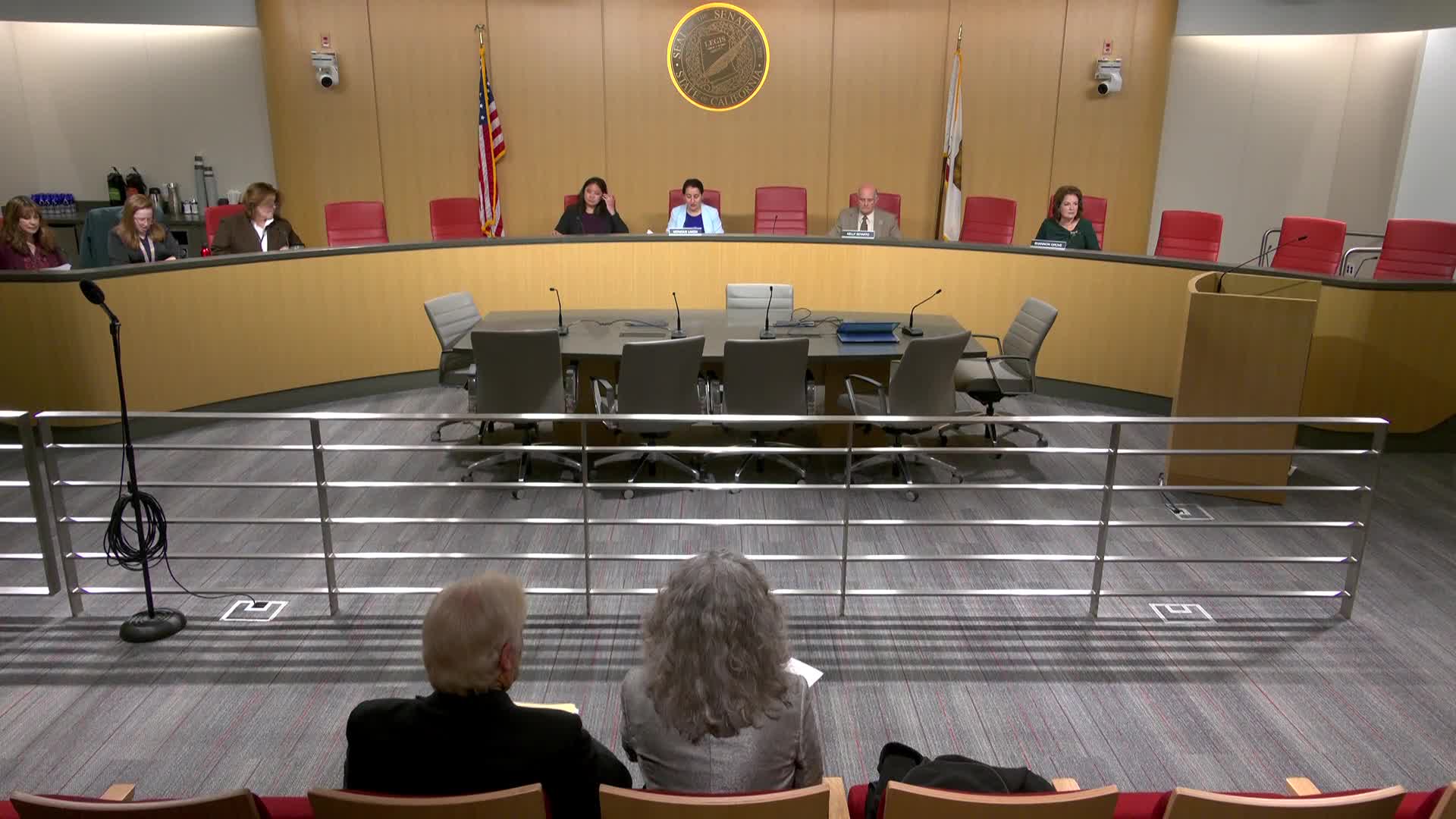
The Senate Natural Resources and Water Committee convened an informational hearing on SGMA, the Sustainable Groundwater Management Act enacted in 2014, to review 11 years of implementation, progress and continuing challenges.
Chair Limon opened the session saying the hearing would examine “progresses and challenges” in implementation and noted groundwater’s central role in California’s water supply. Professor Richard Frank, co‑director of the California Environmental Law and Policy Center at UC Davis School of Law, told the committee SGMA’s central design is local implementation with state monitoring and a target to reach sustainability in the early 2040s. He said the statute sets a regulatory overlay intended to prevent “undesirable results,” including land subsidence and saltwater intrusion.
Paul Gosselin, deputy director for sustainable groundwater management at the Department of Water Resources (DWR), told the committee nearly every basin required to form a groundwater sustainability agency (GSA) did so and most submitted groundwater sustainability plans (GSPs) on schedule. He said DWR has approved 86 basins’ plans but flagged that some plans were returned as incomplete or judged inadequate; seven basins were referred to the State Water Resources Control Board for potential intervention.
Gosselin highlighted several concrete accomplishments: more basin monitoring data than in 2014, increased local recharge projects and a large managed‑recharge year in 2023 when agencies reportedly diverted and recharged more than 4.1 million acre‑feet into underground storage. He said DWR will shift emphasis from plan review toward ongoing basin stewardship and implementation oversight, and signaled forthcoming guidance on interconnected surface water depletion and on addressing subsidence.
Tina Cannon Leahy of the State Water Resources Control Board described the Board’s intervention role under SGMA as a two‑step process: (1) determine whether a basin should be designated probationary, and (2) after at least one year, consider imposing an interim plan if deficiencies are not corrected. Leahy listed basins the department referred to the Board—Chowchilla, Delta‑Mendota, Cahuilla, Kern, Tulare Lake and Tule—and summarized the Board’s public‑notice, draft staff report and hearing process used in those cases. She noted the Tulare Lake probationary determination is now the subject of litigation.
Committee members pressed witnesses about three recurring concerns: (1) how SGMA interfaces with groundwater adjudications, (2) outreach and meaningful participation by small farmers, disadvantaged communities and tribal communities, and (3) funding and workforce constraints for implementation. Leahy and DWR staff described statutory and code provisions intended to harmonize adjudications and SGMA, but both witnesses acknowledged ambiguity and litigation risk remain.
The hearing included multiple local accounts of implementation difficulties, from community organizations and GSAs, and testimony that GSA governance arrangements and the timing of plan development have created friction for some small water users. Several speakers asked the Legislature to increase technical assistance, direct more grant funding to on‑the‑ground projects, and clarify how adjudications and GSP allocations should interact.
What this means: The state’s approach under SGMA has produced institutional capacity, plans and data that did not exist a decade ago, but committee members and witnesses agreed the next five years—when most plans move from planning to implementation—will be decisive. DWR said the agency will use statutory tools to require corrective actions, provide facilitation and translation services, and work with GSAs on implementation; the State Water Board said its probationary and interim‑plan authorities are intended as backstops, not substitutes for local management.
Ending: Lawmakers signaled interest in continued oversight, additional funding and legislative clarification to reduce litigation risk and to support disadvantaged communities, tribal nations and small farmers through implementation. The committee invited further written comments and follow‑up meetings with interested members and staff.