Get Full Government Meeting Transcripts, Videos, & Alerts Forever!
Get email alerts on the Compounding Regulations topic
No spam. Unsubscribe anytime.
Compounding rules at center of sunshine: pharmacists, veterinarians and firefighters say new regulations have reduced access to essential compounded drugs
Summary
The board and dozens of commenters debated proposed compounding regulations and their effects on access to compounded products such as glutathione and methylcobalamin. Veterinarians, compounding pharmacists and firefighters described shortages and urged legislative oversight and appointment of compounding expertise on the board.
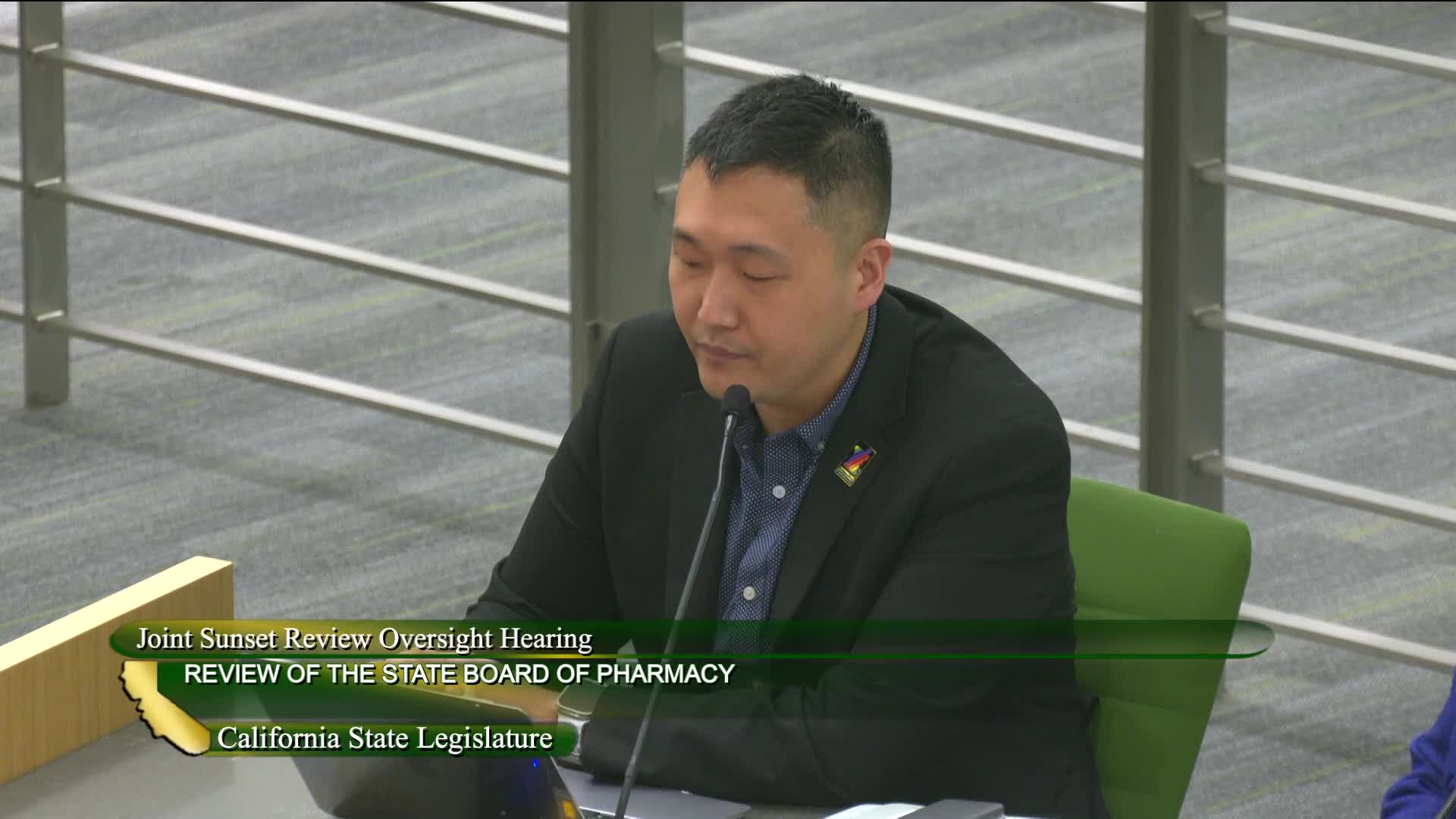
Board President Seung Oh told a joint legislative committee that the California State Board of Pharmacy is updating compounding regulations and has adjusted proposed language after public comment. "As currently proposed, the board is not banning the compounding of substances such as glutathione or methylcobalamin as many advocates of these substances have claimed," Oh said. He also said the board has repeatedly revised text in response to comments and followed the formal rulemaking process.
Many stakeholders told legislators the practical effect has been a sharp reduction in community compounding capacity and restricted access to medicines used in veterinary care and firefighter detox protocols. Grant Miller, director of regulatory affairs for the California Veterinary Medical Association, said California is unique in lacking access to certain veterinary drugs because those medications are available only through compounding pharmacies. "Excessively stringent board of pharmacy regulations for compounding pharmacies have shrunk the number of California veterinary compounding pharmacies to just a few," Miller said, and listed eye medications and other formulations veterinarians say they cannot obtain.
Firefighters and patient advocates urged legislative oversight. Jackie Jorgeson, founder and executive director of the Volunteer Fire Foundation, described a field treatment program that used nebulized glutathione after wildfires: "Many said they felt instant relief after inhaling a single dose of doctor administered glutathione," she said, and added that patients need repeated home doses but cannot obtain the product from California compounding pharmacies. Nearby prescribers and other clinicians echoed accounts of patients and veterinarians unable to get compounded medications for home or clinic use.
Compounding pharmacists urged that the board add sterile community compounding expertise. One compounding pharmacist described the market contraction from "over a hundred compounding pharmacies" a decade ago to "only a handful" remaining today and asked for a board seat with community compounding experience to reduce delays and misaligned requirements between hospital and community compounding.
Legal and regulatory context: board staff and members repeatedly referenced federal law, FDA guidances on bulk substances and national United States Pharmacopeia (USP) standards—particularly USP <797> for sterile compounding—as guiding documents. Speakers noted that FDA lists bulk substances in categories and that the board must consider federal guidance and USP standards in its rulemaking.
Calls to the legislature included: closer oversight of board enforcement practices, appointment of a practicing sterile community compounder to the board, and additional sunset review. Petitioners including a patient group said their petition had more than 11,000 signatories opposing the board's regulatory approach. The board and committee chairs said the hearing was informational; no regulations or new statutes were adopted at the session.