Get Full Government Meeting Transcripts, Videos, & Alerts Forever!
Get email alerts on the Broadband Deployment topic
No spam. Unsubscribe anytime.
Committee approves reporting requirement for pole‑attachment requests to speed broadband rollout
Summary
Senate Bill 502, as amended, would require entities seeking attachments to utility poles for broadband to report quarterly application and completion data to the Indiana Broadband Office, which would publish the information and monitor progress. The committee approved the amendment and passed the bill 9–1 amid broad stakeholder discussion on
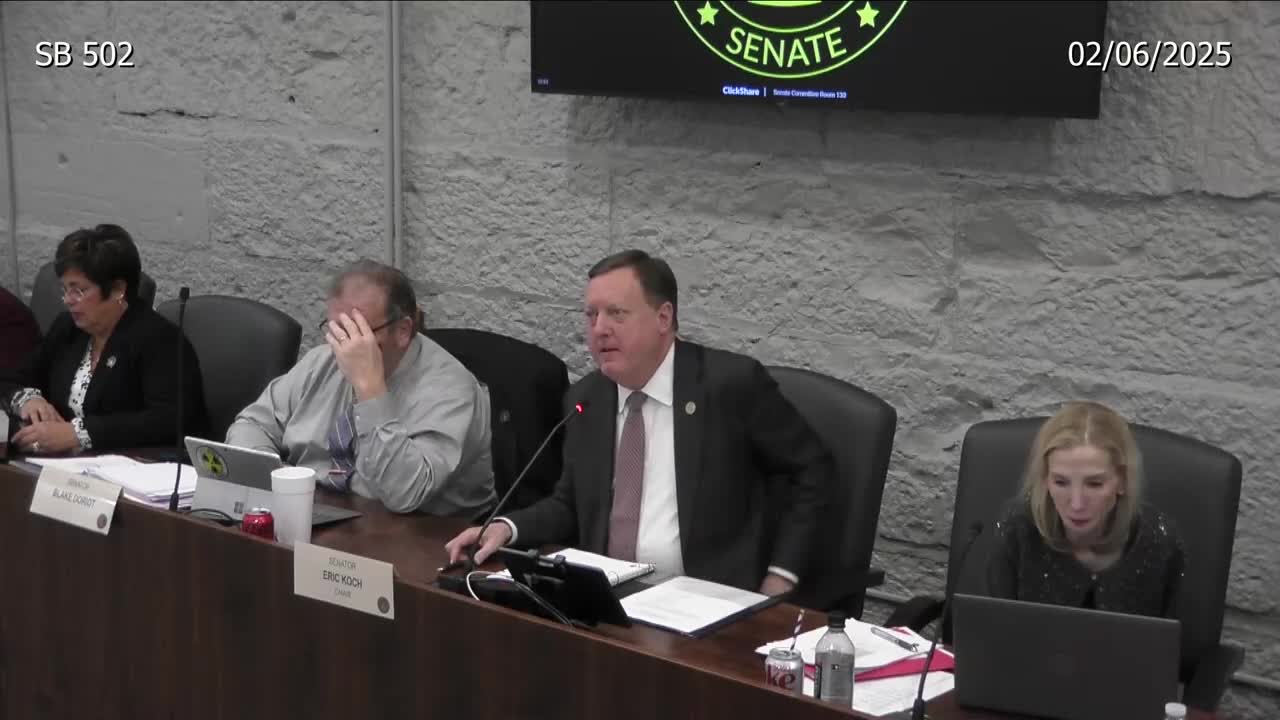
The Senate Utilities Committee passed an amended version of Senate Bill 502 that requires entities seeking attachments on utility poles to report quarterly on pole‑attachment applications and completions to the Indiana Broadband Office, which will publish the data on its website and hold the information for five years.
Senator Tony Zay and Chairman Cook framed the bill as a practical step to reduce delays in a large federal and state broadband deployment. “We’re now in the precip of the federal infrastructure bill,” Zay said, and the committee heard testimony that the state will administer hundreds of millions in federal BEAD funding in addition to state subsidies.
Steve Cox, chief broadband officer for the Indiana Broadband Office, said the office is neutral on the bill but supports the amendment and the intent to “help expedite requests being approved and denied.” He noted Indiana’s BEAD application round is open and that the state expects significant construction in coming years.
Internet service providers and cable companies urged faster pole‑attachment processing. Leanne Herrera of Charter (Spectrum) told the committee Charter has thousands of attachments pending with an average aging of more than 490 days and that thousands more approvals averaged over 380 days—delays she said have slowed expansion. Bill Swords of AT&T said the “single biggest challenge” to connecting Hoosiers has been pole attachments and urged electric utilities to dedicate resources to processing requests quickly.
Electric cooperatives and pole owners supported the amended bill’s reporting and accountability approach but urged continued dialogue about project pauses caused by clearance violations, illegal attachments and relocation timing. Michael Charbonneau of Indiana Electric Cooperatives asked that documentation of valid reasons for pausing permits be considered in any public report so legitimate safety or integrity pauses are understood.
The amended bill directs the Indiana Broadband Office to collect and post attachment application and completion data quarterly and sunsets the reporting requirement after five years. Committee members debated scope and clarified that the reporting is intended to support state and federal broadband projects; some witnesses asked the broadband office to narrow the reporting to BEAD and similar state-federal programs.
The committee moved the bill as amended; the roll call showed nine ayes, one nay and one excused member. Senator Ford explained his no vote in committee, citing concerns raised during testimony.
The measure now proceeds in the legislative process; backers said the reporting will provide visibility and accountability intended to accelerate broadband construction while pole owners requested continued collaboration to avoid safety or structural issues.