Get Full Government Meeting Transcripts, Videos, & Alerts Forever!
Get email alerts on the Energy Classification topic
No spam. Unsubscribe anytime.
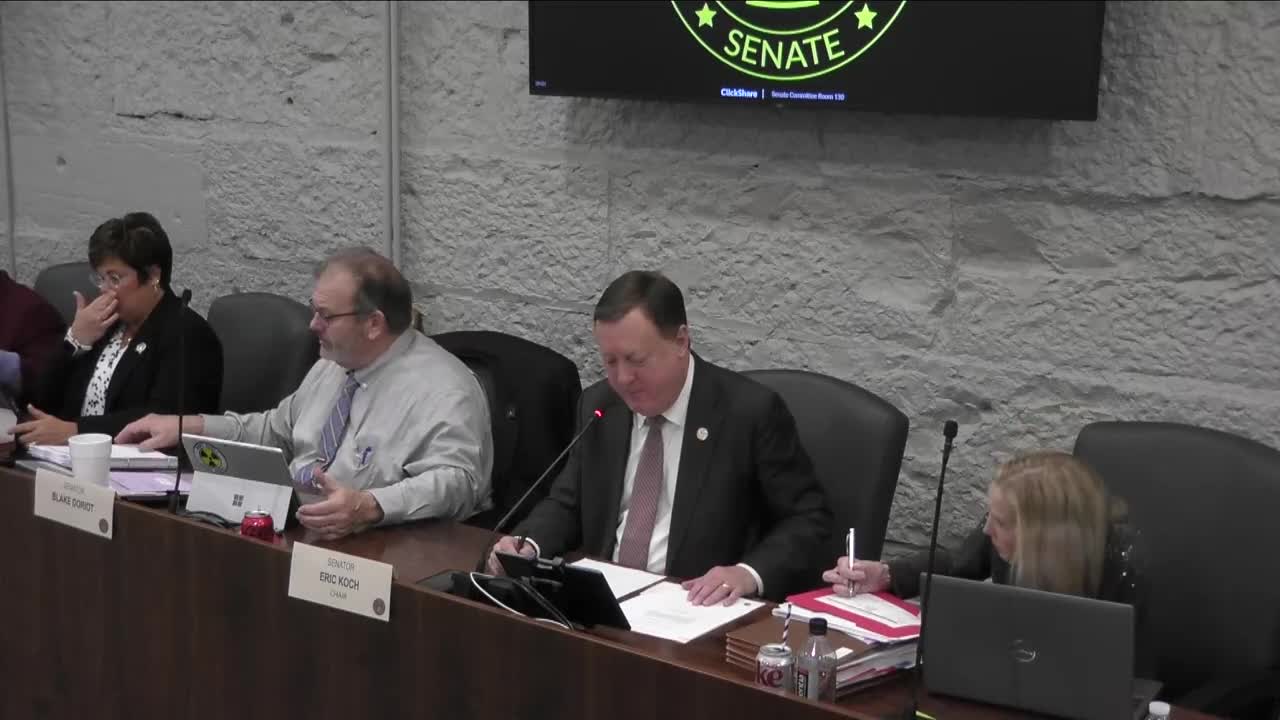
Senate committee approves measure to label natural gas, propane as clean energy amid split testimony
Summary
The Senate Utilities Committee voted 8-2 to advance Senate Bill 178, a proposal to add natural gas and propane to Indiana’s definition of clean energy for state and federal program purposes.
The Senate Utilities Committee voted 8-2 to advance Senate Bill 178 on a voice/roll call after testimony for and against whether natural gas and propane should be added to the state’s definition of clean or green energy.
The measure, introduced by Senator Jim Buck, would add natural gas to Indiana’s statutory list of clean or green energy and—by amendment—include propane. “What this bill simply does is makes natural gas cataloged right along with other clean and, green energy,” Buck told the committee when he introduced the bill, and he explained that the amendment adds propane.
Supporters described the change as preserving consumer fuel choice and allowing utilities, builders and households to pursue potential state or federal programs, grants or incentives tied to clean-energy definitions. Carly Hopper of the Indiana Builders Association said the group “support[s] an all‑above approach” and called the bill an extension of prior legislation prohibiting natural gas bans. Matt Long of the Indiana Energy Association said natural gas “fuels over 1,800,000 homes in Indiana and over 166,000 businesses,” cited job support statistics for the industry and summarized industry trends: “Emissions from natural gas have declined 70% since 1990.” Maureen Ferguson of the American Petroleum Institute and Matt Norris of the Indiana Propane Gas Association also testified in support.
Opponents said classifying gas and propane as clean or green would be misleading and could undercut state and national efforts to prioritize zero‑emission sources. Delaney Barber Quan of Indiana Conservation Voters said federal definitions typically do not list natural gas or propane as clean energy and cautioned that state code changes would not necessarily alter federal program eligibility. Kerwin Olsen of Citizens Action Coalition and Shannon Anderson of Earth Charter Indiana urged the committee to oppose the measure, with Olsen saying natural gas remains a “major contributor [to] ground level ozone” and Anderson citing several institutional definitions (Department of Energy, MIT and utility companies) that exclude fossil fuels from “clean energy.”
Committee members asked whether reclassification would automatically make natural gas and propane eligible for federal grants and incentives. Senator Buck and supporters said the change would allow Indiana to appear on lists for programs that use state definitions, but both opponents and some committee members noted many federal programs define eligible energy sources at the federal level and that state code alone could not guarantee federal funding eligibility.
After debate, the committee took a motion to pass the bill as amended. Senator Ford explained his no vote, saying, “I just can't support it because it still produces carbon dioxide.” The clerk recorded the vote as eight ayes and two nays; the committee chair announced the bill passes 8–2.
SB 178 will now move from the Senate Utilities Committee according to committee procedure; supporters said they aim to preserve customer fuel options and potential program access, while opponents said the reclassification risks conflating fossil fuel use with zero‑emission technologies.
Votes at a glance: Senate Bill 178 — Motion to pass as amended moved and seconded; committee vote 8 ayes, 2 nays (bill passed).