Get Full Government Meeting Transcripts, Videos, & Alerts Forever!
Get email alerts on the Graduate Medical Education topic
No spam. Unsubscribe anytime.
House bill to update graduate medical education grant rules advances after sponsors cite workgroup feedback
Summary
A bill to update rules and terminology for a graduate medical education grant program passed the committee after sponsors said the changes reflect board and medical school input and are intended to help distribute newly allocated state funds.
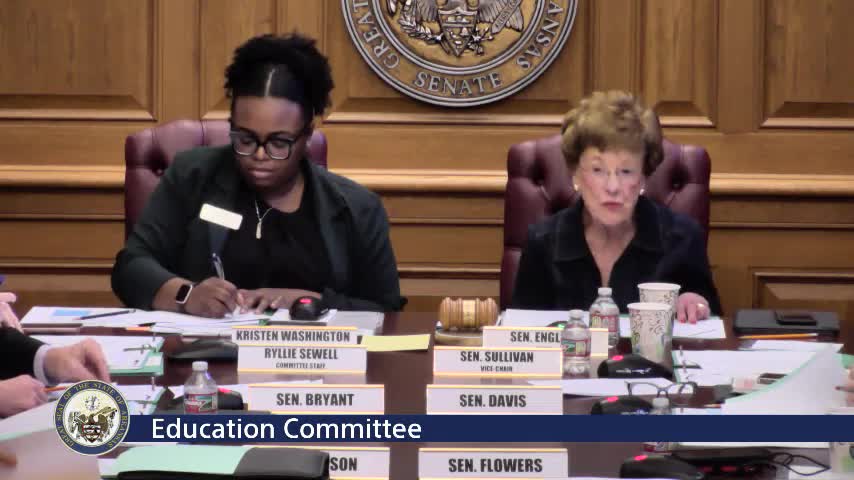
The Senate Education Committee advanced a bill that updates statutory language and grant rules for Arkansas’s graduate medical education (GME) grant program, a program sponsors said was created by legislation enacted in 2019 and funded in the 2023 session.
Representative Lee Johnson, sponsor of House Bill 1384, told the committee that the 2019 law set up a grant mechanism for residency training but that funding did not become available until the most recent legislative session. He said the board created by the earlier law convened this fall, reviewed the statute and public comments, and recommended amendments to modernize terminology and ensure state funds are directed to programs that can effectively grow residency training in Arkansas. “We passed some legislation in 2019, to create a grant mechanism for graduate medical education,” Johnson said. He described the current amendment as the product of board discussions and public input from the state’s four medical schools.
Senators asked about federal caps on Medicare‑funded residency slots and geographic distribution of residency programs. Johnson said the federal cap on certain enhanced funding slots is set at the federal level and cannot be changed by state law and that the state funding is intended to be distributed through grants to programs across Arkansas. He noted that evidence shows physicians often remain where they train, and said expanding residency slots in the state is a workforce strategy to keep medical graduates in Arkansas.
No public opposition was recorded in the hearing. The committee voted to advance the measure.
Committee members said the changes are intended to reflect current residency terminology and to position the newly allocated state funds for effective use by hospitals and training programs across the state.