Get Full Government Meeting Transcripts, Videos, & Alerts Forever!
Get email alerts on the Religious Expression Schools topic
No spam. Unsubscribe anytime.
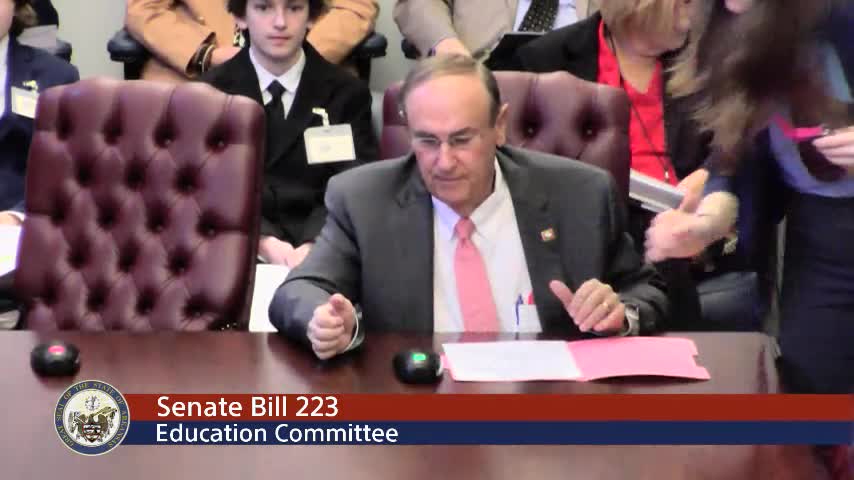
Committee advances bill clarifying religious expression and references to academic study of the Bible in schools
Summary
Lawmakers debated a bill to clarify students’ and employees’ religious‑expression rights and restate statute language about an academic study of the Bible; supporters said it clarifies existing rights, while critics warned of potential for off‑campus religious instruction.
The Senate Education Committee advanced a bill that reiterates existing law on religious expression in public schools and restates statutory language about offering an academic study of the Bible in secondary schools, prompting debate among senators and public witnesses over who would teach such a course and whether it risks mixing religion and public education.
A sponsor identified in the hearing as Senator Johnson told the committee the bill does not change Arkansas Code 6-16-145 and that “this bill does not at all amend any part of, Arkansas code 6 16 1 45.” He and others said the bill’s language was amended to clarify that required notifications about students’ and employees’ First Amendment rights can be communicated by placement in a handbook, policy manual or other resource designed to inform students, employees or parents about policies and rights.
Public witnesses raised concerns about classroom instruction and off‑campus activities. The Rev. Maxine Allen, a retired United Methodist elder, told the committee, “I do believe in the separation of church and state,” and said many public school teachers are not prepared to teach religious texts and that curriculum development raises difficult questions about denominational balance. Toni Rose of the National Association of Christian Lawmakers testified in support, saying she had reviewed the bill and that “nowhere in it does it state that teachers will be teaching any type of or sort of religion.” Rose said the measure aims to clarify longstanding confusion about religious rights in schools and cited federal guidance from the U.S. Department of Education.
Committee members pressed for clarity about who would teach an academic study of the Bible and whether districts could allow off‑campus instruction. Senator Johnson agreed that decisions to take students off campus “should be very carefully considered and filtered through the school board policy,” and reiterated that the bill itself does not authorize off‑campus religious instruction or change the existing statute.
After public comment and discussion, the committee took a vote and the bill passed out of committee. Committee members noted the amendment’s purpose was to clarify existing law and to provide a single place for districts to point for guidance on religious‑expression questions.
Lawmakers did not provide detailed implementation guidance during the hearing; questions about which personnel would be certified to teach an academic Bible study and about curriculum development were referred to the Department of Education or local school boards.