Get Full Government Meeting Transcripts, Videos, & Alerts Forever!
Get email alerts on the Land Use Zoning topic
No spam. Unsubscribe anytime.
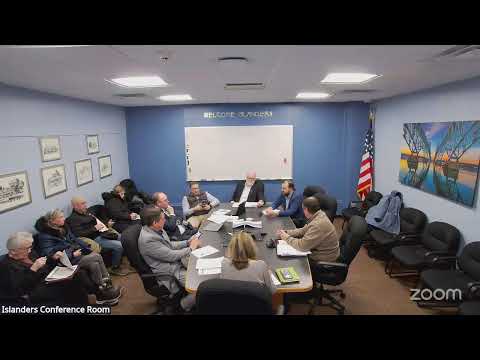
Town board discusses GolfView PDD concept; members press for complete application before zoning change
Summary
At a town board workshop, members reviewed a conceptual plan from the GolfView developer that would change zoning through a Planned Development District (PDD) and eliminate a portion of a B‑1 designation in favor of R‑2 uses.
At a town board workshop, members reviewed a conceptual plan from the GolfView developer that would change zoning through a Planned Development District (PDD) and eliminate a portion of a B‑1 designation in favor of R‑2 uses.
The presentation and board discussion focused on the conceptual nature of the submittal: the developer has revised lot layouts to enlarge some R‑1C lots and create larger buffers between R‑1 and R‑2 areas, removed a so‑called lilac/wildlife corridor in places, and kept the overall density and final unit counts roughly unchanged. Board members and staff repeatedly emphasized that the current submission is a conceptual plan and that a local law and formal PDD approval would be required before any zoning change becomes binding.
Town legal counsel (Peter, staff member) told the board that approving a concept plan gives the developer direction but does not, by itself, change zoning. He said a local law must be adopted for the zoning change to be binding and that the PDD approval process and financial/ownership documentation are parts of later, more formal steps.
Board members pressed on completeness. Staff and one member said a bank commitment letter, ownership and tenant documentation, and other materials required by the town’s PDD procedures have not yet been submitted. Without those pieces the board concluded it could not responsibly vote to adopt the PDD or the supporting local law.
One board member moved to refer the latest plan to the planning board and to the town’s economic development advisory body so those groups could review the materials once the application is complete; another member seconded the motion. The transcript records a motion and second but no recorded final vote on that referral during the workshop, and several members urged tabling further action until the applicant files a complete application and the town can set a public hearing on a completed package.
Board members also discussed whether adding the wildlife corridor back after concept approval would require starting over or would be treated as a non‑substantial revision; staff said the town could treat additions that do not change unit counts or allowable density as less likely to be considered a substantial deviation, but that decision would be up to the board when a specific amendment was proposed.
The board directed staff to notify the applicant of the need to submit the outstanding application materials, to coordinate possible referrals to the planning board and economic development advisory board once the application is complete, and to schedule a public hearing after the town confirms the submission is complete.
Votes or final approvals on the PDD or the local law were not recorded in the workshop transcript; the discussion ended with direction to await a complete application and to proceed with standard referral and public‑hearing steps when those materials arrive.